






























.jpg)


Published on 23/10/2025 & Updated on 13/04/2026.
Community defibrillators are transforming cardiac arrest survival rates in the UK, but success depends on more than simply installing devices.
This guide explains how to get a community defibrillator, get funding, and maintain a community AED programme that saves lives, with trusted models from Mindray, CU Medical Systems, and Schiller, and advice supported by NHS and Resuscitation Council UK guidance.
Why Every Community Needs an AED Network
Every year, emergency services in the UK attempt resuscitation on around 30,000 people who suffer an out-of-hospital cardiac arrest – most often in homes, streets, or public places.
Without immediate treatment, the chances of survival decline rapidly. For every minute that passes without CPR or a defibrillator (AED), the likelihood of survival drops by roughly 10 %.
Using a defibrillator within the first three to five minutes of collapse can raise survival rates to 50–70 %, proving how vital early intervention and community preparedness can be.
However, fewer than 2% of cardiac arrests receive bystander defibrillation before ambulance crews arrive. Expanding public access defibrillation programmes, improving CPR training, and establishing local volunteer networks can significantly enhance community emergency responses and ultimately save more lives.
How to Get a Free Community Defibrillator
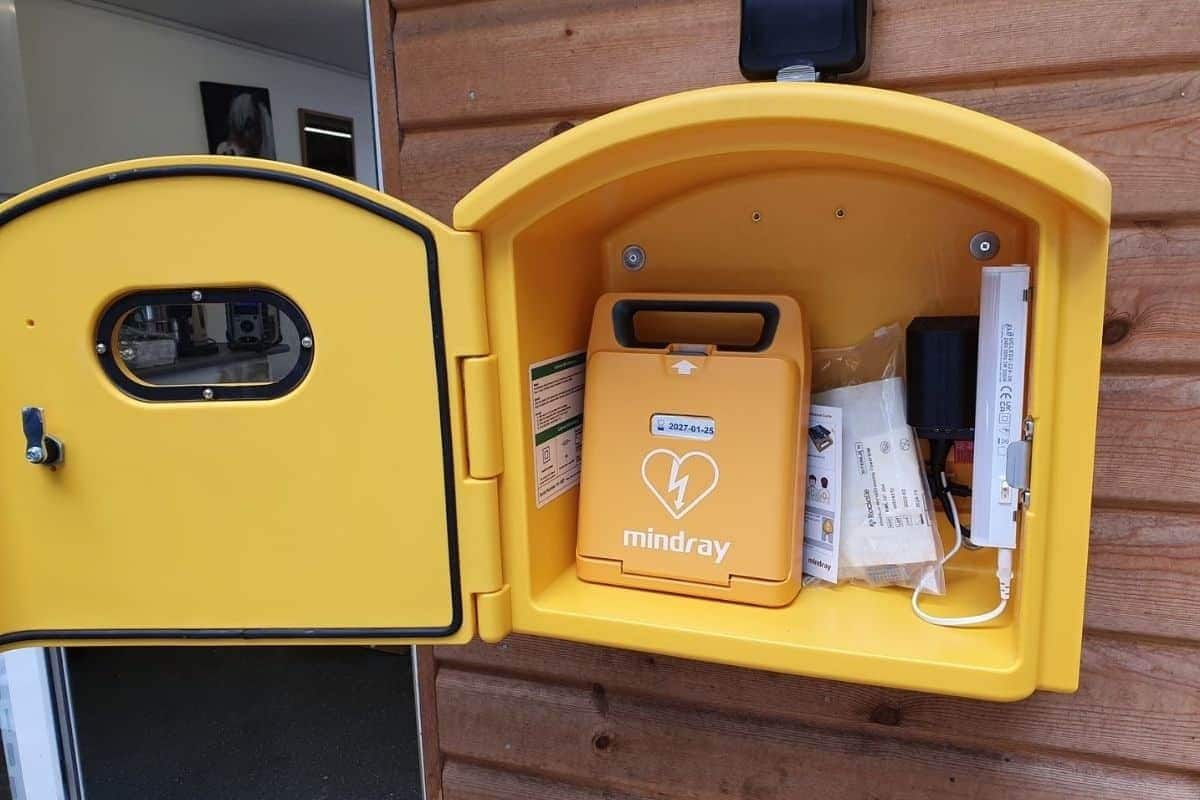
Getting a free community defibrillator through grants, partnerships, or local fundraisers is totally possible. Many local organisations fund an AED through a combination of these elements.
Funding options include local authority safety grants and charity partnerships such as the British Heart Foundation, the National Lottery, corporate sponsorships or “adopt-an-AED’ schemes, and community crowdfunding platforms like JustGiving.
Generally, you can apply on behalf of a non-profit, community-focused group for a free defibrillator. This might include:
- Charities
- Community centres
- Faith organisations
- Sports groups
What to Do After Securing Funding
After securing funding, you should select the right defibrillator and choose a suitable location where the public can access it 24/7 in the case of an emergency.
Typically, you will need the permission of the landowner or local authority.
Once the AED is installed, you should register it with The Circuit. They are a nationwide network of defibrillators that are known to the NHS. The goal is to quickly connect someone to a nearby defibrillator in an emergency.
From this point onwards, it is important to keep your defibrillator in working condition.
Laying the Foundations: Planning a Community AED Programme
Before purchasing devices, local organisers should take the time to develop a comprehensive framework that not only ensures the immediate functionality of the devices but also promotes their long-term success and sustainability within the community. This involves careful planning, consultation with stakeholders, and consideration of future needs to create a robust system that supports ongoing growth and adaptability.
Map Local Needs
Use NHS or ambulance service data to identify high-risk or high-footfall zones. Rural and low-income areas often lack access, despite potentially higher risks. In December 2022, the UK Government announced a £1 million fund to support around 1,000 additional PADs. Organisations were invited to apply in June 2023, and the fund was launched in September 2023. A further £500,000 was added in August 2024 after the initial funds were exhausted to cover existing applications.
Engage Local Partners
Parish councils, Rotary groups, schools, and sports clubs can co-fund or host AEDs. Shared responsibility encourages upkeep and training.
Confirm EMS Registration
Register every defibrillator with The Circuit, the UK’s national defibrillator network, so ambulance dispatchers can direct callers to the nearest device.
Choose Suitable Housing
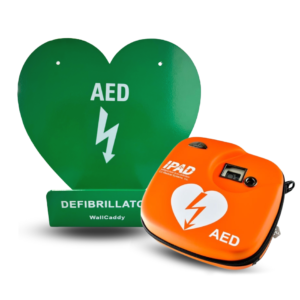
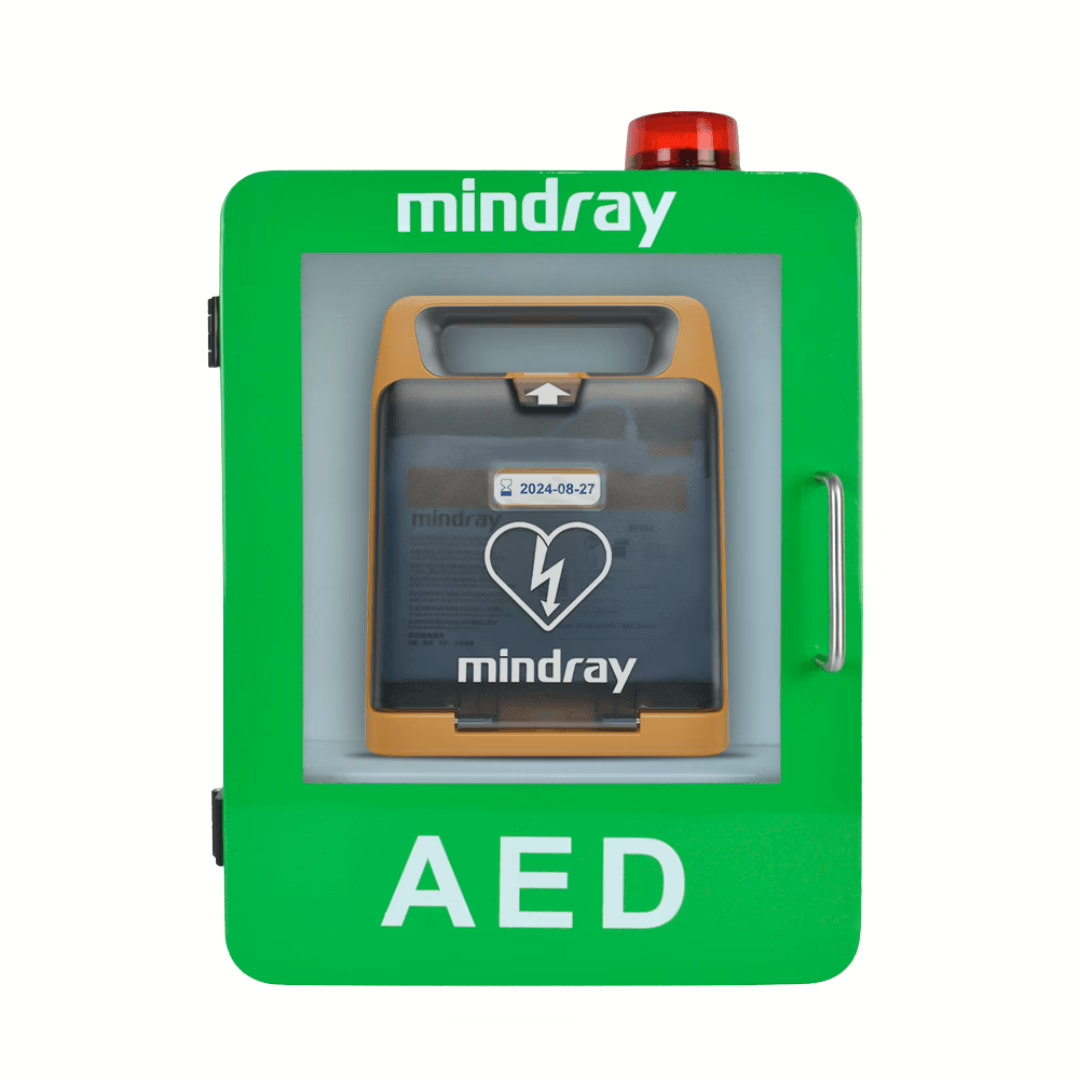
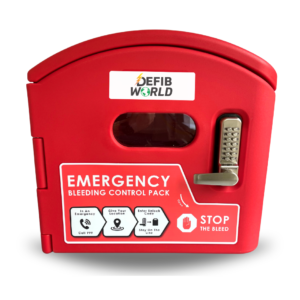
Outdoor installations typically require the use of lockable and heated cabinets to protect the equipment from environmental elements and unauthorised access. Meanwhile, indoor units may need to be secured within alarmed enclosures to deter theft and ensure safety. Properly securing these units is essential for maintaining their functionality and preventing potential security breaches or damage.
Establish a Maintenance Rota
Nominate local volunteers to check each AED monthly, record battery/pad status, and log results for insurance or audits.
Choosing the Right AEDs for Community Use
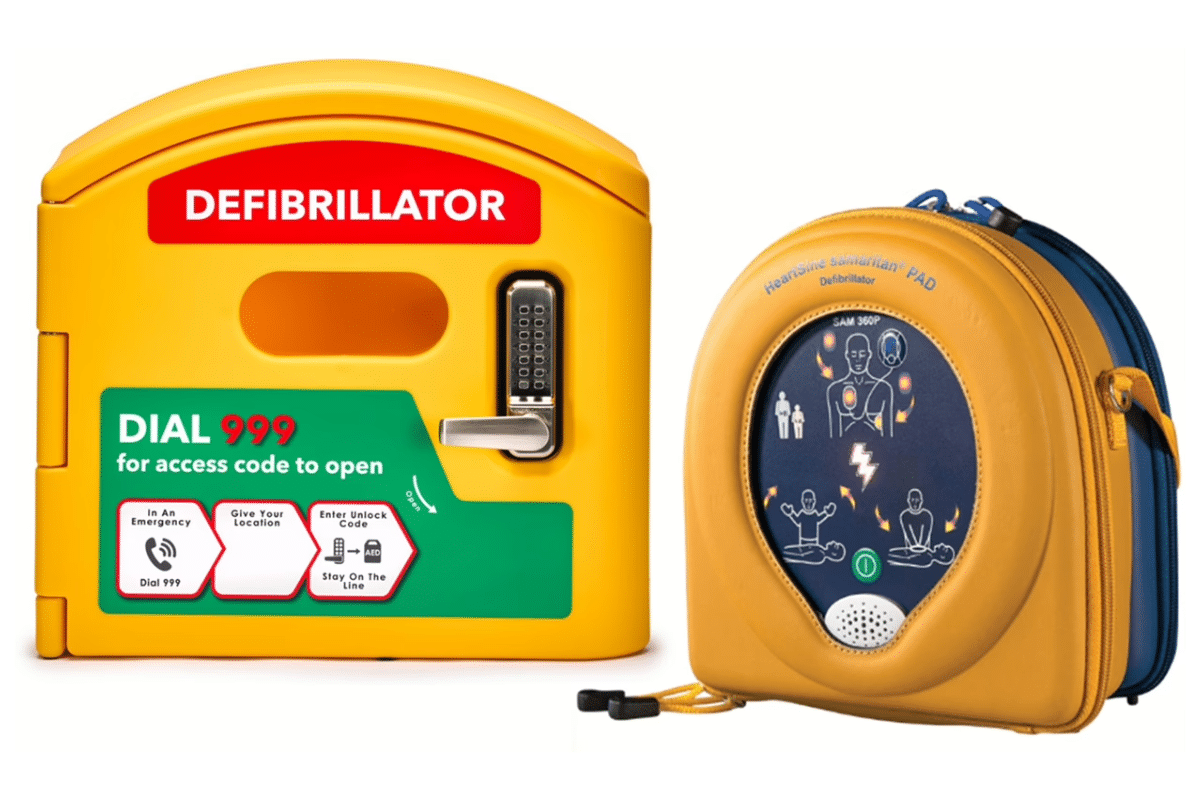
Public-access defibrillators should be designed to be intuitive, durable, and highly dependable, ensuring that even individuals with no prior training can effectively operate them during emergencies. Their user-friendly interface, robust construction, and reliable performance are crucial features that can make a significant difference in saving lives when every second counts.
Below are trusted, community-friendly options available through Defib World:
Mindray Defibrillators
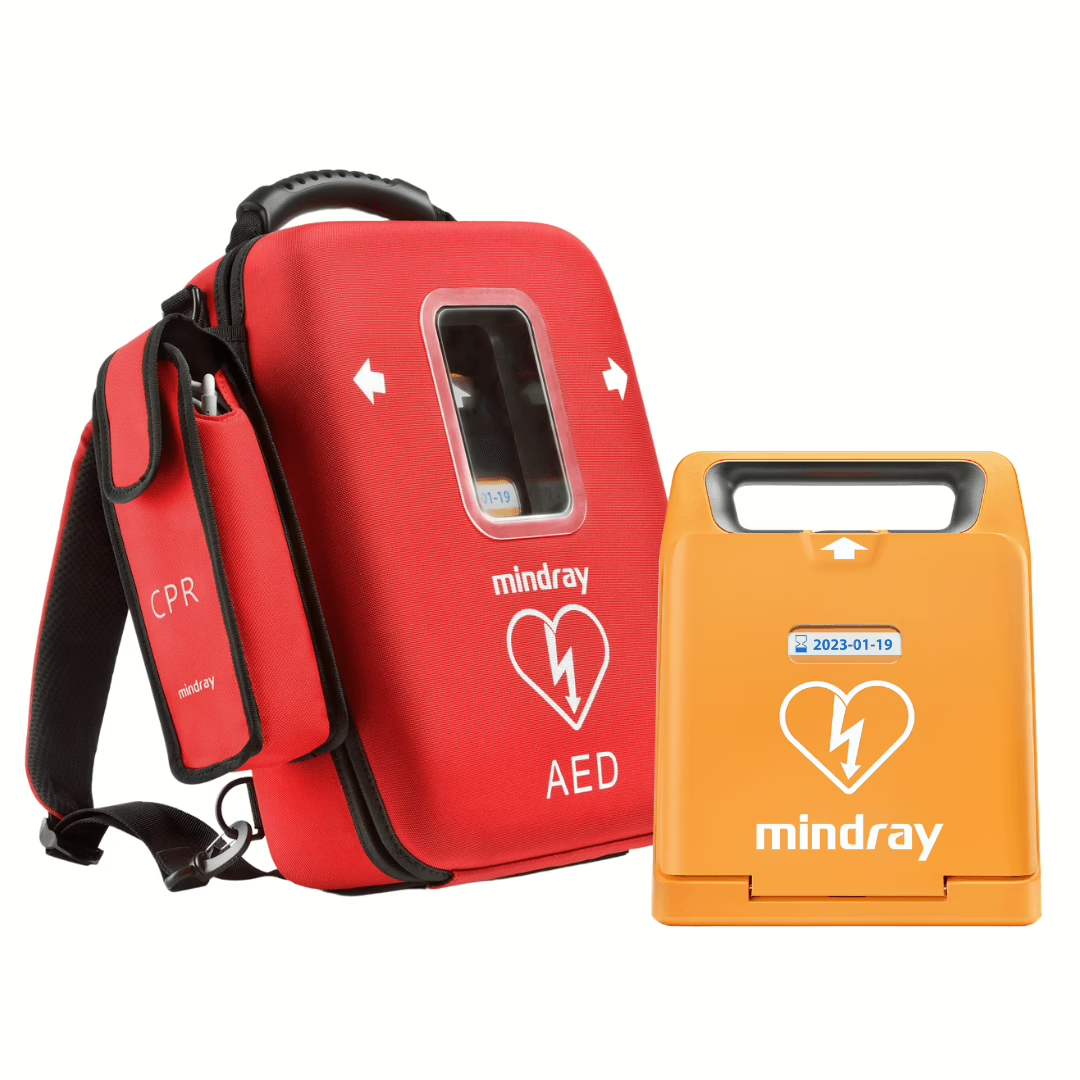
- Mindray C1A Fully Automatic: delivers a shock automatically for speed and simplicity.
- Mindray C1A Semi-Automatic: (Best Seller) – offers control for trained first-aiders.
- Mindray C2 Fully Automatic: advanced diagnostics and data logging, ideal for council or multi-site networks.
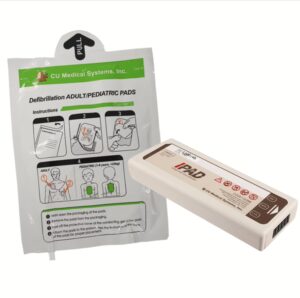
CU Medical Systems (iPAD)
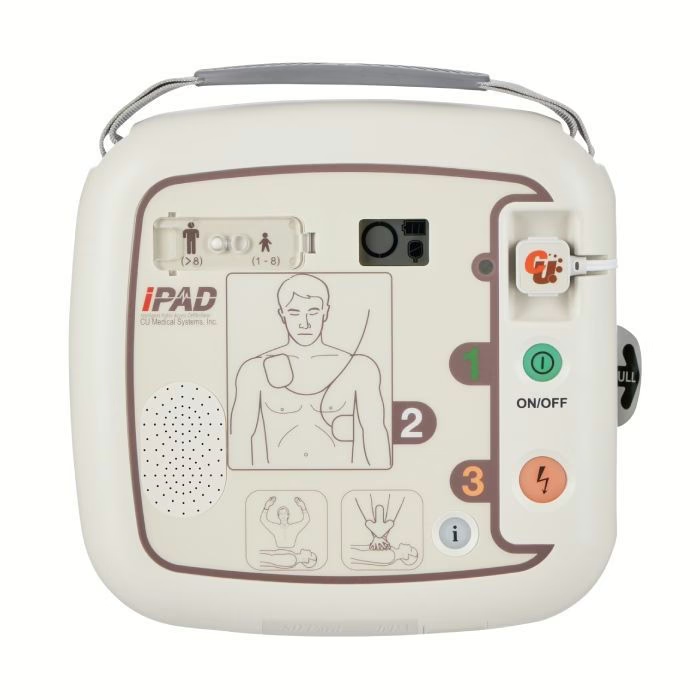
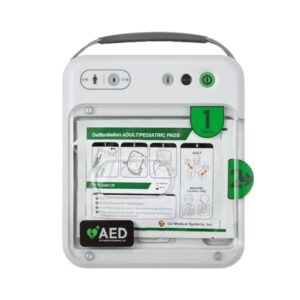
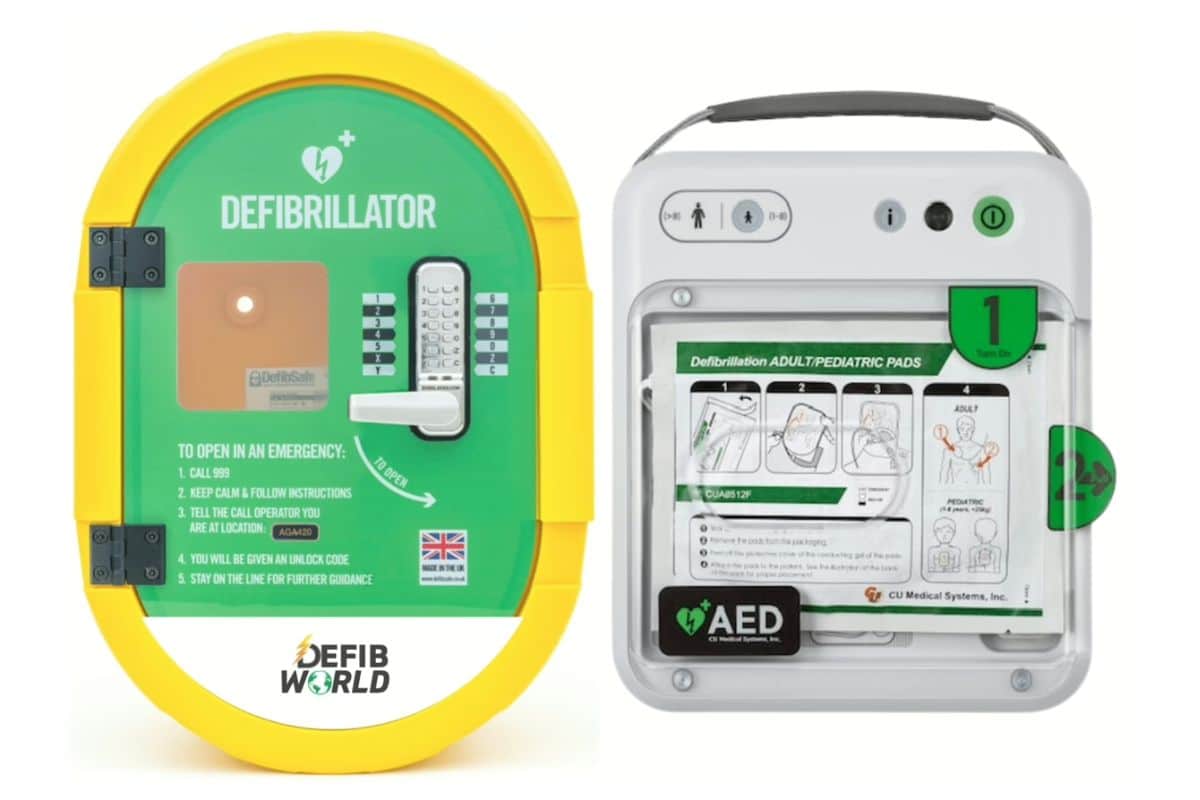
- iPAD SP1 Fully Automatic: straightforward prompts; excellent for high-footfall community venues.
- iPAD NFK200 Semi-Automatic: durable and easy to maintain; used in local council schemes nationwide.
HeartSine Defibrillators
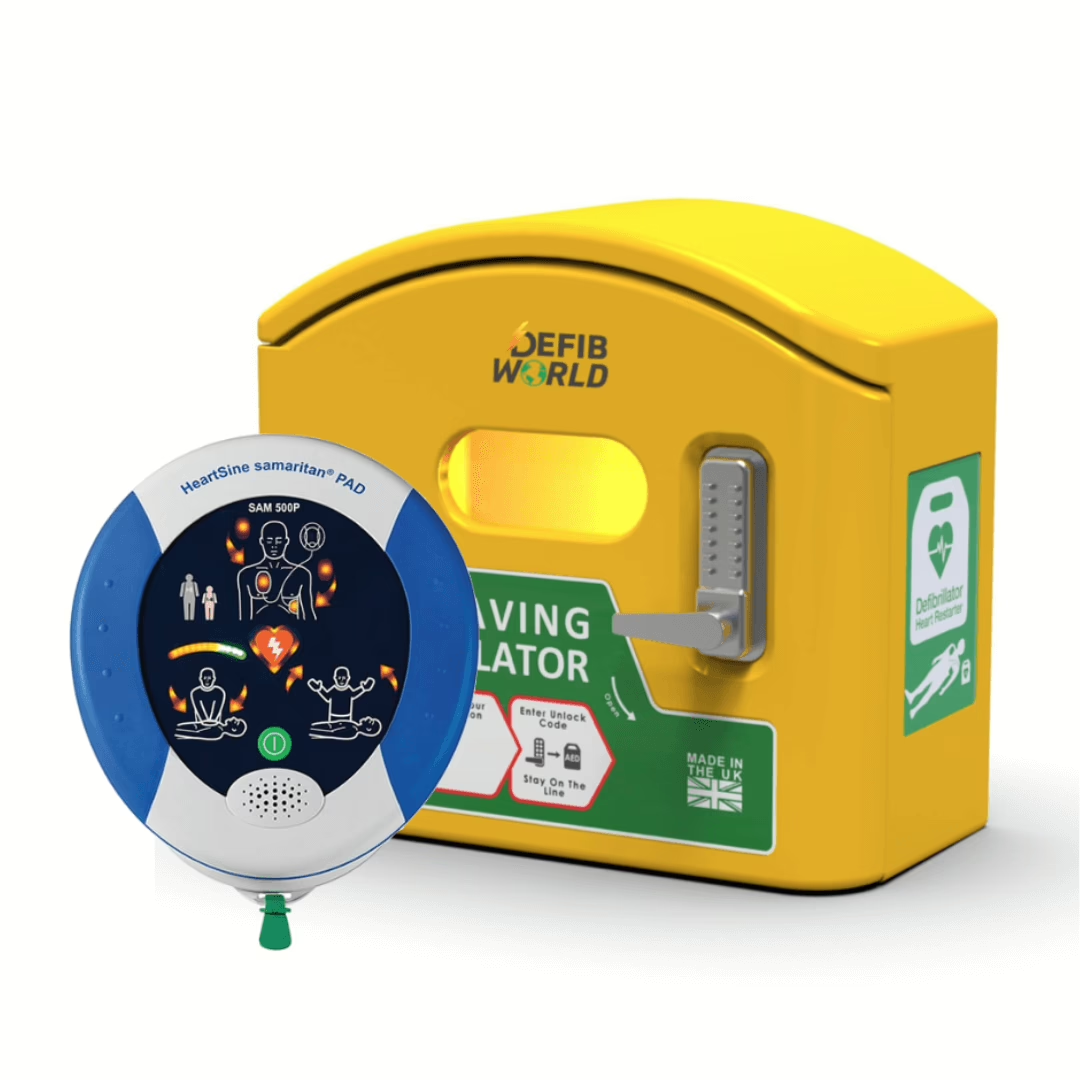
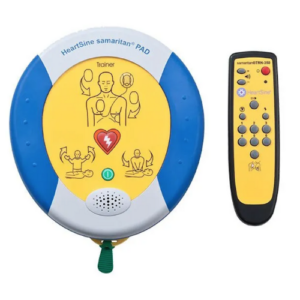
- HeartSine Samaritan PAD 350P Semi-Automatic Defibrillator: Easily accessible and reliable
- HeartSine Samaritan PAD 360P Fully-Auto AED: Easy to carry, transport and use
Each model above is UK-compliant, features self-testing diagnostics, and is supported with parts and training through Defib World.
Training and Community Engagement
To improve training and awareness, it is essential to recognise that confidence motivates action. Studies show bystanders are significantly more likely to intervene when they feel competent, even without formal certification. Providing free local CPR and AED awareness sessions every 6-12 months can support this, along with encouraging participants to share knowledge across workplaces and social groups.
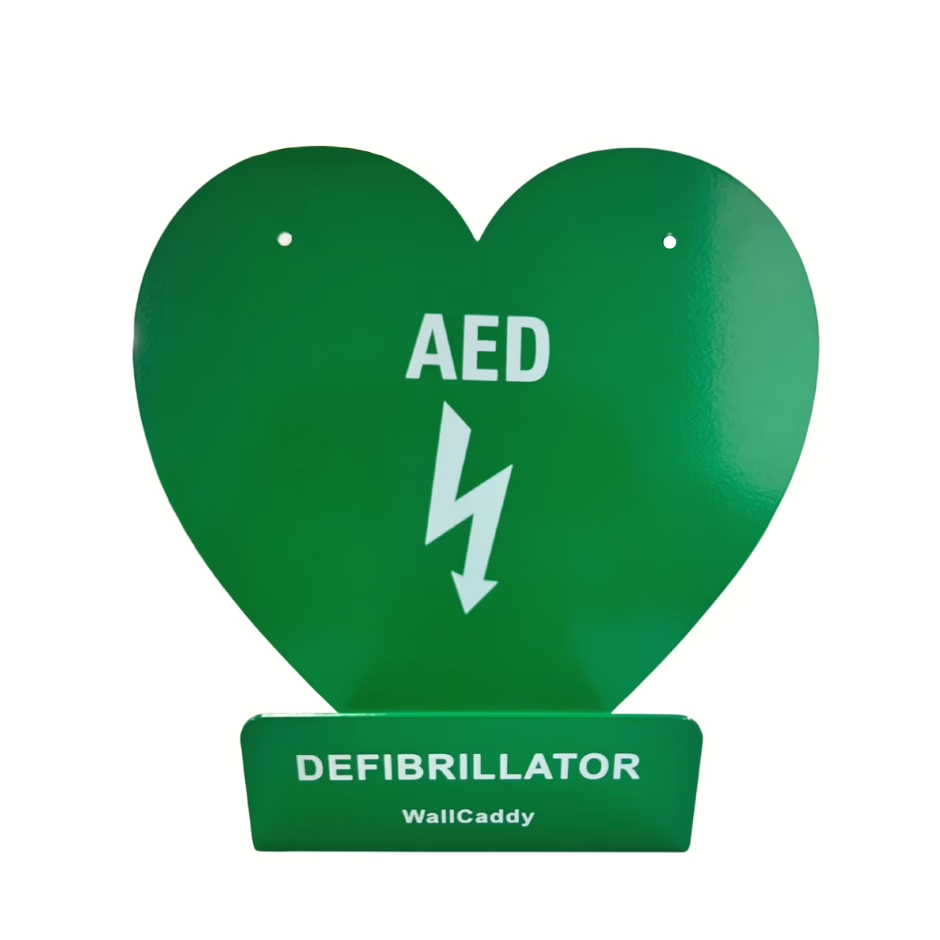
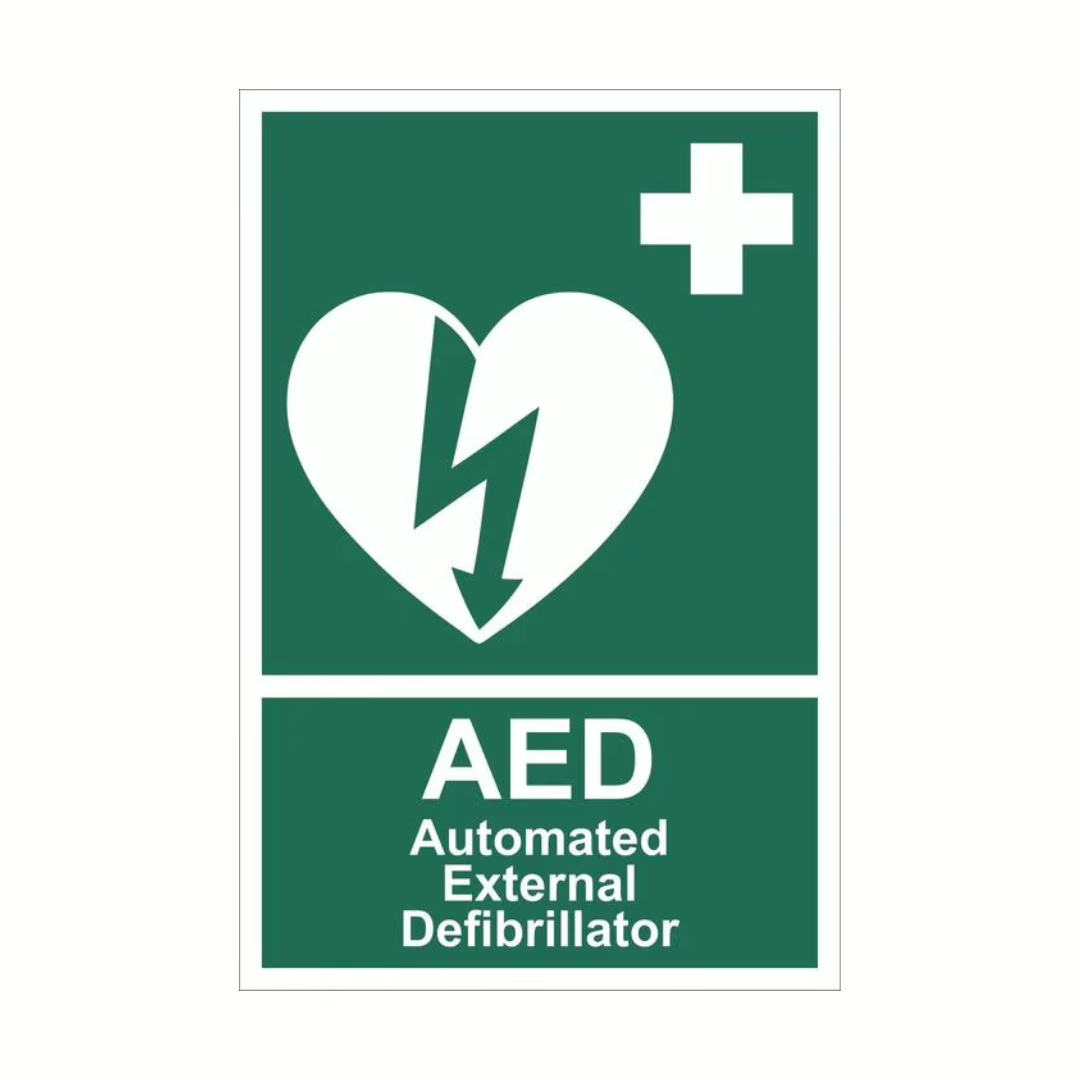
Promoting AED locations online and on local noticeboards improves accessibility. Adding visible signage such as “AED Available Here” helps normalise these devices’ presence, while hosting “Heart-Safe Community Days” with live demonstrations and media coverage can further increase awareness and community involvement.
Long-Term Care: Maintenance and Sustainability
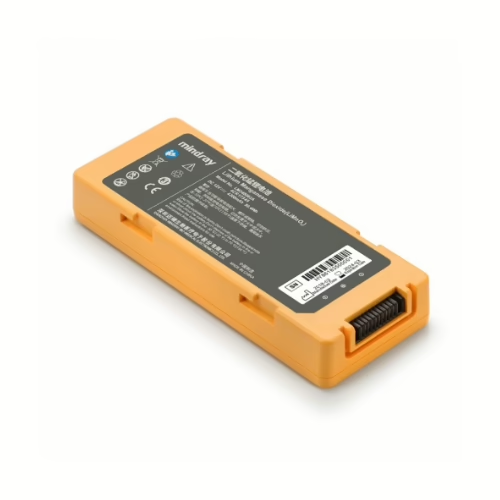
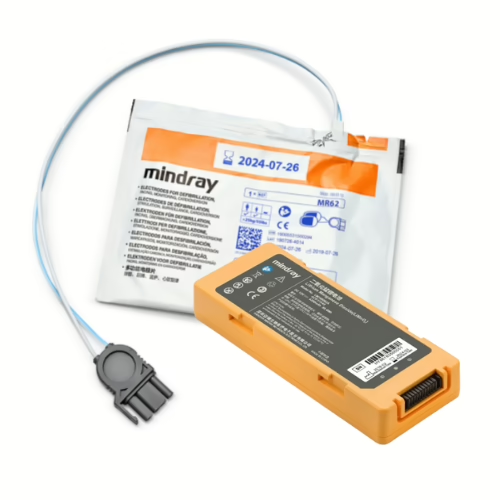
Installing AEDs is just the start – maintaining them ensures reliability when it matters most. Routine checks should be conducted monthly, including inspecting cabinets, batteries, and pads. Consumables such as pads and batteries need to be replaced before expiry, typically every 2–5 years.
For effective record-keeping, use a shared logbook or cloud-based tool so multiple volunteers can document inspections. Modern AEDs often come with remote monitoring or mobile app connectivity to alert users about battery or pad expiry.
Budget planning is essential, with an annual fund set aside for replacement pads, batteries, and servicing. According to the APPG for Defibrillators Report (2024), sustainable funding remains a significant gap in current community AED schemes.
Additionally, after an AED is used, it’s important to download its event data and inform the ambulance service to ensure quality control and maintain transparency with the public.
Community AED programmes succeed when they combine equipment, engagement, and empowerment. Installing defibrillators alone isn’t enough – they must be visible, functional, registered, and supported by confident local responders.
At Defib World, we provide the expertise, equipment, and support needed to build sustainable AED networks using reliable models from Mindray, CU Medical Systems, and Schiller.
Order online today or contact our friendly team for tailored guidance on building your community’s life-saving network.