














































.jpg)


The reason people go to the gym is to improve their health, strength, and well-being, but with increased physical exertion comes an important responsibility of being prepared for medical emergencies.
A critical emergency that can happen at the gym is sudden cardiac arrest. While it’s rare, it can happen to anyone regardless of age, fitness level, or experience. That’s why having a defibrillator at the gym is not just a precaution, but a potentially life-saving investment.
In this guide, we explore whether gyms are required to have a defibrillator, why they should strongly consider one, and how the right equipment can make all the difference when every second counts.
Are Gyms Required to Have a Defibrillator?
No. In the UK, there is currently no universal legal requirement for public spaces, including gyms, to have a defibrillator.
However, health and safety regulations require businesses, including gyms, to assess risks and take reasonable steps to protect staff and visitors.
Due to the increased strain on the heart during exercise, many gyms choose to install a defibrillator, and it is seen as best practice.
If you’d like to offer a defibrillator at your gym, explore our range today.
Why Do People Get Cardiac Arrest in the Gym?
Exercising is one of the best ways to maintain heart health, but intense physical activity can also place temporary strain on the heart, particularly in individuals with underlying conditions.
Sudden cardiac arrest can occur without warning. In gym environments, this risk is heightened due to high-intensity workouts, increased heart rate and blood pressure, and undiagnosed heart conditions.
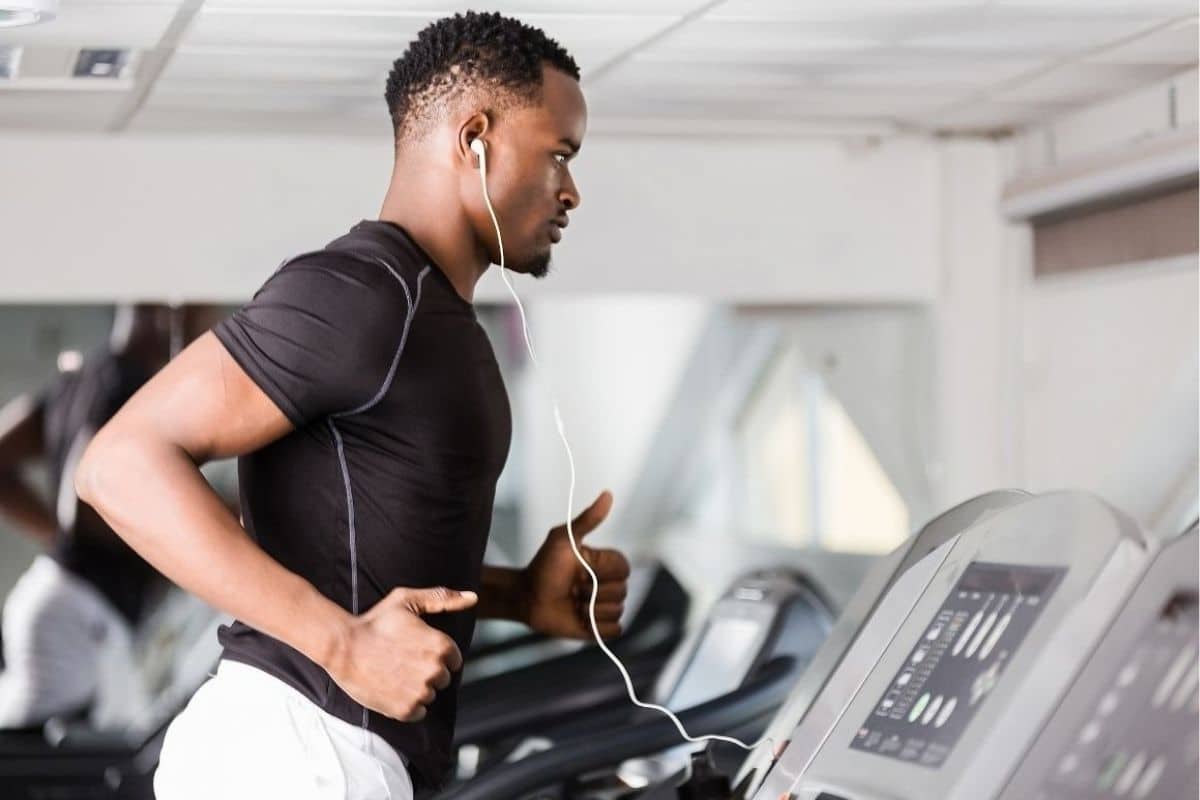 People get cardiac arrest in the gym due to the intense physical activity putting strain on the heart.
While the overall risk is low, the consequences are severe, which is why it’s best to be prepared. Defibrillation within 3–5 minutes of collapse can produce survival rates up to 50–70%, so it’s vital to have a defibrillator nearby.
4 Reasons Why Every Gym Should Invest in a Defibrillator
There are several key reasons why every gym should have a defibrillator on site, including:
1. Protect Members & Staff
Your gym members and staff place trust in you to provide a safe and supportive environment where they can focus on their health and wellbeing.
While gyms are designed to improve fitness, they also carry inherent cardiac arrest risks due to physical exertion.
Having a defibrillator on site demonstrates a proactive approach to safety, helping to protect both members and staff and ensuring that immediate action can be taken when every second counts.
2. Improve Survival Outcomes
Defibrillators increase survival outcomes significantly when they are used within the first few minutes of a cardiac arrest. Each minute of delay reduces the probability of survival to hospital discharge by 10%, so it’s crucial to use one as quickly as possible.
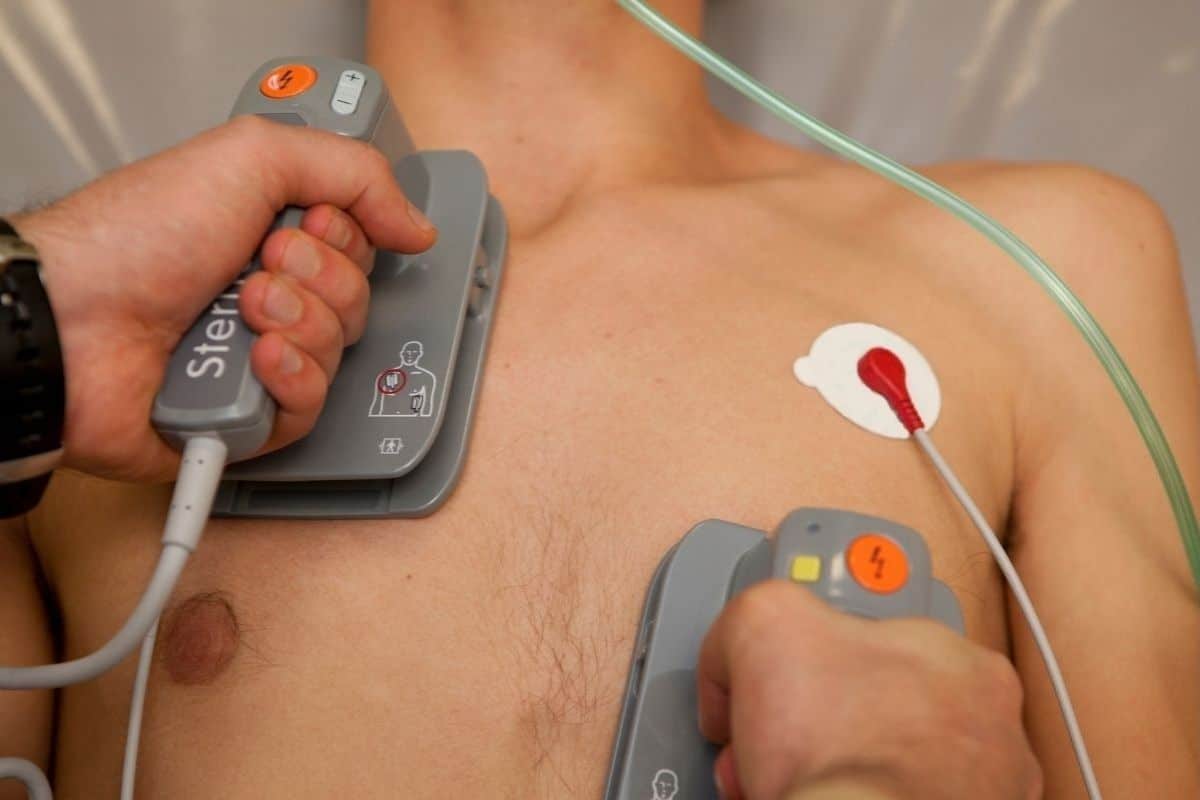 Each minute defibrillation is delayed reduces the chance of survival by 10%, so it’s crucial to have one nearby.
In a gym setting, where staff and members are typically nearby, immediate access to an automated external defibrillator (AED) allows for rapid intervention before emergency services arrive.
3. Boost Confidence & Reputation
When potential clients are deciding whether to choose your gym, one of the key factors they’ll consider is your health, safety, and well-being standards.
Nowadays, customers expect facilities to take appropriate measures to protect their members. Having a clearly visible defibrillator on site provides reassurance that your gym takes safety seriously.
This increases your members’ confidence and also enhances your reputation as a responsible and professional organisation. In a competitive industry, demonstrating a commitment to safety can set your gym apart and build trust with both current and prospective members.
4. Simple to Use
Modern defibrillators are simple to use as they’re specifically designed for use by members of the public, even in high-pressure situations.
They provide clear step-by-step voice instructions and visual guidance, helping users place the pads correctly and follow the process with confidence.
The device automatically analyses the heart rhythm and will only deliver a shock if it is necessary, so there’s no need to worry about delivering too many shocks. This means that staff, and even gym members, can use a defibrillator effectively in an emergency, regardless of whether they’ve had prior training.
Choosing the Right Defibrillator for Your Gym
If you’re struggling to choose the right defibrillator for your gym, we’ve compiled a list of our top recommendations:
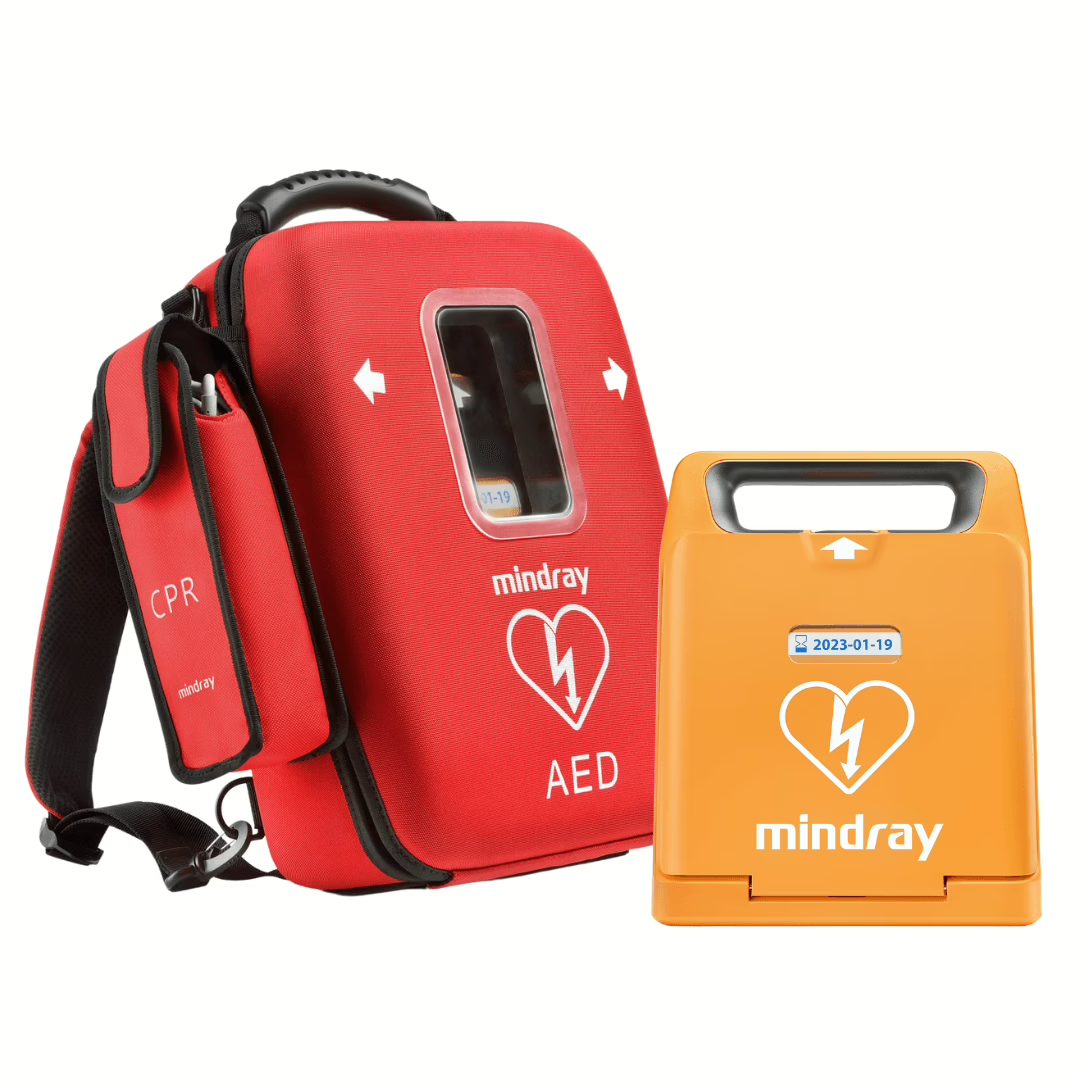
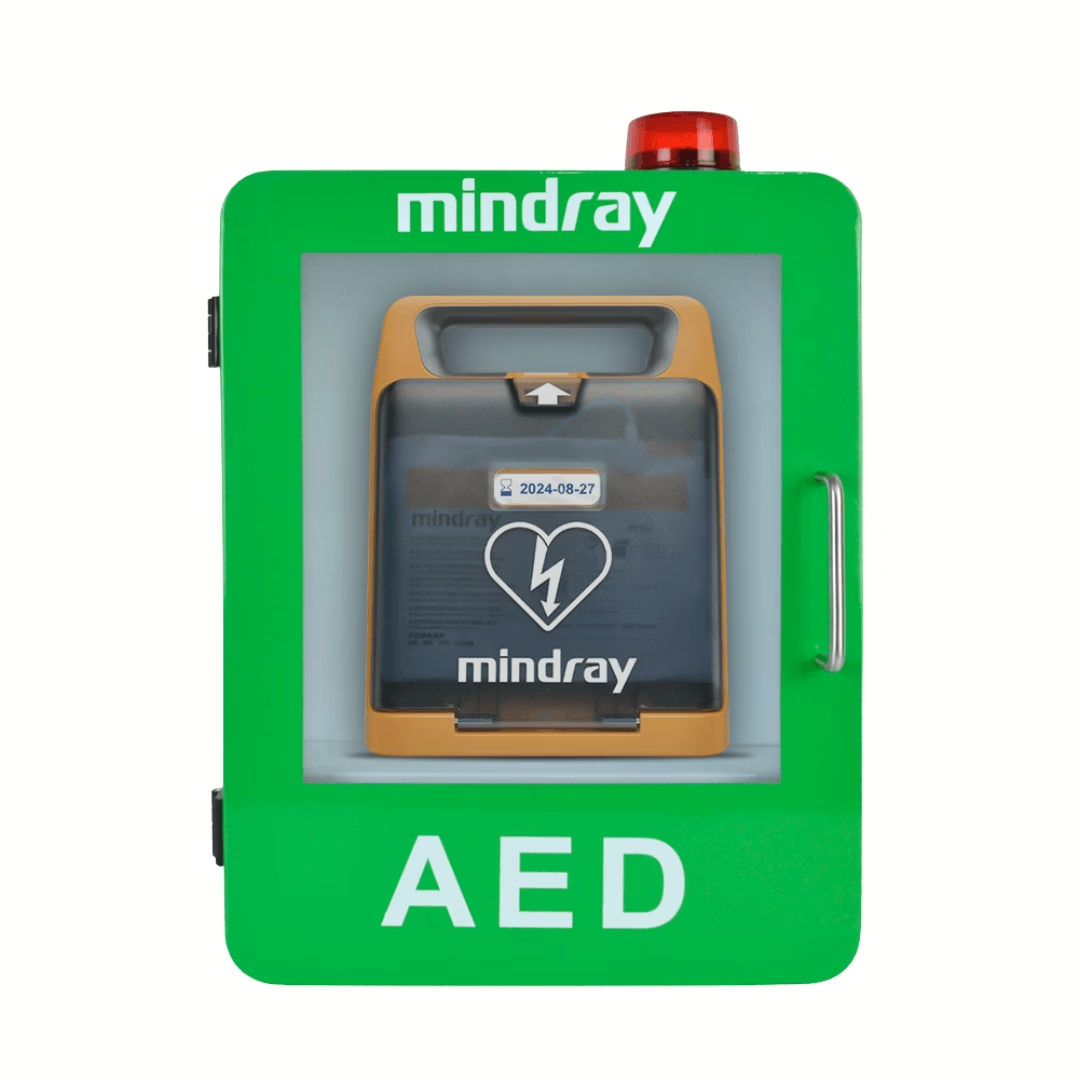
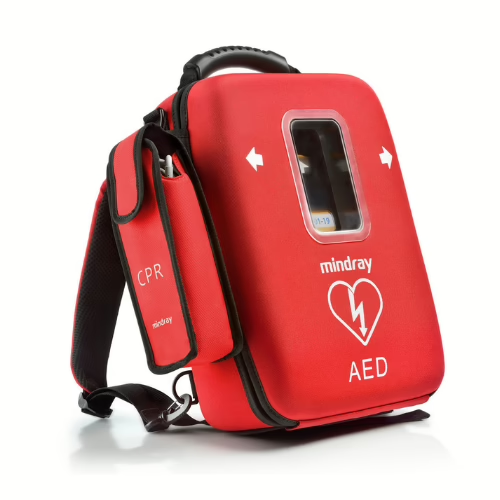
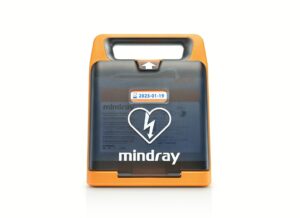
C2 Mindray Semi-Auto Package With AED Alarmed Wall Cabinet
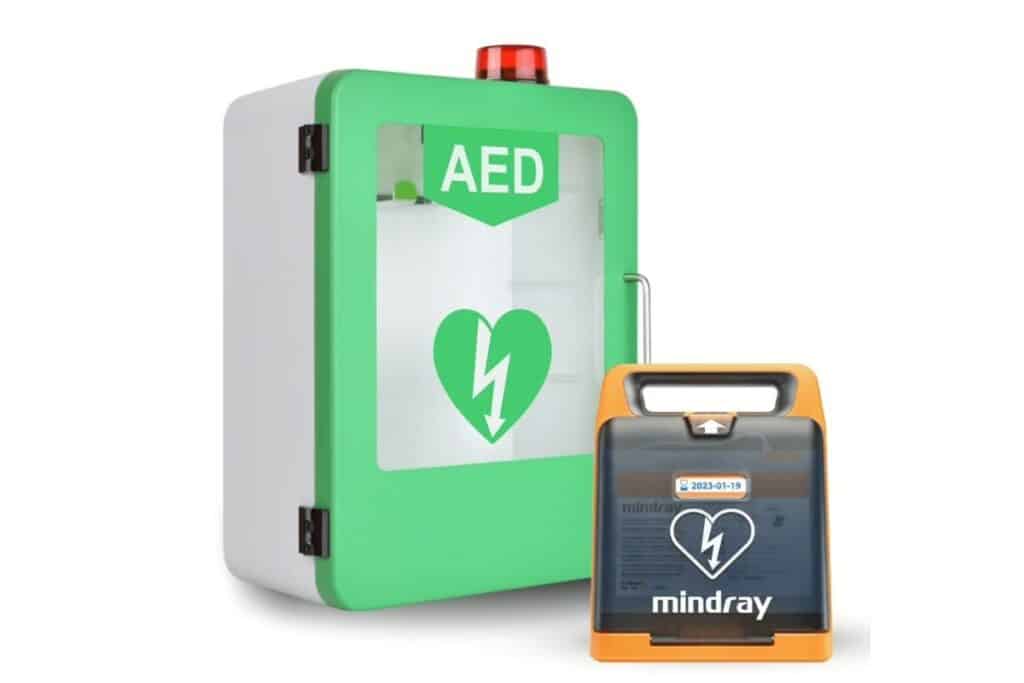
For gym environments, the C2 Mindray Semi-Automatic Indoor AED Package is a highly practical choice, designed specifically for accessible, indoor use.
It combines the Mindray C2 semi-automatic defibrillator with a highly visible, alarmed wall cabinet, ensuring the device is both easy to locate and quick to access during an emergency. Semi-automatic defibrillators automatically analyse the patient’s heart rhythm but require the user to press a button to deliver the shock.
The defibrillator itself is suitable for both trained staff and untrained gym members, offering clear voice prompts, a full-colour screen with visual CPR guidance, and pre-connected pads to reduce delays when every second matters.
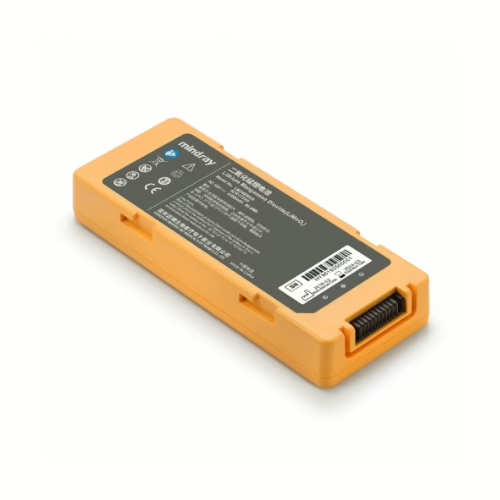
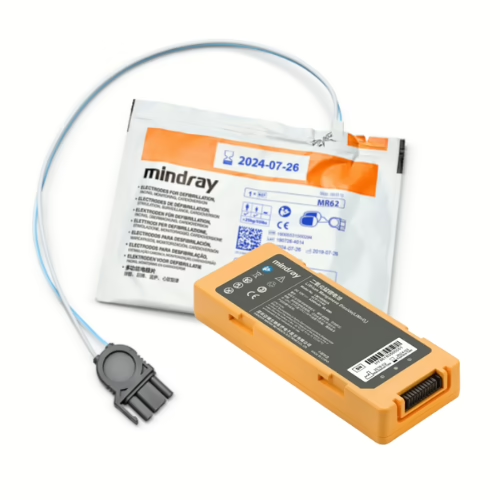
It also has long-life batteries and pads too, making it a reliable choice for busy fitness environments.
DefibWorld Schiller FRED PA-1 AED Indoor Package
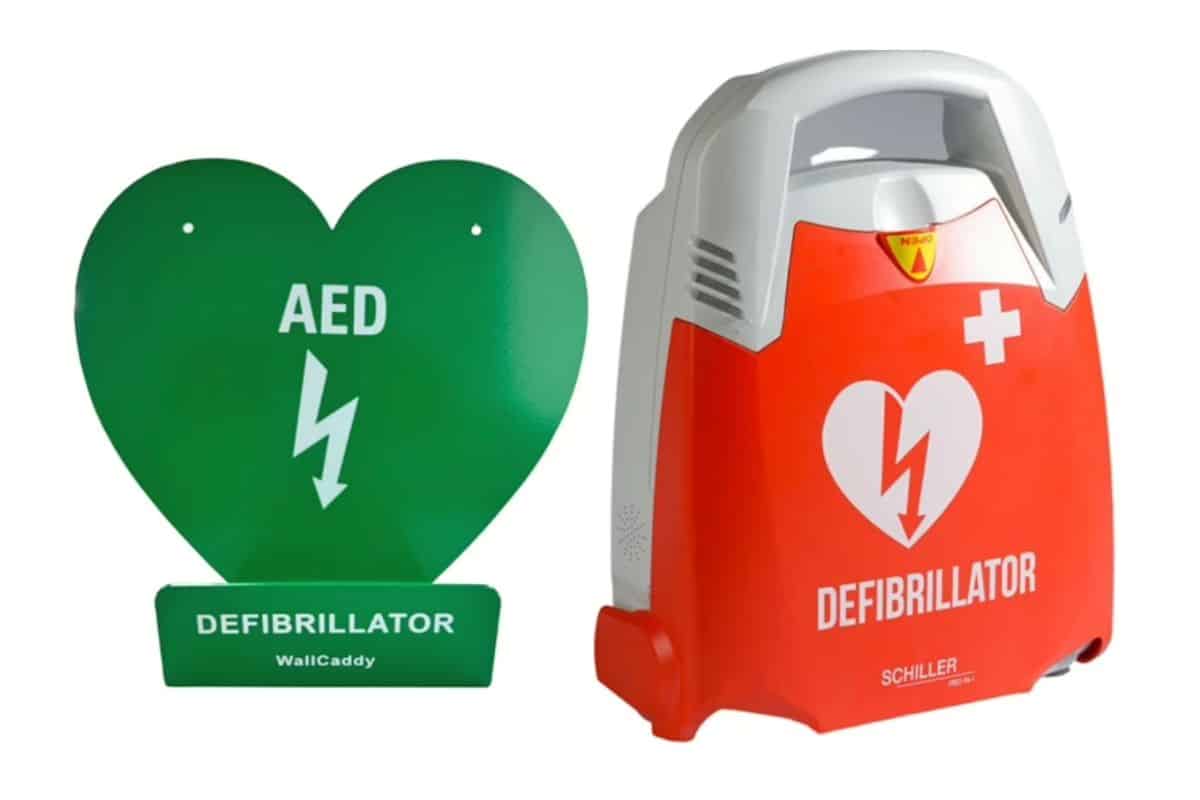
This package includes the SCHILLER FRED PA-1 AED, which is a highly reliable and user-friendly defibrillator that supports fast, confident action in an emergency.
It begins guiding the rescuer as soon as the device is opened, with simple step-by-step instructions. Its intuitive interface provides a clear “1-2-3” process, which helps reduce hesitation in high-pressure situations, ensuring treatment can begin quickly. It further has features like pre-connected electrodes, automatic self-testing to ensure readiness, and optional CPR feedback support.
The package includes an indoor cabinet, keeping the defibrillator visible and protected.
Philips Heartstart FRx Defibrillator Indoor Package
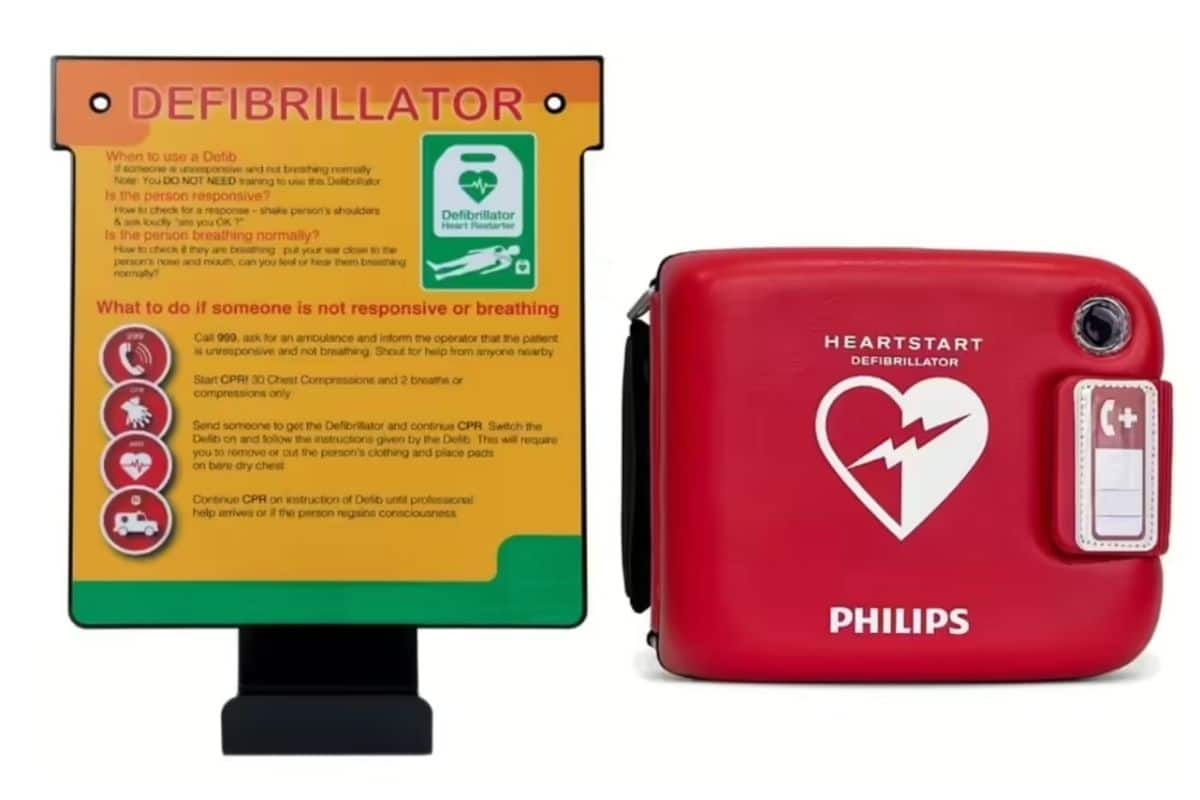
The Phillips Heartstart FRx Defibrillator features preconnected SMART Pads II that can be used on both adults and children, making its use quicker as it’s not necessary to switch pads for younger members.
It further has flashing icons to indicate electrode pad placement on the patient, reducing uncertainty, and it’s able to deliver a shock within 8 seconds, following a CPR pause.
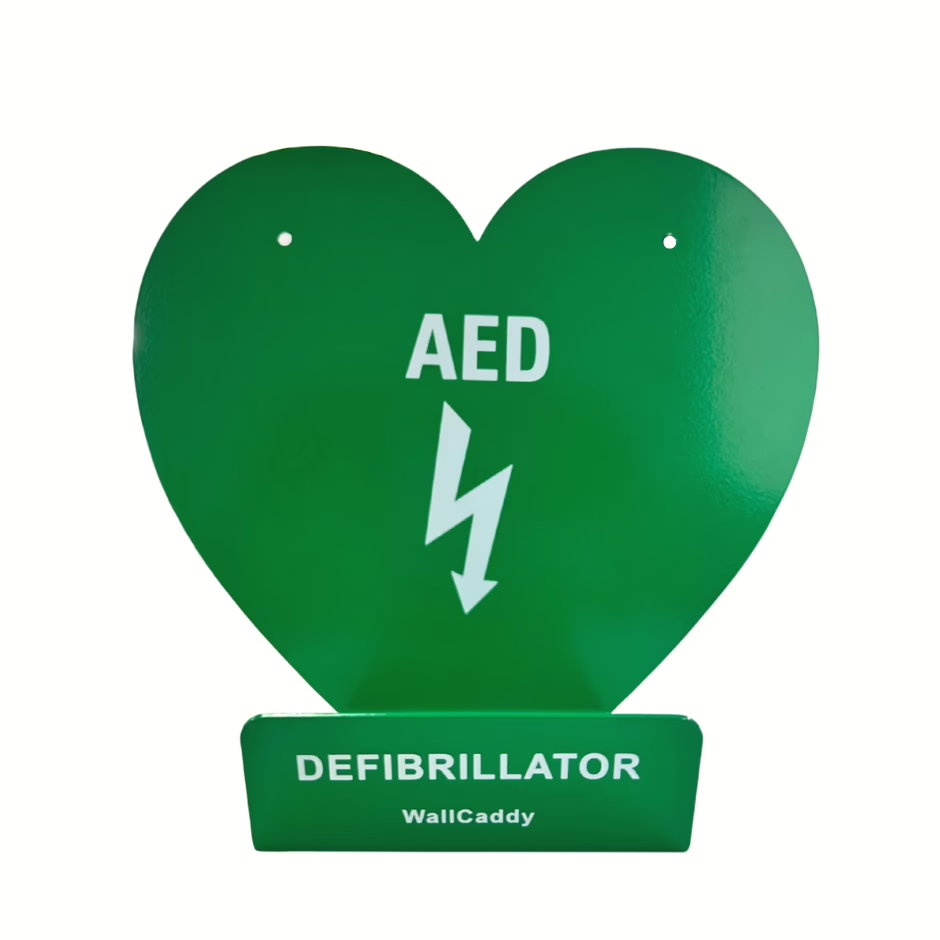
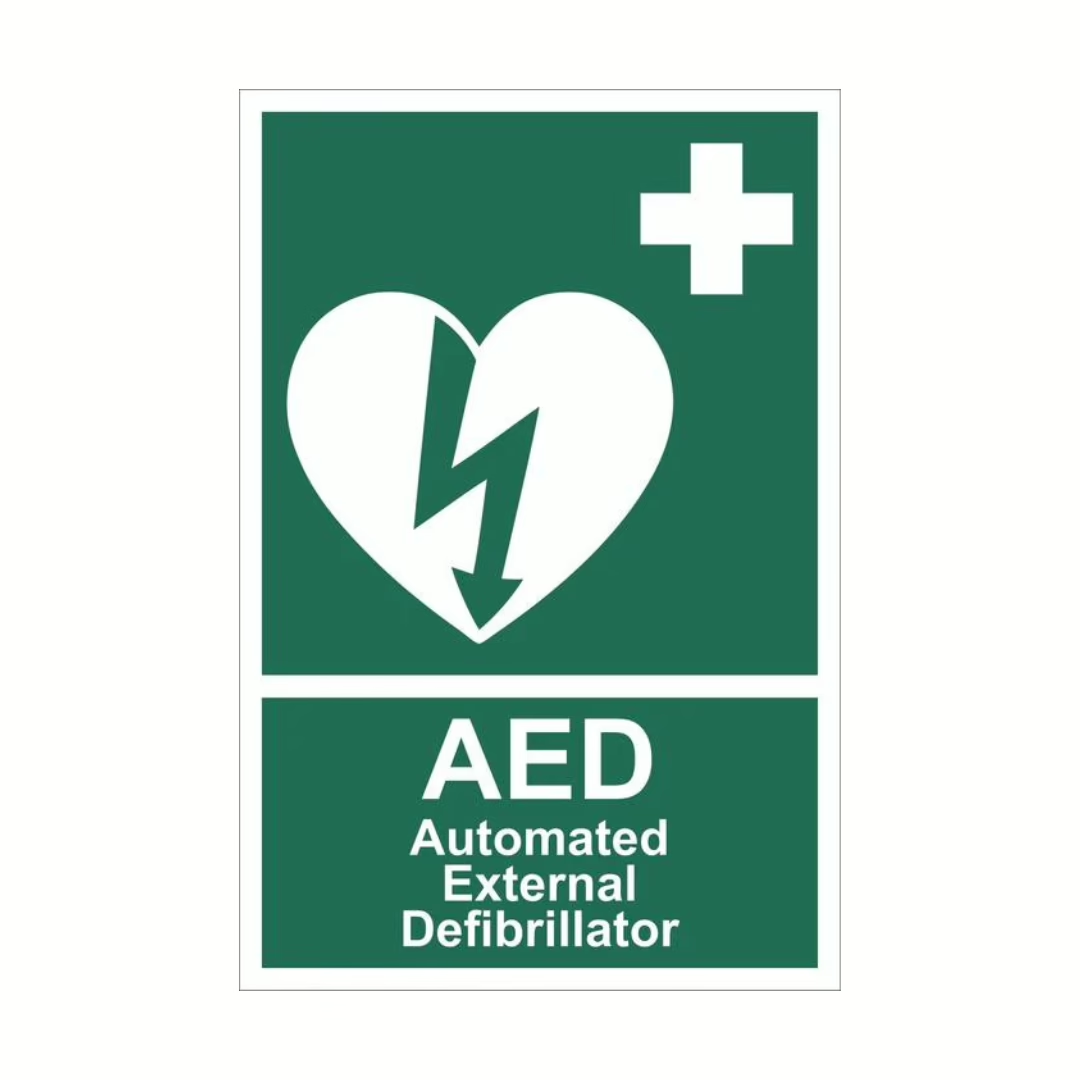
A universal wall bracket with basic instructions and a defibrillator wall sticker is included in this package to make its location clear.
Ready to Include a Defibrillator at Your Gym?
We hope this guide has clarified why offering a defibrillator at your gym is so crucial for the safety of your staff and members.
At Defib World, we support gyms, fitness centres, and sports facilities in choosing reliable, easy-to-use defibrillators designed for real-world emergencies.
Whether you’re setting up a new gym or upgrading your safety equipment, our range of trusted AEDs helps ensure you’re ready when it matters most.
Explore our defibrillator range today, and don’t be afraid to contact us for support with making your choice.