



































.jpg)


The Benefits of Defibrillator Training Equipment
When someone experiences sudden cardiac arrest, every second counts. Immediate defibrillation with an on-site automated external defibrillator can significantly increase the chance of survival, with survival rates rising to 50%–74% when defibrillation occurs promptly.
Although AEDs are designed for anyone to use, those trained in CPR and AEDs reported a marked increase in readiness: 69% feel well-prepared, 63% feel confident, and nearly half are comforted knowing they can take decisive action when seconds matter most.
This increased self-assurance can lead to quicker and more effective responses, potentially improving survival outcomes.
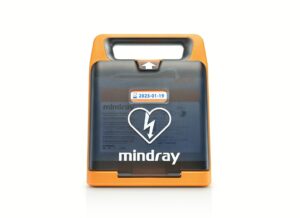
Products like the Mindray C2 Training Defibrillator are instrumental here, as they help individuals to gain hands-on experience in a safe, controlled environment.
Instructors can use defibrillator training kits to create realistic scenarios that build skills, speed and self-assurance, making trainees ready to respond when an emergency occurs.
We’ll explore the benefits of defibrillator training equipment in more detail below, including what to look for when selecting a training defibrillator unit for an emergency response program.
Advantages of Defibrillator Training Equipment
Defibrillator training equipment has several advantages in defibrillator training.
1. Maximising AED Effectiveness
AED simulators allow trainees to practice using a defibrillator safely and accurately. While AEDs are designed to guide untrained users, using a training device helps participants master critical steps, such as electrode pad placement and timing.
Repeating these actions in a controlled environment helps trainees gain confidence, enabling them to operate a genuine device to its full potential during an emergency. All this can improve the chances of saving a life.
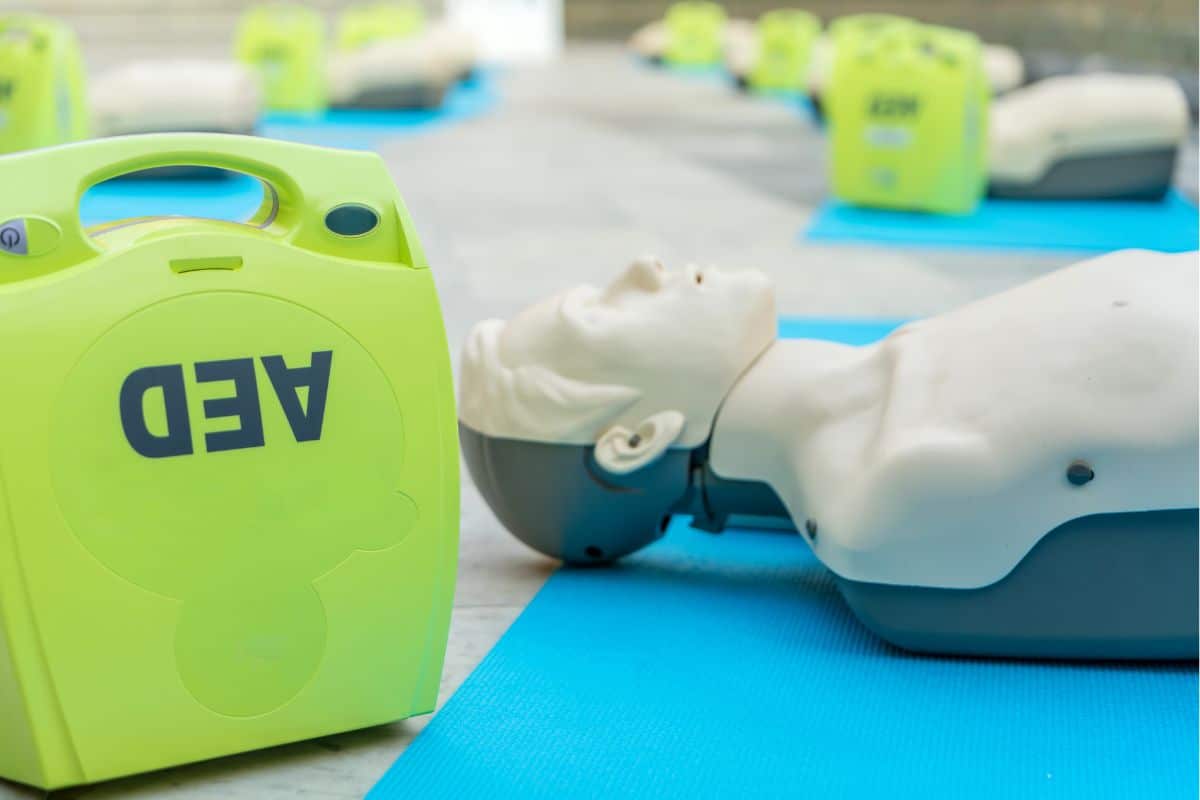
While AEDs are designed to guide untrained users, using a training device helps participants master critical steps, such as electrode pad placement and timing.
2. Mastering Vital CPR Skills
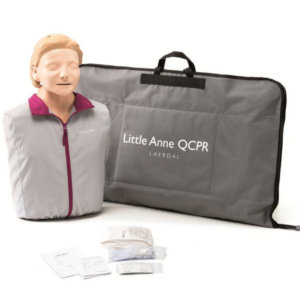
High-quality training devices often pair defibrillator simulation with hands-on CPR practice. Trainees learn how to coordinate compressions with AED use, maintaining blood flow to vital organs until professional help arrives.
With realistic feedback from training devices, learners develop the muscle memory and timing required for effective CPR, turning theoretical knowledge into practical, life-saving skills.
3. Coordinating an Effective Emergency Response
Beyond technical operation, training equipment allows instructors to simulate authentic scenarios, helping trainees learn to manage the entire emergency.
This includes directing bystanders, communicating with emergency services, and making quick, efficient decisions. Practising with training devices can turn a chaotic, high-pressure situation into coordinated, life-saving action.
What to Look for in Defibrillator Training Equipment
When selecting defibrillator training devices for first aid courses, workplace safety programs, or emergency response training, it’s important to choose equipment that is safe, lifelike, and versatile.
Here are the key features to consider:
1. Realistic Training Simulation
An advanced trainer should mirror the functions of a real defibrillator (apart from the shock), including voice prompts, pad placement cues, and operational steps. This ensures that trainees experience authentic AED use, preparing them for any scenario.
A prime example is the Mindray C2 Training Defibrillator, which faithfully replicates the operation of the live Mindray C2 AED.
Using a defibrillator trainer that mirrors an AED already in use at your facility allows trainees to practice with a device they will actually encounter, making training more relevant, familiar, and effective.
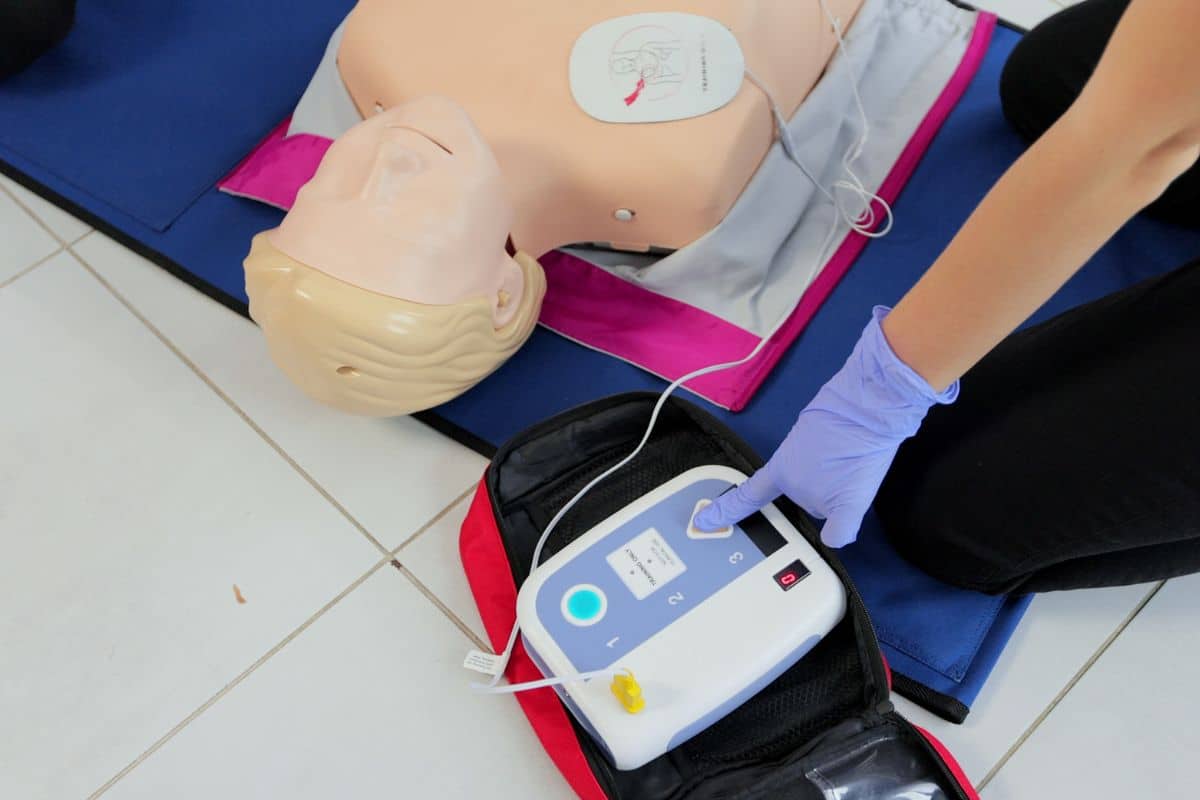
An advanced trainer should mirror the functions of a real defibrillator (apart from the shock), including voice prompts, pad placement cues, and operational steps.
2. Instructor Control
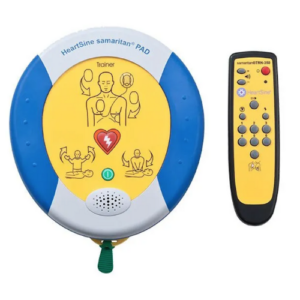
Look for a defibrillator trainer that offers a remote control for instructors. This allows trainers to adjust scenarios in real time, creating dynamic rescue conditions for trainees.
Your trainer remote control should:
- Pause and resume simulations at any point, allowing for teaching moments or corrections.
- Modify settings mid-scenario to replicate different emergency conditions.
- Guide trainees safely while maintaining control over the learning experience.
These capabilities help trainers create realistic, responsive learning environments, helping trainees build skill and confidence under a variety of conditions.
3. Reusable Training Pads
Reusable training pads are a key feature of premium training equipment. Unlike real AED pads, which are single-use to ensure safety, proper adhesion, and effective shock delivery, training pads are designed to be used repeatedly.
Reusable training pads are a cost-effective solution for repeated practice sessions. They allow multiple participants to train without the need to replace components after each session.
They’re also made from materials designed to withstand frequent handling, cleaning, and repositioning, making them suitable for repeated use by many participants.
Who Should Consider Defibrillator Training?
While anyone can use an AED in an emergency, certain individuals are more likely to be the first responders in situations involving sudden cardiac arrest.
These people often work in public-facing roles or environments with large groups of people, such as:
- Workplace safety officers and floor managers
- Gym instructors and physical education teachers
- Railway station, airport, and public transport staff
- School staff and childcare professionals
Even non-professionals can benefit from AED familiarity, which can save lives. Cardiac arrests can occur anywhere. Learning basic AED operation through training courses allows more people to act decisively and potentially save lives.
Professional AED training programs often include structured courses with scenario-based exercises and CPR integration. They also provide guidance on coordinating with emergency services.
Hands-on practice with high-quality training AEDs enhances this experience, helping trainees develop the readiness to respond calmly in real emergencies.
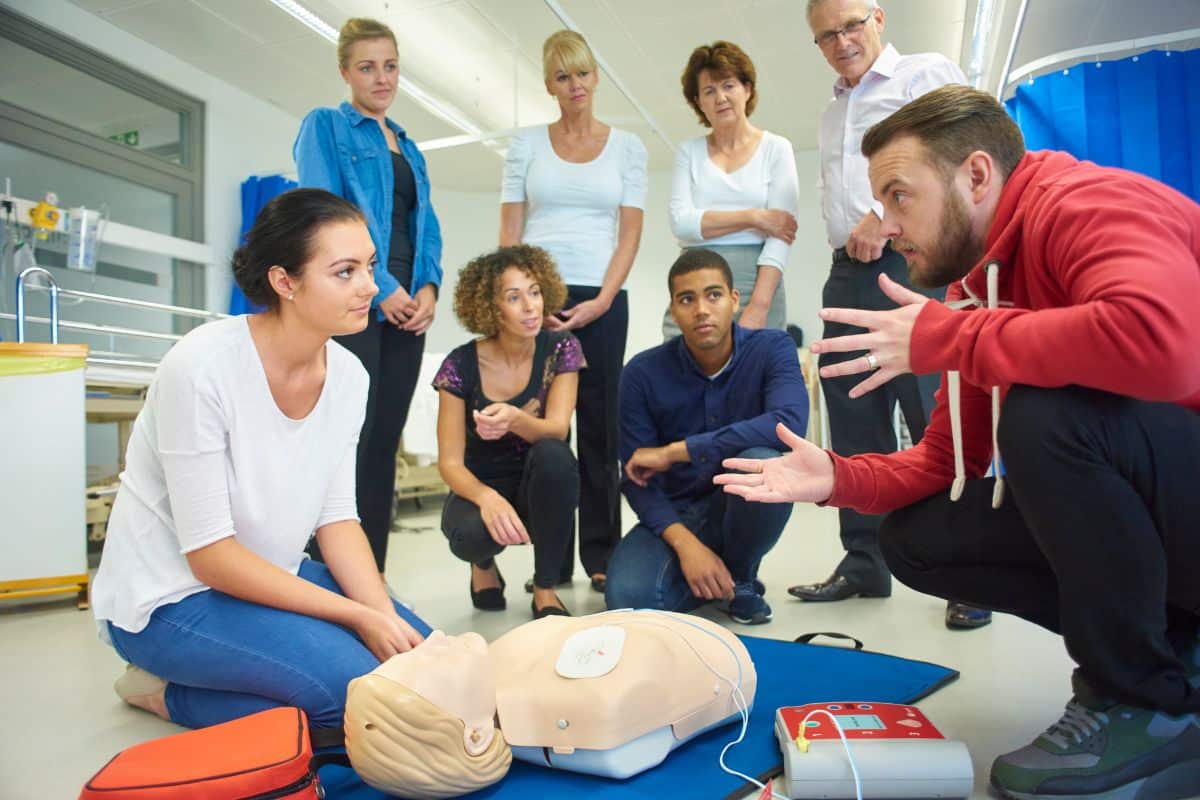
Learning basic AED operation through training courses allows more people to act decisively and potentially save lives.
About Mindray AED Training Equipment
For AED training to be truly effective, participants need devices that closely replicate the operation of an actual AED.
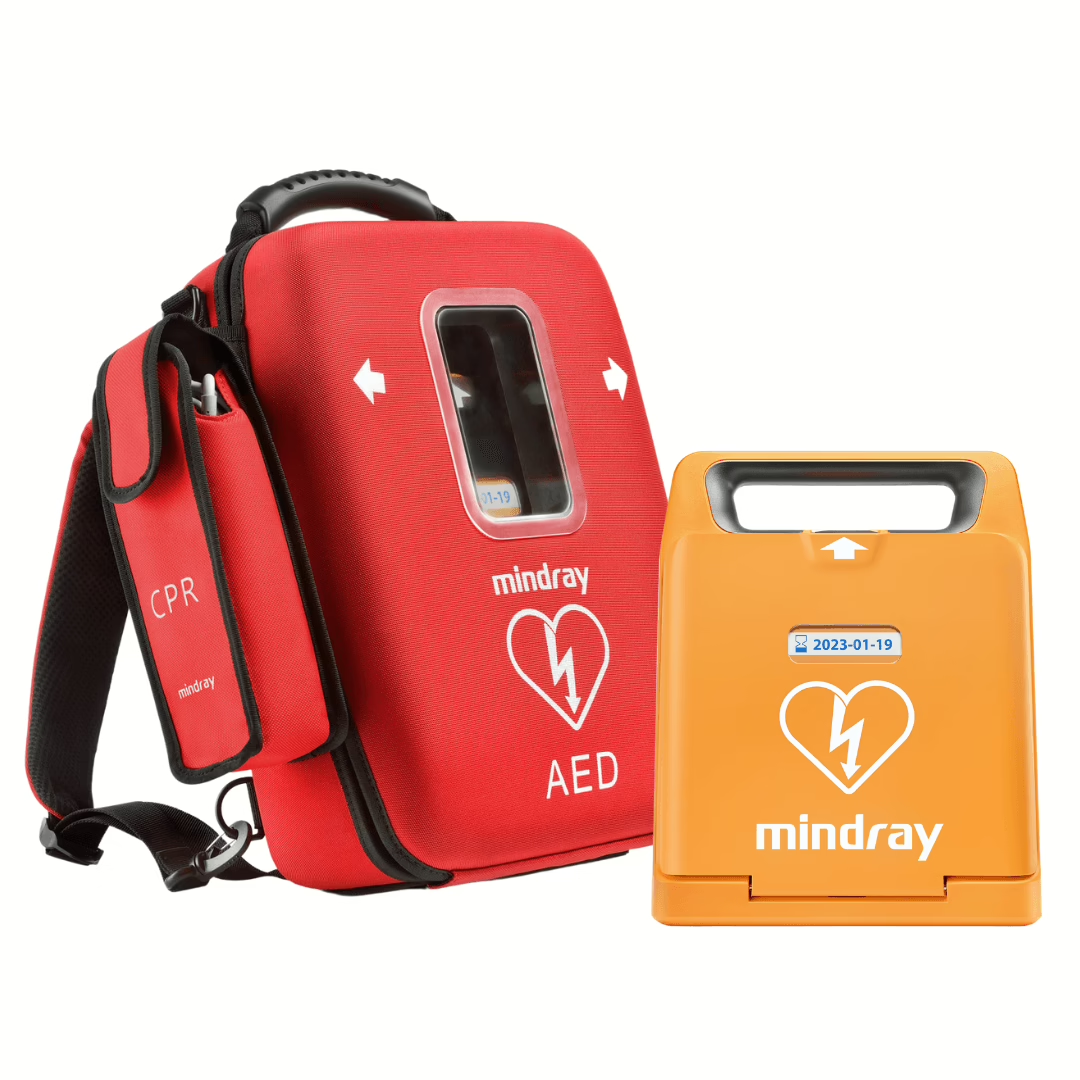
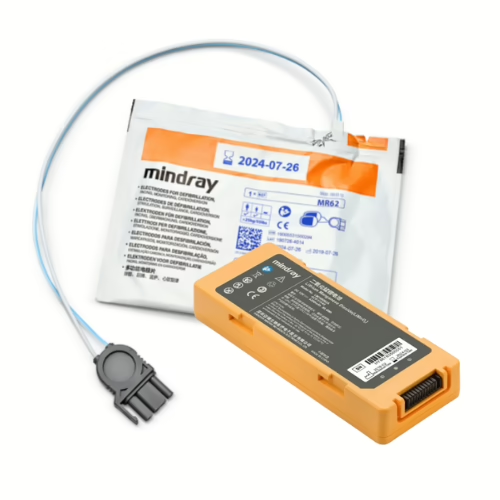
Mindray training kits, including the C1A and C2 Trainer AEDs, provide this level of realism. Each kit includes a trainer AED and reusable training pads, allowing participants to practice multiple scenarios safely.
These kits are designed to mirror the authentic devices in look, feel, and functionality. Voice prompts, visual cues, and step-by-step guidance simulate the same instructions that would appear during an actual cardiac emergency.
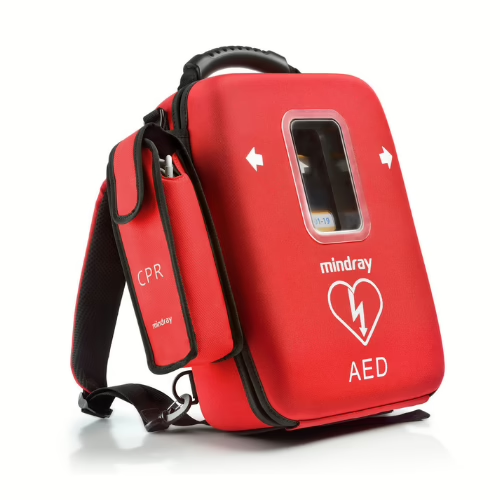
Encased in a durable carry case and thoughtfully designed, Mindray training AEDs can withstand regular classroom or workplace use, allowing you to use the AED simulators repeatedly.
Be Prepared to Respond in an Emergency
Explore our range of training AED devices to equip your workplace, school, or general defibrillator training program.
If you have any questions about AED training equipment or need guidance on the right Mindray trainer for your team, don’t hesitate to call us on 0330 223 6336. Our experts are ready to help.