








































.jpg)


Please remember, if you need assistance or have any questions, call us on 0330 223 6336 or drop us an email at sales@defibworld.org
- Published:9 April 2025
Choosing an automated external defibrillator (AED) isn’t like picking out new office furniture or selecting a coffee machine. It’s a serious decision, one that genuinely determines if someone lives or dies during a cardiac emergency. With dozens of brands and hundreds of options, selecting the best defibrillator isn’t straightforward. You’re here because you’re wondering if a Mindray defibrillator is genuinely superior to others on the market. Let’s take a look at Mindray AEDs, comparing them side-by-side against competitors to see which defibrillator truly stands out when every second counts.
What Makes Mindray AEDs Special?
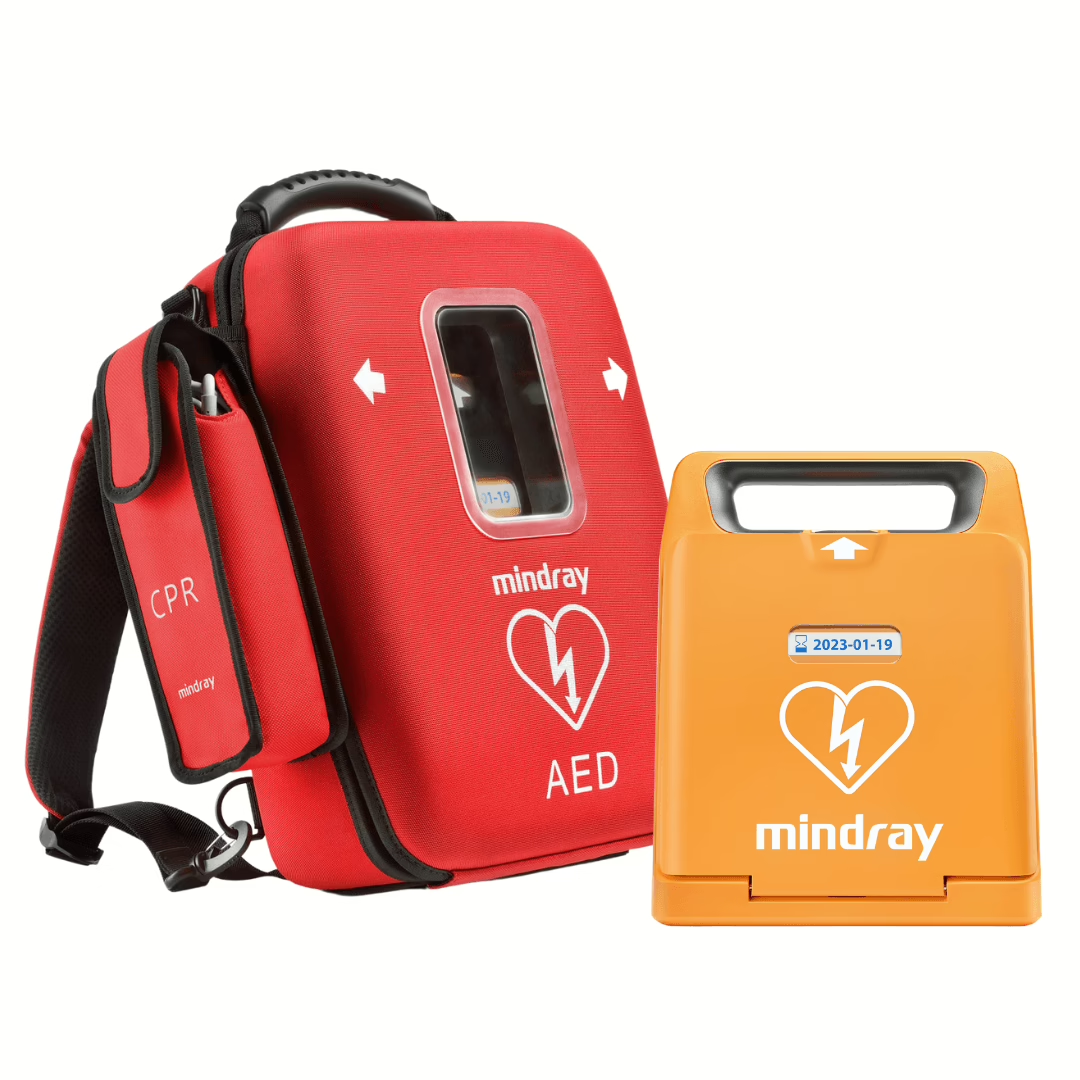
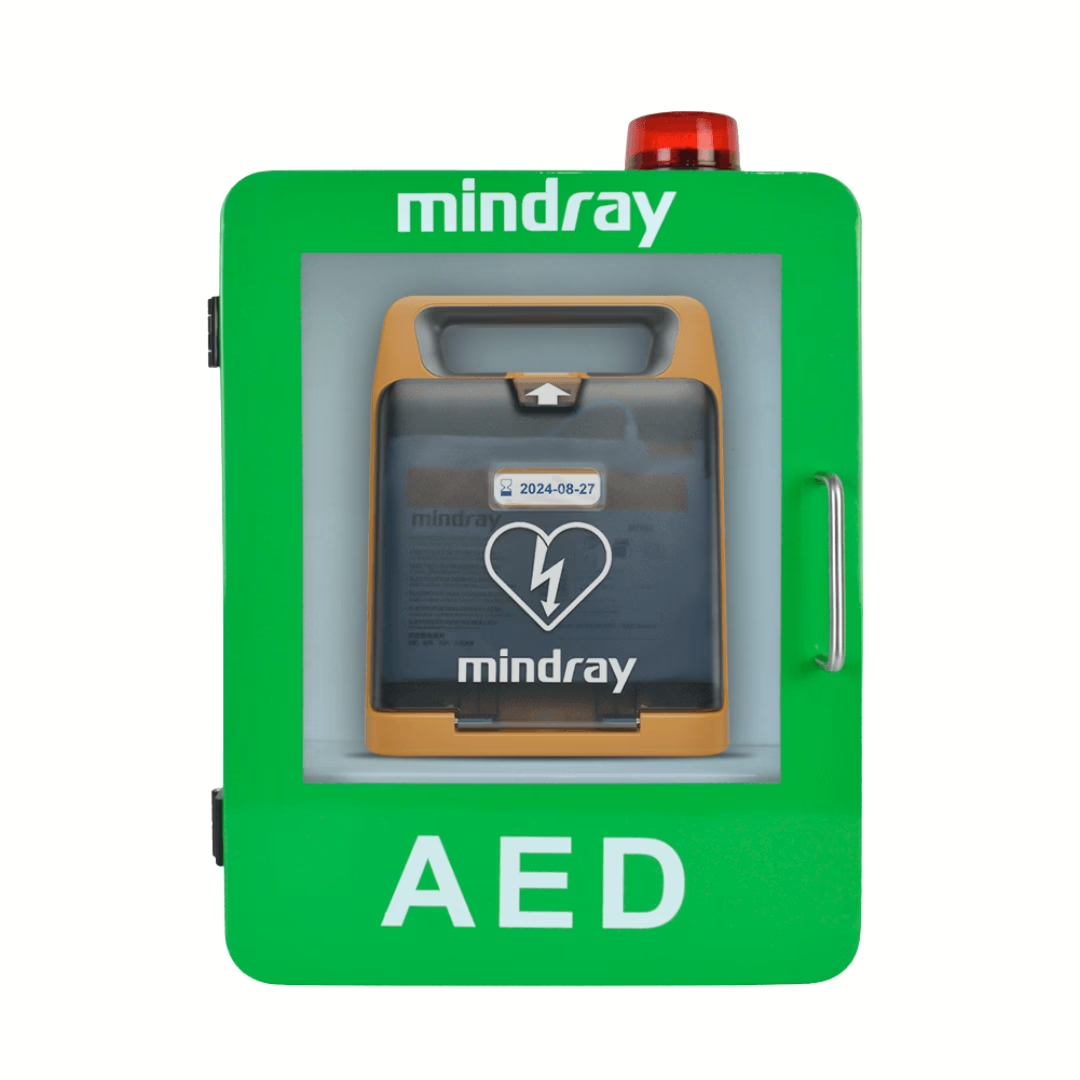
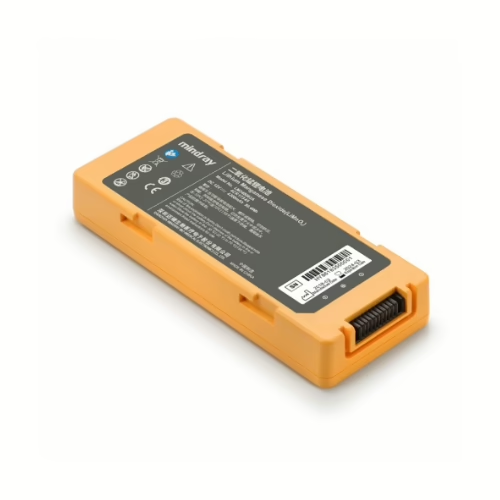
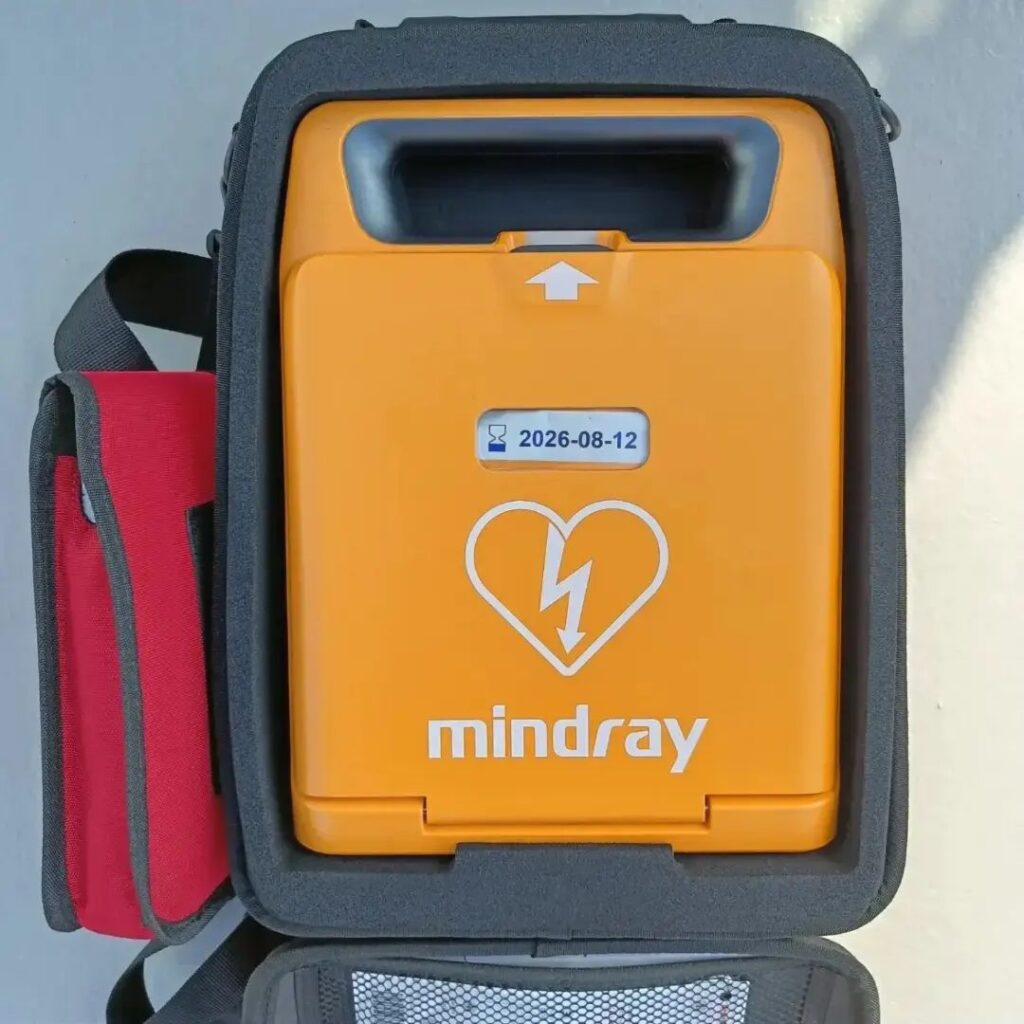
First off, Mindray AEDs aren’t newcomers; they’re professional-grade medical devices developed with real-world, high-pressure scenarios in mind. The brand has become known for advanced technological features designed specifically to boost survival rates, particularly during the critical first minutes after cardiac arrest. One such advanced technology is their QShock™ technology, which drastically cuts down the defibrillator’s analysis and charging time. Where many AEDs take upwards of 10 to 15 seconds, Mindray’s C Series AEDs, including the popular Mindray C1A AED, analyse heart rhythms in around 5 seconds and deliver shocks in less than 8 seconds. That difference of a few seconds can significantly increase the chances of survival.
Another standout Mindray innovation is the ResQNavi™ technology, a system that uniquely adapts to the rescuer’s level of experience. If you’re anxious or unsure during an emergency (and who wouldn’t be?), the AED adjusts, providing clearer and more detailed voice prompts and guiding you step-by-step. This unique adaptive approach sets Mindray apart in the AED marketplace, as few competitor models tailor their guidance based on user proficiency.
- 9 April 2025
Mindray vs. HeartSine: Which is Better for User-Friendliness?
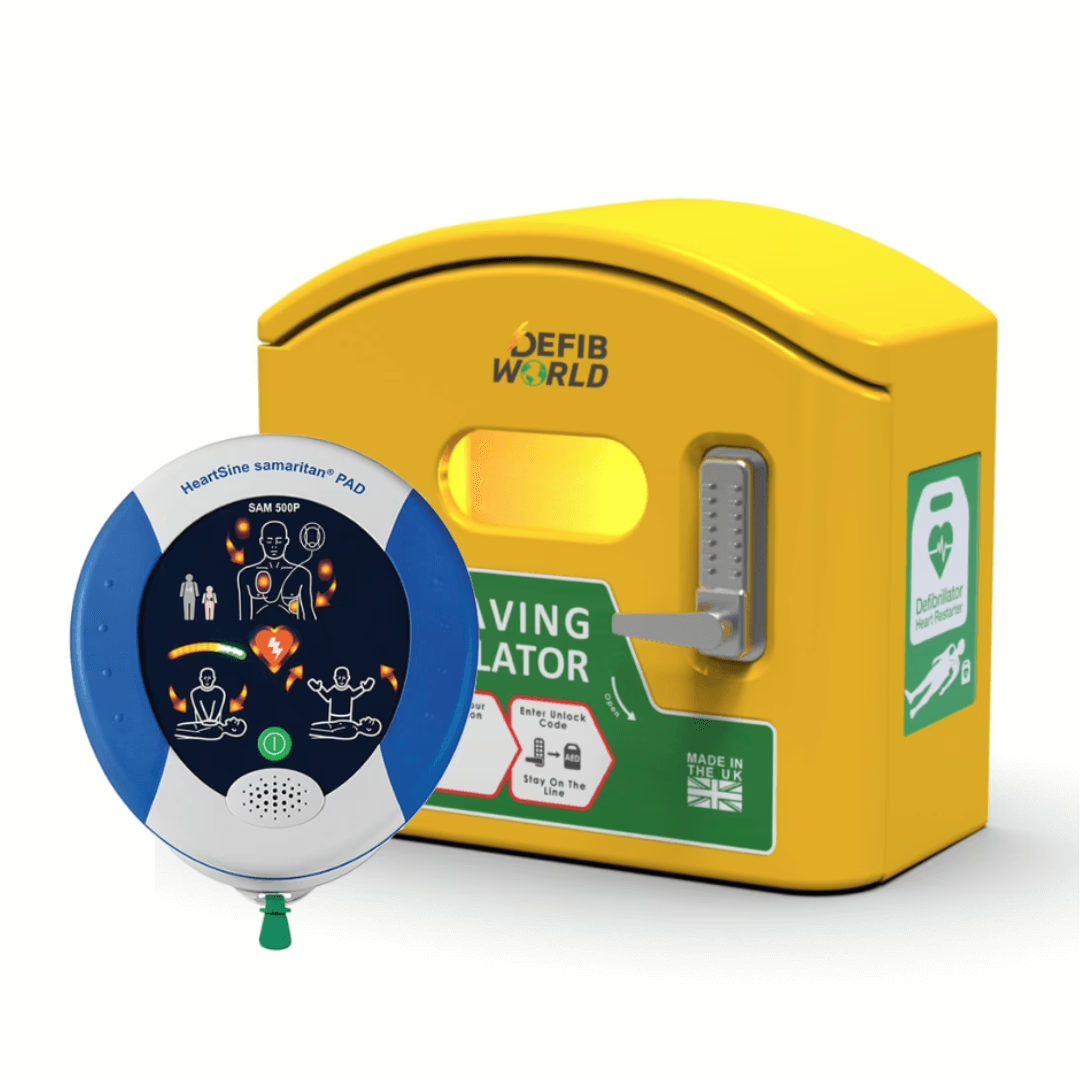
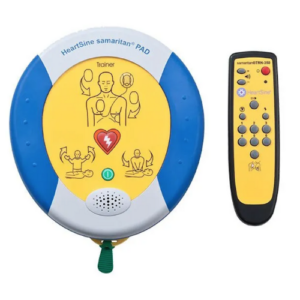
HeartSine is another trusted brand in the AED world, renowned for being compact and lightweight. For instance, the HeartSine Samaritan PAD 350P is exceptionally portable, ideal for small offices and travelling. But here’s the thing: portability isn’t the only critical feature you need during an emergency; user-friendliness and adaptability matter more.
Mindray’s ResQNavi™ adaptive technology provides an edge by actually reading your situation. If you pause or seem unsure, it provides more specific and reassuring instructions. The HeartSine Samaritan is intuitive and simple, but it lacks Mindray’s sophisticated adaptive guidance. If you imagine yourself or your staff dealing with an emergency for the first time, Mindray’s adaptive prompts could be the difference between hesitation and decisive, lifesaving action.
Mindray vs. Zoll: CPR Guidance and Durability
Zoll defibrillators are popular in busy public spaces, primarily because they offer comprehensive CPR feedback. Models like the Zoll AED Plus provide excellent CPR guidance, clearly indicating compression depth and rate. Mindray’s AEDs, like the BeneHeart C Series, also offer built-in CPR feedback, complete with a metronome and clear voice coaching to maintain compression rhythm and depth. But here’s a lesser-known distinction: Mindray models also deliver much faster shock times (again, thanks to QShock™), something crucial when seconds matter.
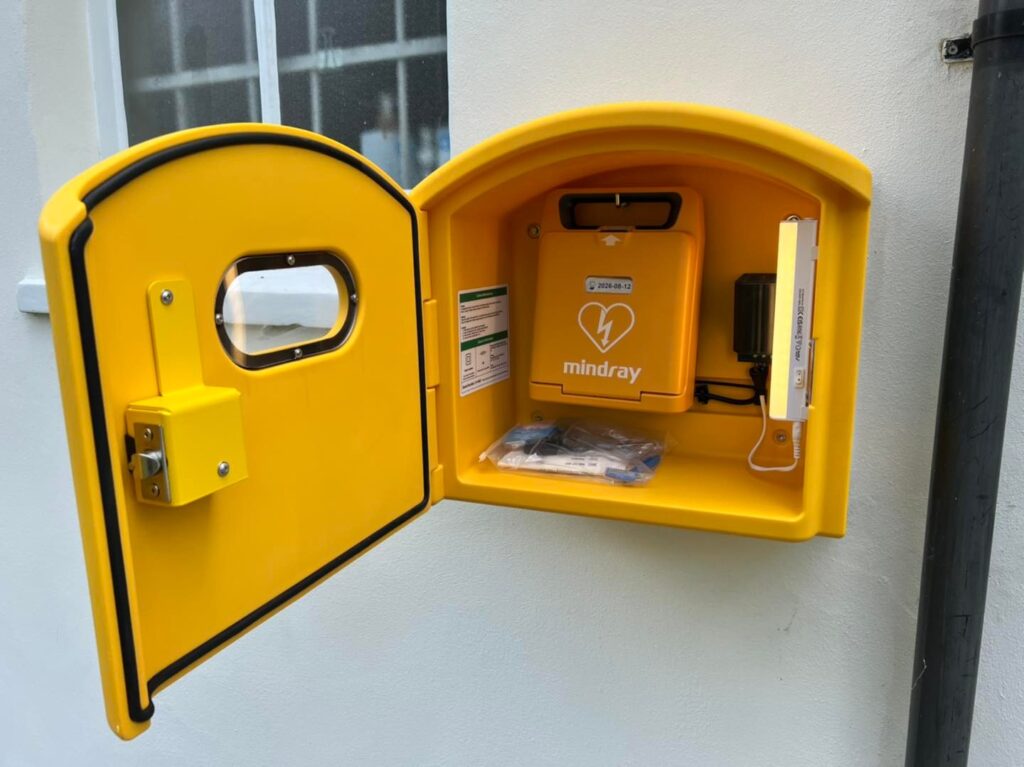
On durability, Mindray AEDs take the lead again. While Zoll units are robust, Mindray AEDs undergo stringent durability tests, including drops from 1.5 meters and rigorous environmental tests to achieve IP55 certification, meaning they can resist water sprays and dust ingress. This superior ruggedness means Mindray AEDs can handle tougher environments, making them ideal for outdoor settings, construction sites, or public areas where rough handling is likely.
Mindray vs. Philips: Cost and Maintenance
Philips HeartStart AEDs are well-known for their reliability and simplicity, making them popular in schools and offices. However, the true total cost of ownership goes beyond the initial purchase. Philips AED pads and batteries generally require replacement more frequently, typically every two years, increasing maintenance costs over the AED’s lifespan.
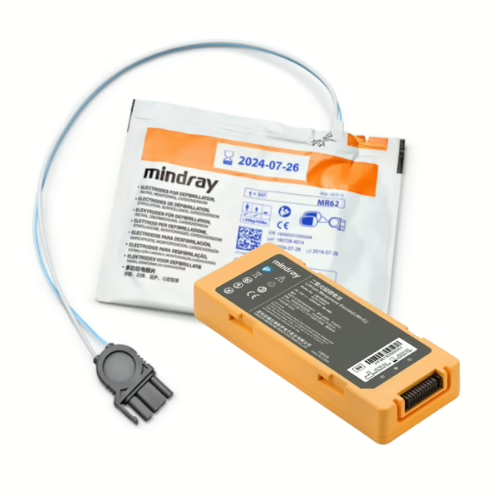
In contrast, Mindray AEDs offer lower maintenance demands. Pads and batteries have up to a five-year shelf life, significantly reducing ongoing expenses. If budget is a significant concern without compromising quality, Mindray provides greater long-term value for your investment.
Feature | Mindray BeneHeart C2 AED | Zoll AED Plus | Philips HeartStart HS1 | Cardiac Science Powerheart G5 |
|---|---|---|---|---|
Ease of Use | Adaptive ResQNavi™ provides real-time animated coaching tailored to rescuer skill level. User-friendly even for untrained responders. | Visual and audio prompts; simple graphical interface; real-time CPR feedback. | Clear voice instructions, but lacks visual CPR feedback. | RescueCoach™ voice prompts adapt to the rescuer’s pace, offering comprehensive audio guidance. |
Shock Delivery Speed | QShock™ Technology: Delivers shock in <8 seconds; ECG analysis in just 5 seconds. | Shock delivery in approximately 10-15 seconds after analysis. | Typically delivers shock within 8-10 seconds after analysis. | Fast shock in under 10 seconds post-analysis, but slightly slower than Mindray. |
Paediatric Compatibility | Quick-switch adult/child modes without needing separate paediatric pads. | Requires separate paediatric pads; additional step during rescue. | Paediatric mode requires special infant/child pads cartridge. | Requires separate paediatric electrode pads. |
Durability & Environmental Protection | IP55-rated; water and dust resistant, robust build withstands drops from 1.5m. Ideal for outdoor and indoor use. | IP55-rated; sturdy build, durable outer casing, but bulkier design. | IP21-rated; less rugged; primarily indoor use recommended. | IP55-rated; highly durable, designed for tough environments. |
CPR Feedback & Coaching | Real-time audio and visual CPR coaching with a clear metronome. | Real CPR Help™ gives precise depth/rate feedback with audio and visual prompts. | Audio-only CPR coaching with metronome but no depth feedback. | Offers CPR metronome and audio prompts but limited depth feedback. |
Battery & Electrode Life | 5-year battery and electrode pad shelf-life; cost-effective long-term ownership. | 5-year battery and electrode pad shelf-life; equally economical. | 4-year battery; electrode pads with a 2-year shelf-life (shorter replacement cycle). | 4-year battery life; electrode pads have a 2-year shelf life, higher maintenance. |
Data Management | Internal memory: 500 events or 5 hours of CPR data; easy data download via USB/Bluetooth. | Limited internal memory (approx. 5 hours); data transfer via IR or USB. | Internal memory up to 15 minutes of ECG, limited data capacity. | Large internal memory (90 minutes of rescue data); easy USB transfer. |
Self-Test Frequency & Reliability | Daily comprehensive self-tests ensuring continual readiness; status clearly indicated. | Weekly self-tests; reliable but slightly less frequent monitoring. | Daily basic self-tests, but monthly comprehensive self-tests. | Daily, weekly, and monthly extensive self-tests ensure readiness. |
Price Point & Value | Mid-range pricing; excellent value balancing premium features, low maintenance costs, and robust reliability. | Premium pricing due to CPR feedback technology; good long-term value. | Affordable entry-level price; suitable for tight budgets but with fewer advanced features. | Higher-end pricing, robust build quality and advanced features justify the cost. |
Warranty | 8-year extensive warranty; reflects manufacturer confidence and durability. | 7-year warranty, slightly shorter coverage period. | 8-year warranty, similar to Mindray. | 8-year warranty, equally strong coverage. |
Key Takeaways:
- Mindray BeneHeart C2 AED emerges strongly, offering the quickest shock delivery (<8 seconds), simplified paediatric mode, robust durability, comprehensive adaptive CPR coaching, and cost-effective maintenance, making it ideal for a variety of settings, including schools, offices, gyms, and outdoor use.
- Zoll AED Plus is excellent in CPR feedback quality but requires additional paediatric pads and offers slightly slower shock delivery.
- Philips HeartStart HS1 is budget-friendly but lacks in ruggedness and advanced CPR feedback features.
- Cardiac Science Powerheart G5 provides robust data management and daily extensive self-tests but is on the higher end in terms of pricing and maintenance.
What About Paediatric Usage?
Most AEDs require separate child-specific pads or additional keys to adjust the energy level for paediatric patients, causing potential confusion during a high-stress rescue. Mindray’s AEDs simplify this. They feature an intuitive paediatric switch that instantly adjusts the AED to safe energy levels for children using the same pre-connected electrode pads. No searching for extra pads, just flip the switch and act quickly. This feature alone offers significant reassurance for schools, childcare facilities, and family-oriented venues.
Unveiling the Underrated: Event Data Management
Here’s something you probably never considered: what happens after the emergency? Mindray AEDs have a built-in memory that captures comprehensive rescue event data, storing up to 500 events and 5 hours of CPR data. This stored data can be easily accessed via Bluetooth or USB connections, allowing first responders and medical professionals to analyse the effectiveness of the response, adjust training, and refine future emergency strategies. Most other brands offer less comprehensive data capture, limiting your ability to improve rescue responses and training over time.
Bottom Line: Which AED is Truly the Best?
Mindray AEDs outshine competitors in several critical areas: speed of shock delivery, adaptive rescue guidance, lower long-term maintenance costs, and superior ruggedness. While competitors like HeartSine, Zoll, and Philips excel in portability, CPR feedback, and simplicity, respectively, Mindray uniquely combines the best aspects of these features into one robust, advanced device.
If you’re looking for an AED that’s versatile, cost-effective over its lifespan, and intuitive enough for anyone to use confidently under pressure, the Mindray defibrillator undoubtedly offers the most compelling combination of features currently on the market.
You’re making a decision that could save a life, not just picking a piece of technology. Mindray’s innovative approach ensures you can trust their AEDs when every second counts. In emergencies, trust isn’t negotiable; it’s essential.