













































.jpg)


- Published:22 July 2026
Once an AED delivers a shock, you should begin CPR immediately. Chest compressions should come before checking for a pulse or breathing. Every automated defibrillator is designed to prompt you to do exactly this.
In 25% of cases where someone has been defibrillated, it took more than 2 minutes for their pulse to begin again; all that time, oxygen is not flowing to the brain, which could cause permanent damage. This is why CPR after defibrillation is so important.
In this guide, we are going to be covering whether you need to continue CPR after defibrillation, what happens to the body after a shock, the sequence you should follow once a shock has been delivered, and when it is safe to stop CPR.
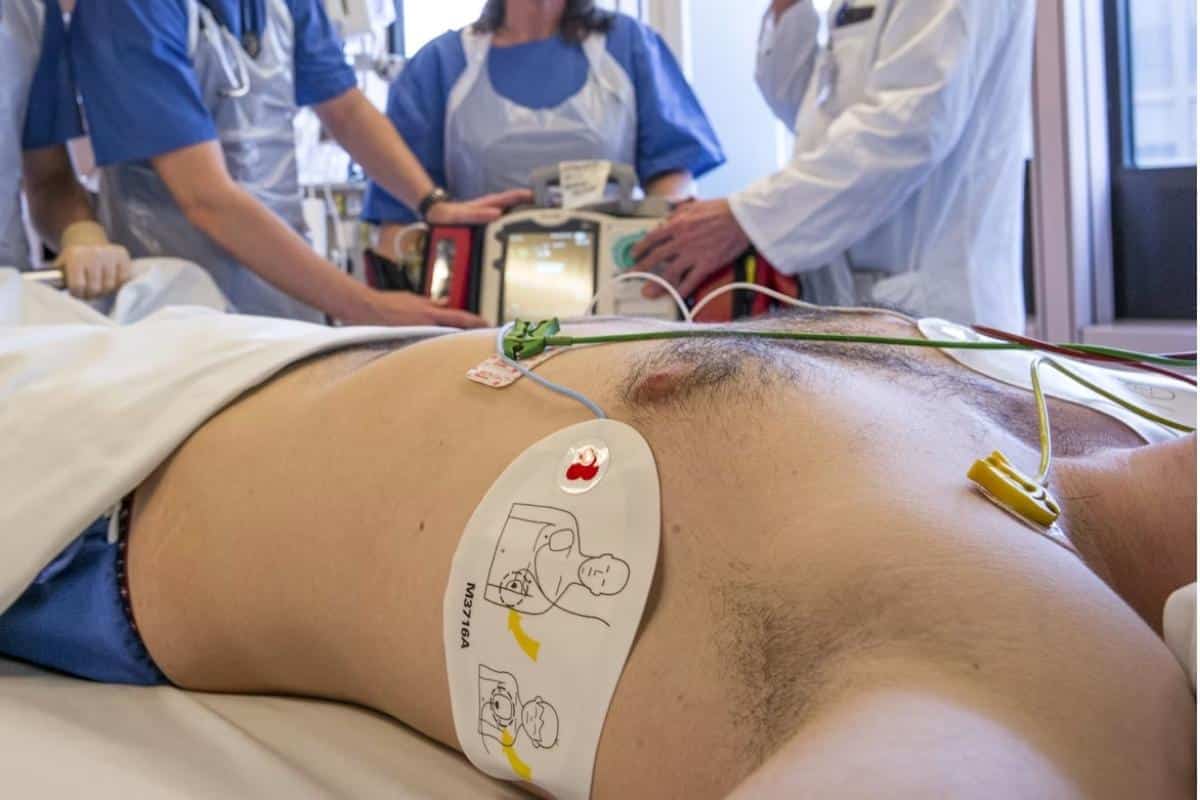
Do You Continue CPR After Defibrillation?
Film and television have given us the idea that once a shock is delivered, the person will wake up dramatically and gasp for air; unfortunately, this is rarely what you will see in real life. The shock’s job is to stop a chaotic heart rhythm, not to restart the heart on its own.
The guidance is clear when it comes to CPR and defibrillation; you should not stop performing CPR unless the person has recovered. After every shock, you should immediately resume CPR.
It is rare for a person to recover from CPR alone, but combined with defibrillation, the chances are much better. But the most likely scenario is that you will continue this process until emergency services arrive and take over.
AEDs are built to support this guidance. After analysing the heart’s rhythm, it will advise a shock, or not, depending on the person. The device will prompt you to begin CPR as soon as the shock has been delivered and reanalyse the person’s heart rhythm in roughly two-minute intervals. This cycle will repeat until emergency services arrive.
What Happens To The Body After a Shock?
It helps to understand why CPR is necessary after defibrillation, and what is happening to the heart. Defibrillation is intended to treat two kinds of heart rhythm problems:
- Ventricular fibrillation – A quivering heartbeat where blood isn’t being pumped effectively.
- Ventricular tachycardia – A very rapid heartbeat where the heart isn’t filling with blood before pumping.
The shock stops the heart and is intended to give the heart’s natural pacemaker a chance to reset back to normal.
Even when defibrillation works as intended, the heart is often weakened and unable to function properly immediately following a shock, so CPR needs to step in.
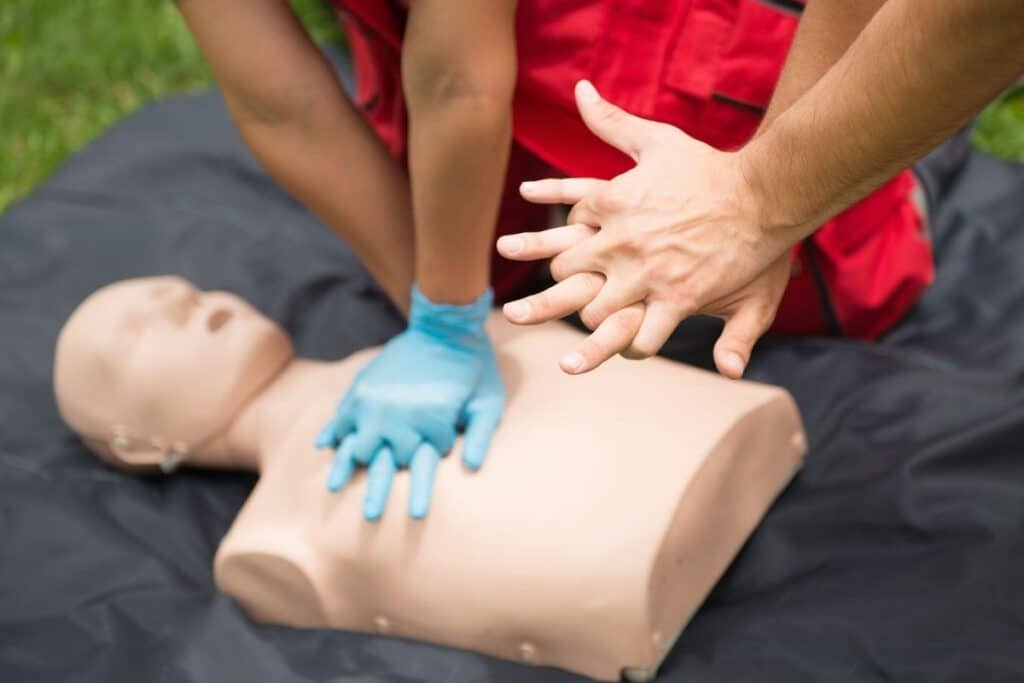
CPR is intended to manually pump oxygenated blood around the body, and particularly to the brain. This is why stepping back and waiting to see if the person wakes up can do so much harm.
Fabrice Muamba is a high-profile example of this. He was given CPR and a total of 15 shocks over the course of 78 minutes. His heart appeared to have recovered on several occasions but kept returning to an abnormal rhythm. Thankfully, he survived his ordeal.
One shock alone is very unlikely to be the whole answer, and even if the person appears to be improving, you should remain vigilant.
Is your organisation ready for a cardiac emergency? If not, you can browse our full range online.
The Sequence After a Shock
Regardless of whether you are using a fully automatic or semi-automatic defibrillator, the sequence remains the same:
- Resume chest compressions right away – Don’t wait or check for breathing or a pulse.
- Follow the standard CPR compression guidance – A ratio of 30 compressions to 2 breaths, at about 100 – 120 compressions a minute.
- Try to keep interruptions brief – Pre- and post-shock pauses should be less than 10 seconds to ensure the best chances of survival and positive outcomes.
- Let the AED reanalyse – Typically, an AED will wait two minutes before taking another reading. Follow whatever instructions the AED is giving you next, whether that is another shock or continued CPR.
- Swap the person performing CPR if needed – Performing chest compressions is a very physically demanding activity, and the quality of compressions can drop within a couple of minutes of starting. Having a second or third person on standby to swap regularly will greatly help maintain CPR’s effectiveness.
When Is It Safe to Stop CPR?
There are only a few situations where it is acceptable to stop performing CPR:
- The person is waking up, moving, opening their eyes, and breathing normally.
- An emergency first aid responder arrives and takes over or instructs you to stop.
- You become too exhausted to continue safely.
Outside of these instances, you should not stop performing CPR before or after defibrillation. Following the CPR guidance is the best chance a person suffering from cardiac arrest has for survival.

Preparing For The Moment
For organisations, the value of a defibrillator depends on the knowledge to use it and perform CPR. Having the knowledge that CPR is needed both before and after defibrillation and that an AED alone is no substitute is simple but often overlooked.
Regular training, clear signage, maintained equipment, and an emergency response plan can make all the difference.
If your organisation is reviewing the need for a defibrillator, looking for signage, replacement batteries and pads, or a cost-effective rental plan, our team is ready to help.
Explore our full range of defibrillators and rental offers online, or get in touch with the Defib World team for tailored guidance.