












































.jpg)


The Correct Placement of Defib Pads: Your Guide
Knowing how to place defibrillator pads correctly might not be something you think about every day, but in a real emergency it will make all the difference.
When someone goes into sudden cardiac arrest, every second truly counts – in fact, the chance of survival drops by around 10% for every minute without defibrillation. That’s why understanding where to correctly place the pads, whether on an adult, child, or even an infant, is absolutely essential.
The great news is that modern AEDs (Automated External Defibrillators) are designed to be incredibly user-friendly, giving clear voice prompts and diagrams so anyone can use them confidently.
That said, having a basic understanding of pad placement before you’re faced with an emergency can help you stay calm and act quickly.
In this guide, we’ll walk you through how defibrillator pads work, why placement matters so much, and exactly where they should go for adults, children, and infants.
What Are Defibrillator Pads Used For and How Do They Work?
In short, defibrillator pads are the sticky electrode pads you place on someone’s chest when using an AED, and while their job is incredibly important, the way they work is actually surprisingly simple.
Once stuck to the skin, they act as the connection between the defibrillator and the person’s heart. The pads let the AED “listen” to the heart’s electrical activity so it can work out whether a shock is needed.
If the device detects a shockable rhythm, such as ventricular fibrillation, it sends a controlled electrical current through the pads and across the heart. This current aims to stop the chaotic rhythm and give the heart a chance to restart in a normal, organised way.
Because the pads read the heart’s rhythm and deliver the shock, correct placement is essential.
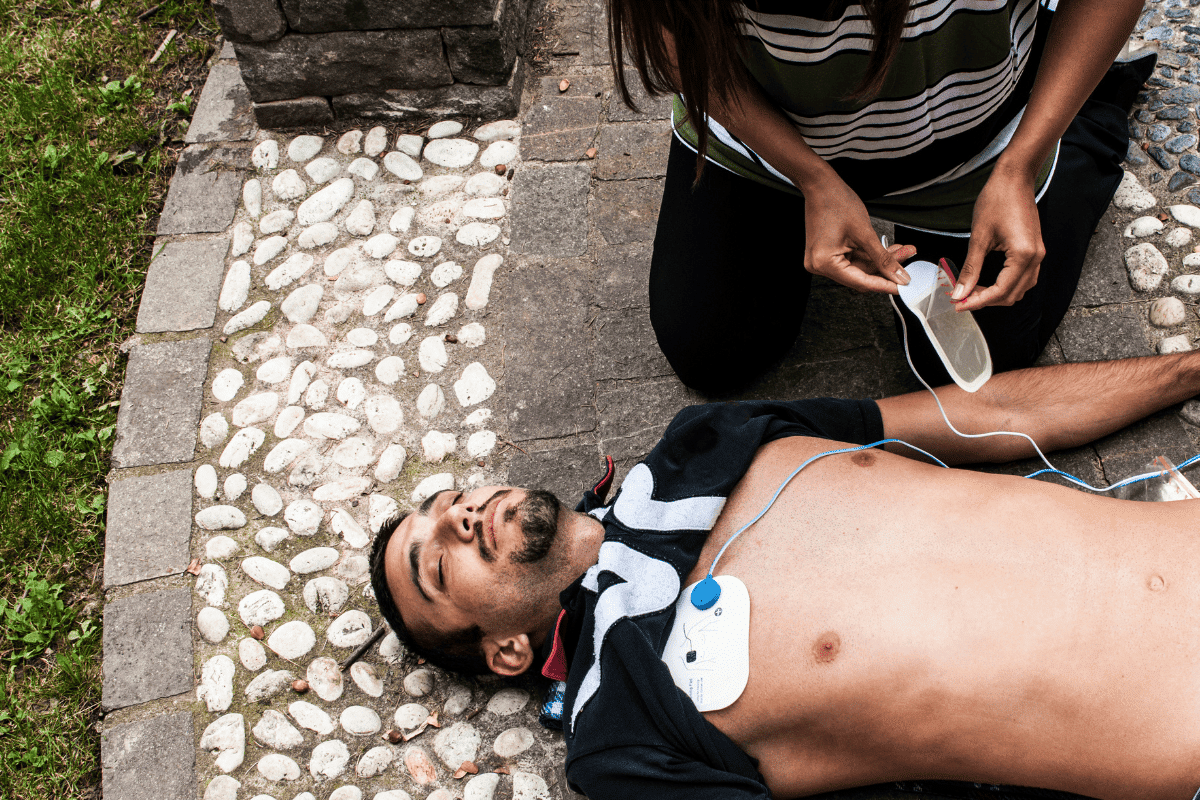
Defibrillator pads are designed to make the whole process as straightforward as possible, so even someone with no medical training can use them safely in an emergency.
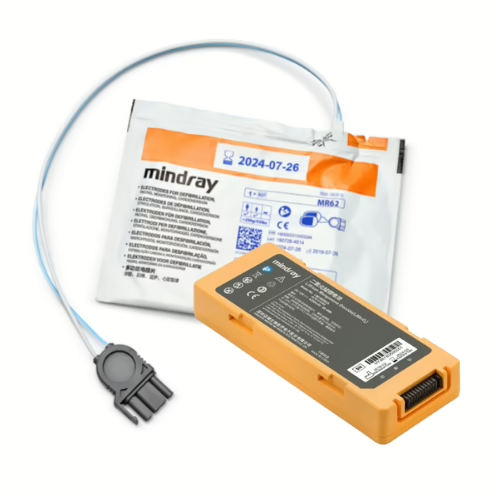
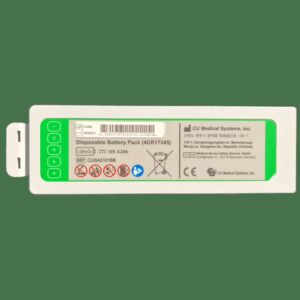
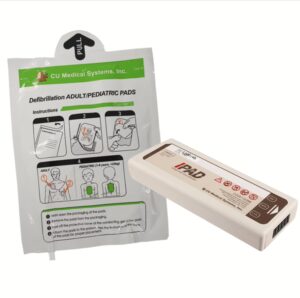
Explore our range of reliable defibrillators and replacement pads here. And if you’re unsure which products are best for you and your situation, give us a call on 0330 223 6336 – we’d love to chat to you about your requirements.
Defib Pad Placement for Adults
When placing defibrillator pads on an adult, it helps to think of creating a clear path for the electrical current to travel through the heart. This is why one pad goes high on the chest and the other sits lower down on the opposite side.
Pad 1 (Upper Right / Sternum)
This pad should be placed on the person’s right-hand side, just below the collarbone and slightly towards the centre of the chest.
You’re aiming for the flat area beneath the clavicle. It doesn’t need to be exact to the millimetre – just make sure the pad is firmly stuck to dry skin in that upper-right chest area.
This pad is responsible for helping the AED sense the heart rhythm clearly, so good contact with the skin is important.
Pad 2 (Lower Left / Apex)
The second pad goes on the left side of the chest, tucked just below the armpit, sitting over the ribs.
Think of the side of the body, roughly level with the bottom of the breast. This placement helps the electrical shock travel diagonally down through the heart, which is the most effective route for resetting a dangerous rhythm.
Again, the exact position doesn’t have to be absolutely perfect – what matters is that it’s placed on the left side, lower than the first pad, without any overlap.
Together, these two pads create the ideal path for the defibrillator to deliver a life-saving shock.
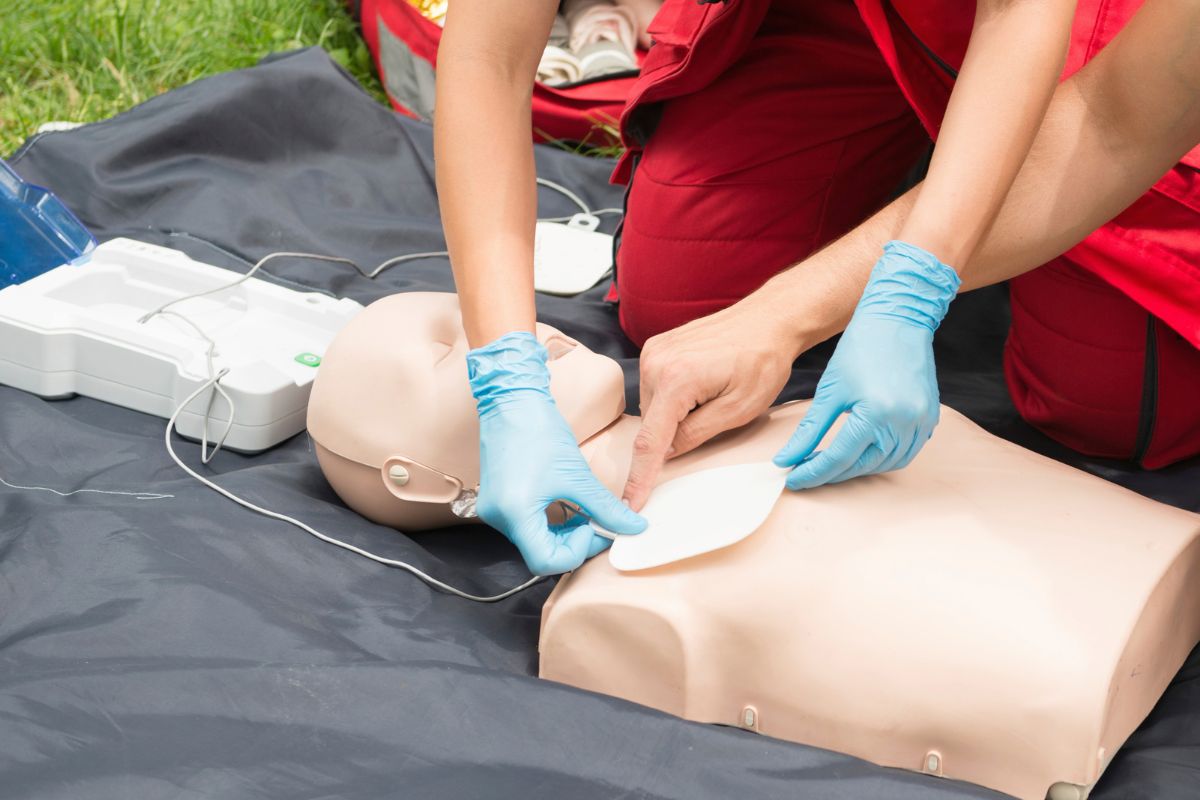
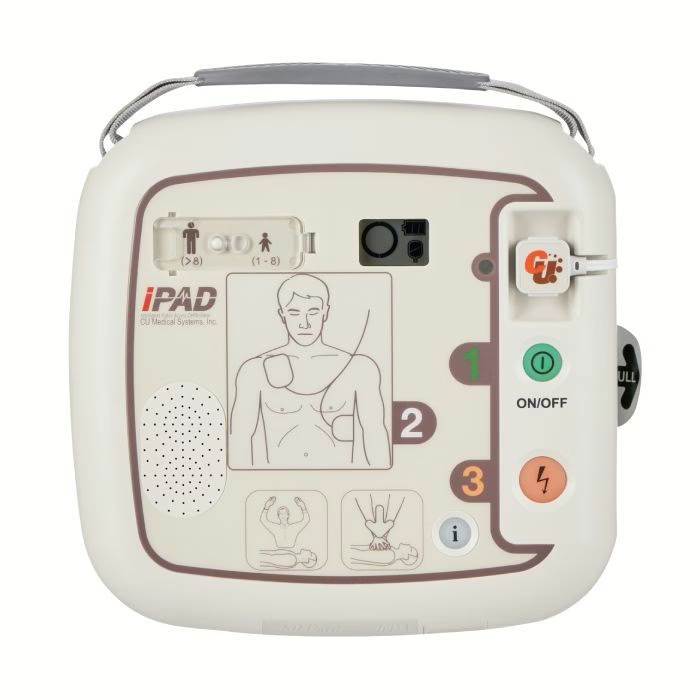
The AED’s diagrams will show these positions too, so you can quickly check you’re doing it right at the moment.
Browse our wide range of adult AED pads here, each suited to different defibrillator models.
Extra Tips to Remember
- If the patient has excess chest hair, shave quickly with the razor often stored in an AED kit.
- If the patient has water or sweat on the chest, make sure you dry it before applying the pads.
- If the patient has implanted devices (pacemaker/ICD), place a pad at least 1 inch away. Most pacemakers and ICDs (implantable cardioverter defibrillators) are implanted in the upper left side of the chest. During CPR, chest compressions are done in the centre of the chest and should not affect a pacemaker or ICD that has been in place for a while.
- If the patient has jewellery or piercings, do not place pads directly over them.
Defib Pad Placement for Children (1-8 years old or <25kg)
If you’re using an AED on a child, it’s always best to use paediatric pads if the device has them.
These smaller pads are designed specifically for younger, smaller bodies, and when they’re connected, most AEDs will automatically switch to a lower shock energy that’s more appropriate for children.
When placing AED pads on a child, the key is making sure the pads don’t touch or overlap, as children have much smaller chests than adults.
For most younger or smaller children, front-and-back placement is the safest and most effective option. In this method, one pad goes right in the centre of the chest, and the other is placed on the back between the shoulder blades. This positioning allows the electrical current to pass straight through the heart without the pads getting too close together.
If the child is older or larger and their chest is big enough to allow good spacing, you can use the standard adult placement instead (as we mentioned above).
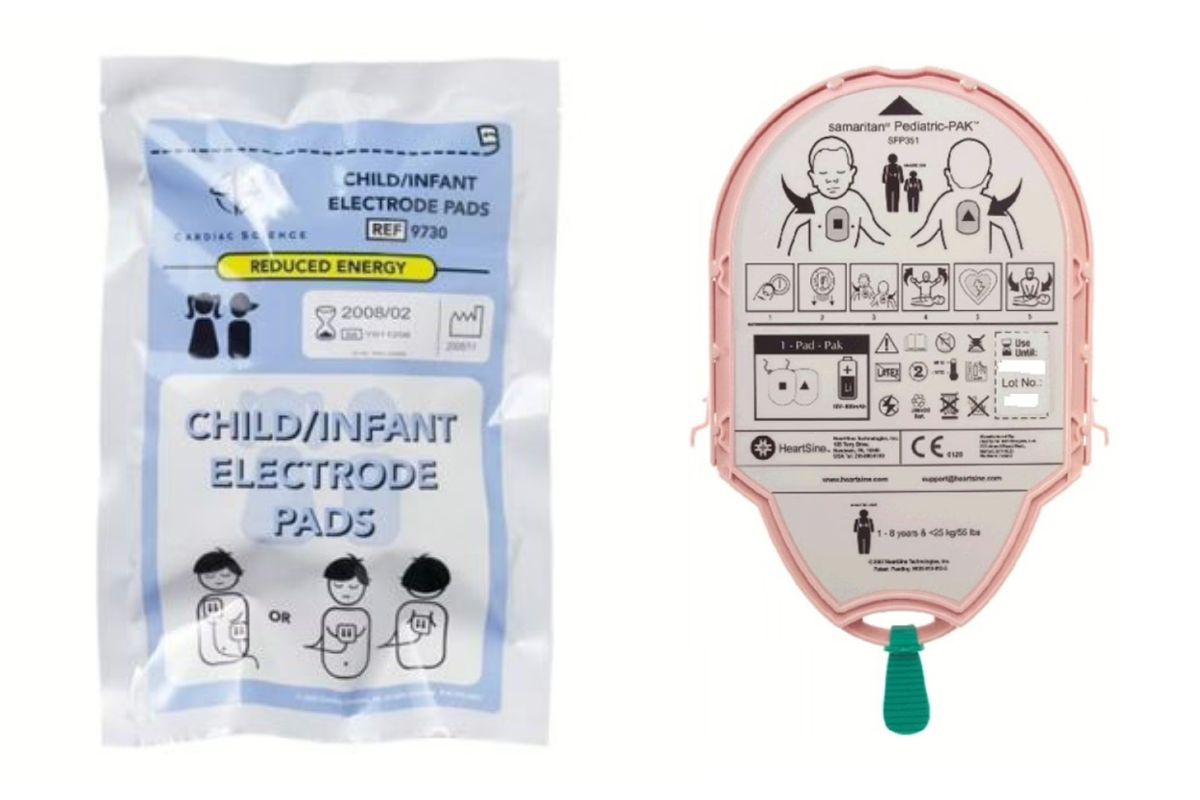
Browse our wide range of paediatric AED pads here, suitable for various defibrillator units.
Can You Use Non-Pediatric Pads on Children?
The simple answer is – yes! If you open the AED and discover there are no paediatric pads, don’t let that stop you. Adult pads are absolutely fine to use, and they will still work safely on a child.
Delivering a shock, even with adult pads, gives the child a far better chance of survival than doing nothing. Just place the pads so they don’t touch or overlap, follow the AED’s prompts, and let the machine guide you through the rest.
Defib Pad Placement for Infants (Under 1 year old)
Similarly to the above, when dealing with an infant under one year old, it’s always best to use infant-specific or paediatric AED pads if the device includes them, as these are designed to deliver a reduced level of energy that’s appropriate for a baby’s much smaller body and more delicate heart.
However, if you find yourself in a situation where only adult pads are available, you should still use them, but remember that adult pads are larger, so you must place them in a front-and-back position to avoid the pads touching each other on the chest.
One pad goes in the centre of the baby’s chest, and the other goes between the shoulder blades on the back.
Keeping the pads separate ensures the electrical shock travels correctly through the heart and avoids any interference between the pads.
How Can We Help
At Defib World, we’re committed to helping businesses create a truly heart-safe environment.
Our range of defibrillators, bleed control kits and first aid equipment ensures you’re not just compliant, but properly equipped to protect staff, customers and the wider public.
You can also call us on 0330 223 6336 to discuss your requirements and find the perfect solution for your organisation. And for more expert insights and advice, check out our regularly updated first aid & defibrillator blog.