













































.jpg)


- Published:18 January 2026
CPR Manikins come into close contact with multiple users and can accumulate sweat, saliva and other contaminants during practice. As a result, manikins must be kept clean and hygienic to protect learners and instructors from infection.
As well as being an infection control measure, a well-maintained manikin ensures that feedback mechanisms, chest compression resistance and valve systems work as expected, providing trainees with a realistic and effective training experience.
This means all manufacturers’ cleaning and maintenance instructions must be followed, and basic hygiene measures must be observed between users and after each session to ensure proper hygiene, function and lifespan.
In this guide, our experts share when and how to clean and maintain your CPR manikins and parts.
When & How to Clean CPR Manikins
Cleaning a CPR manikin should occur at two key points: between each individual use during a session and at the end of each training session.
1. Between Trainees
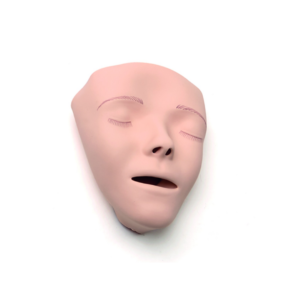
After each person uses the manikin, its face, mouth and nose must be disinfected.
Use a dedicated manikin wipe or a cloth with an appropriate disinfectant (70% alcohol solution) to vigorously clean all contact surfaces. For optimal disinfection, wrap the wipe over the mouth and nose and hold it in place for at least 30 seconds.
Leave the surface wet for at least 30 seconds before wiping dry with a clean, dry cloth. This is because disinfectant wipes and sprays often need a minimum contact (or dwell) time on the surface to effectively kill bacteria and viruses.
2. After Training Sessions
After each session, you should wipe down all high-contact external surfaces again — face, chest, shoulders and hands — with disinfecting manikin wipes or a dedicated cleaner. As before, you should leave the surface wet for at least 30 seconds before wiping it with a clean, dry cloth, so the disinfectant can effectively kill bacteria and viruses.
On a weekly or monthly basis, depending on use frequency and the manufacturer’s instructions, you need to conduct a deeper clean.
Typically, a deep clean involves removing the face, lung bags (airways), and any other removable mannikin parts, and then washing these non-disposable components vigorously with soap and water, using a scrub brush for a thorough clean. Avoid harsh cleaners, bleach aerosols or corrosive agents unless recommended by the manufacturer.
You can also soak individual mannikin parts in a cleaning solution, but do not submerge the entire manikin in water or cleaning fluids, as electronics and internal mechanisms can be damaged.
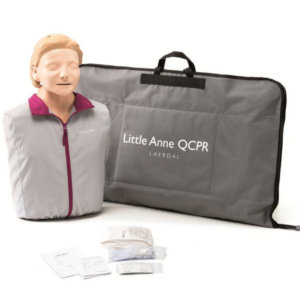
Some manikins come with cloth covers or carry bags. If bags aren’t cleaned, they can re-contaminate freshly cleaned manikins. You can wash these on a gentle cycle or hand-wash with mild detergent and allow them to dry fully before reuse. You should do this when the bag becomes visibly dirty (dust, spills, etc.) or once a month if manikins are used on a regular basis. You can give manikin bags a light clean or wipe down after every training session.
How Often Should Manikin Lungs Be Changed?
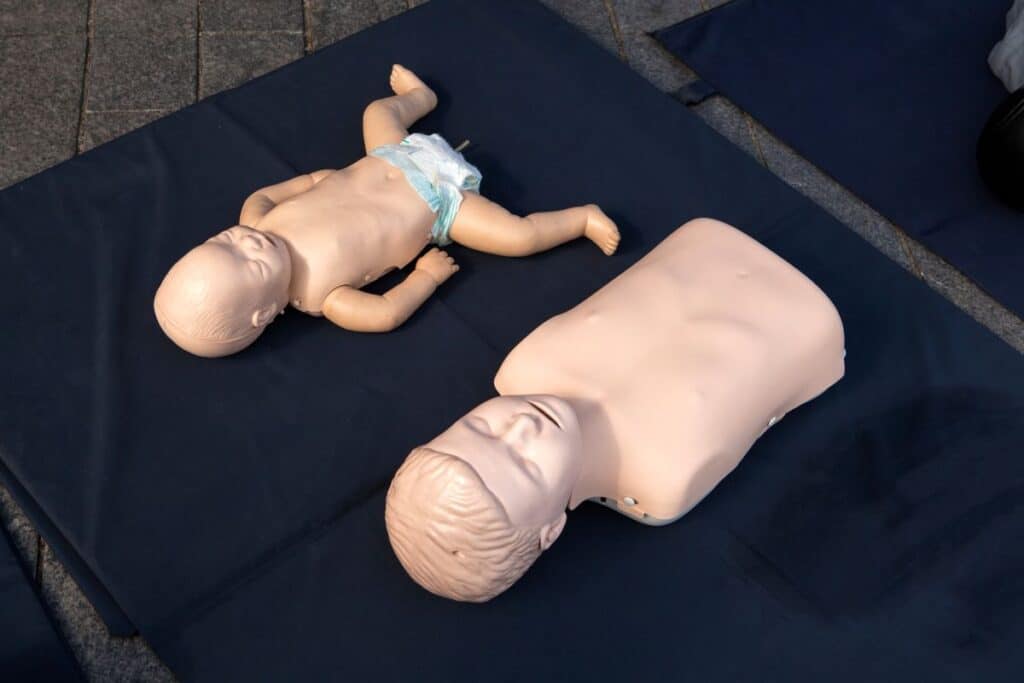
Disposable valve lungs or airway inserts should be replaced after every training session in which they are used to eliminate contamination risk.
For reusable lung bags (which are less common and have strict decontamination protocols), the change frequency depends on the manufacturer’s instructions and visual inspection. Replace them immediately if you notice any holes, tears, stiffness or permanent discolouration that doesn’t wipe clean.
What About Cleaning Shields & Barriers?
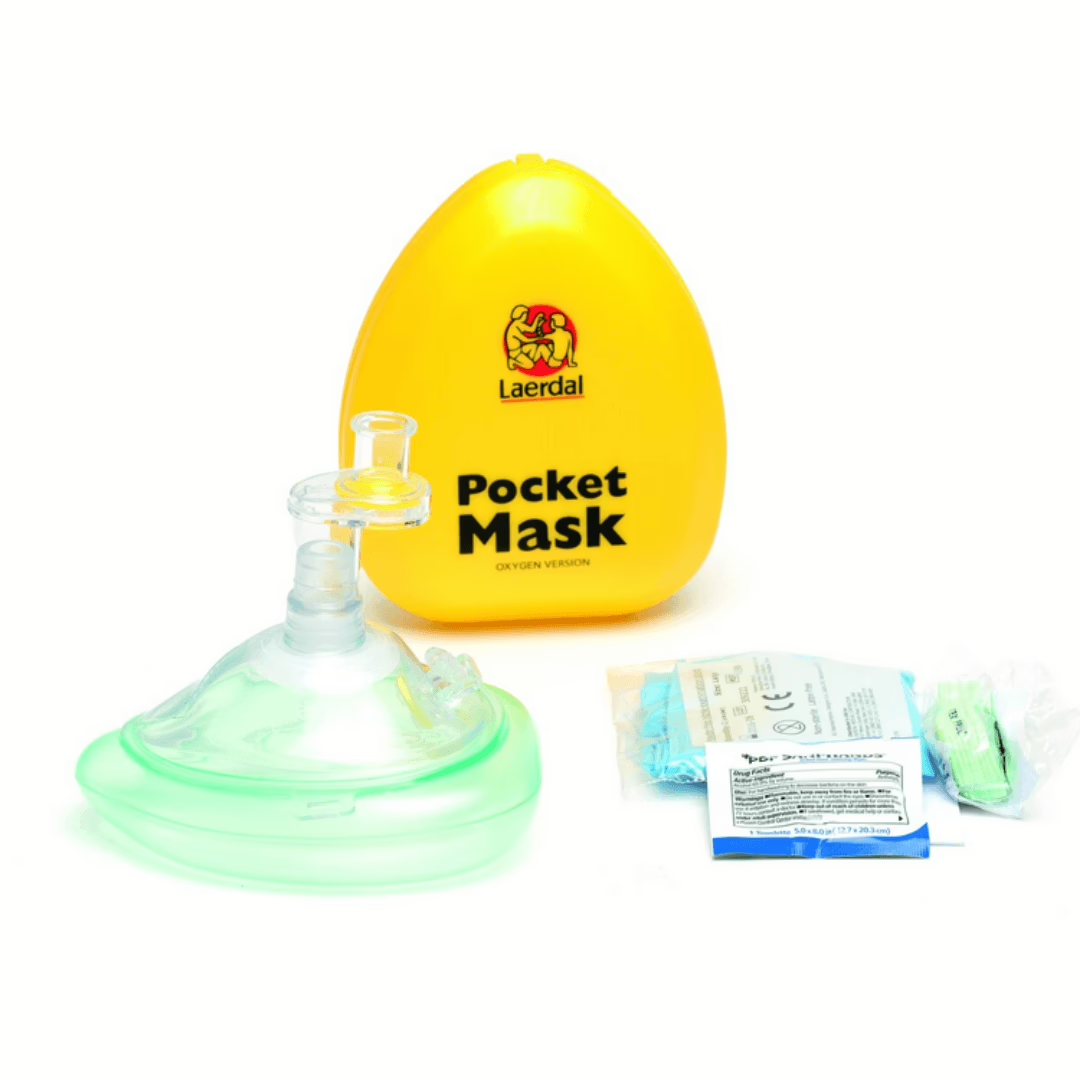
If using disposable face shields, provide one per learner and replace after each session. Reusable shields or masks should be cleaned and disinfected between users with suitable wipes or according to the manufacturer’s instructions.
How to Maintain CPR Manikins
Maintenance of manikins goes beyond cleaning to include lubrication, inspection and proper storage.
Lubrication
Some manikin components, such as moving joints or compression mechanisms (manikin springs), may benefit from occasional light lubrication, as advised by the manufacturer. This prevents friction wear and preserves the feel of compression.
As a general rule, you should regularly apply a water-based lubricant to moving parts such as the rib frame hinge and joints. This prevents “sticking” parts, ensures smooth compression, and reduces wear. Follow your specific manikin’s manual for guidance on lubrication points.
Storage
Always store manikins and their components in a well-ventilated, dry and clean place away from direct sunlight. Use the original transportation case or a dedicated manikin storage bag to protect them from dust and physical damage when in storage or on the move.
Always make sure that manikins (and their components) are completely dry before placing them in storage bags or containers.
How We Can Help
Regular cleaning and proper maintenance of CPR manikins is essential for delivering safe, hygienic and effective training.
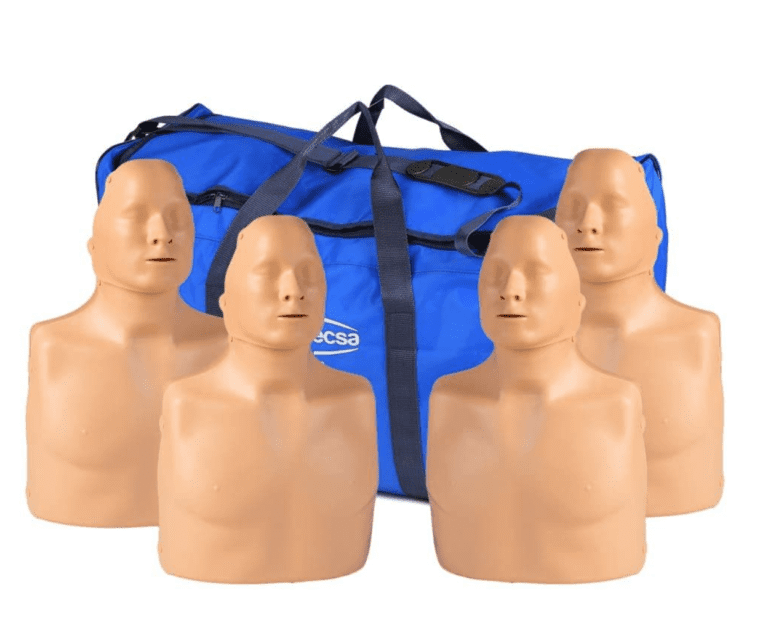
We hope this guide has helped you understand how to clean and maintain CPR manikins with confidence. If you’re looking to replace worn components or invest in new training equipment, Defib World offers a wide range of high-quality CPR manikins, replacement lungs, face shields and accessories to help you maintain safe and professional training environments.
Not sure what you need? Check out our CPR Manikin Buying Guide to get started.
Beyond training equipment, we also supply reliable defibrillators for a range of spaces, and flexible defibrillator rental options.
Still need help? Our knowledge hub is full of articles which answer your FAQs on defibrillators and first aid. Otherwise, our experts are here to help you choose the right defibrillator and storage accessories for your specific needs. Contact us now for personalised advice.