







































.jpg)


Having a first aid kit in a school is more than just a shelf of bandages and plasters – it’s an essential tool when it comes to protecting the lives of pupils, staff and visitors. Yet many people don’t realise just how fragile those few minutes are in an emergency.
According to St John Ambulance, only 4 in 10 people know the basic first aid skills needed to respond to a bleeding injury, choking or cardiac arrest, and when it comes to sudden cardiac arrest, the statistics are stark: timely defibrillation can raise survival chances from under 10% to as high as 50%.
That’s why a school first aid kit needs to include the right equipment, maintained and ready, so that when seconds count, help is there.
Below is a breakdown of essential items you should include (and why they matter) – from plasters to life saving defibrillators.
The Core Components Every School First Aid Kit Should Include:
- Plasters, dressings & bandages – These are an important part of a first aid kit, ideal covering cuts, grazes and wounds, with the aim of stopping bleeding and reducing the risk of infection. Bandages can also provide support for sprains or hold dressings in place.
- Safety pins – A simple but useful tool for securing bandages, slings or dressings, keeping everything in place during treatment.
- Disposable gloves – These are essential for protecting both staff and pupils by reducing the risk of cross-infection when treating injuries or dealing with bodily fluids.
- Alcohol-free cleansing wipes – Used to clean the skin around wounds before applying a plaster or dressing, without stinging or causing irritation.
- Eyewash / eye irrigation solution – Vital for flushing out dust, dirt or chemicals from the eyes, giving fast relief and helping prevent further injury. Shop our Spectra eye wash first aid system.
- Blunt ended scissors – Designed to safely cut bandages, clothing or tape without causing accidental injury when working close to the skin.
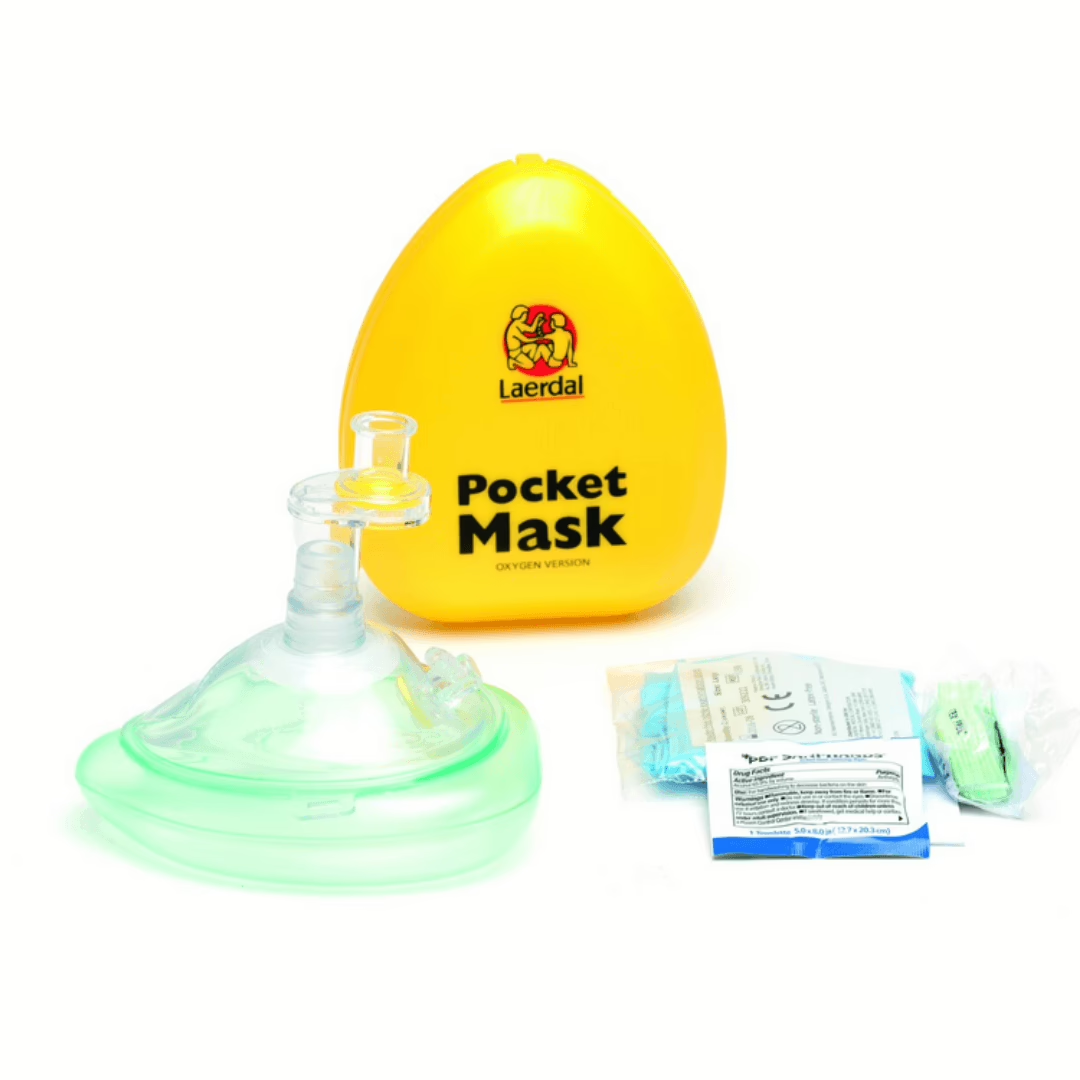
- Resuscitation face shield or mask – These are great for providing a barrier during CPR, protecting the first aider while still allowing life-saving breaths to be given if needed. Our Laerdal Pocket Mask and Case is a great option for schools.
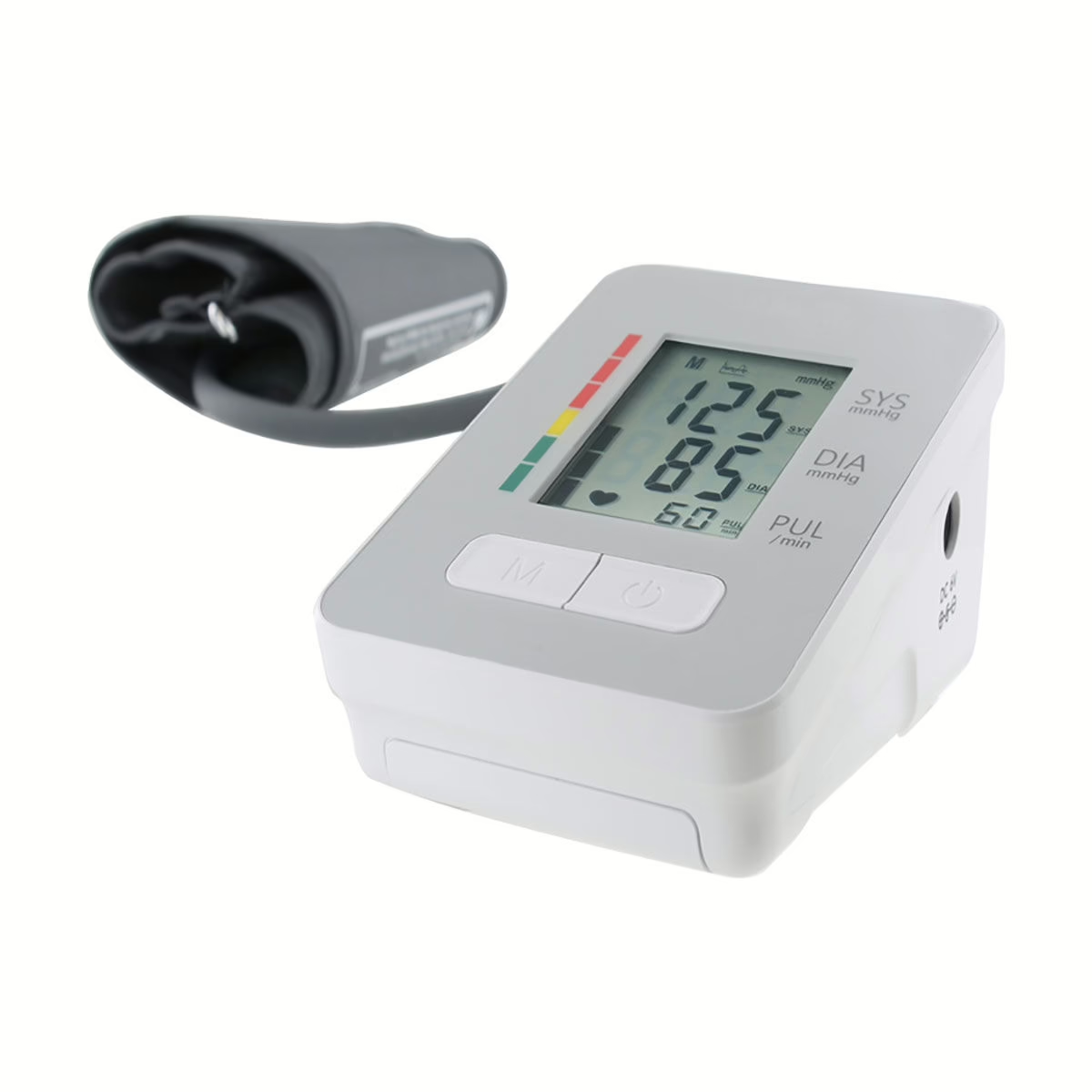
- Digital thermometer – Quick and accurate for checking temperatures, especially helpful when a child is feeling unwell or showing signs of fever.
- Instant cold packs / ice packs – Ideal for reducing swelling, pain and bruising after knocks, sprains or sports injuries that are common in schools.
- Burn dressings / gel – Provides immediate cooling relief and protection for minor burns or scalds, often important in science labs, kitchens or tech workshops. Shop our Spectra burns first aid kit here.
- Accident report book – This is a legal and practical requirement for recording incidents, ensuring there’s a clear record of what happened and how it was dealt with. Order our A4 Astroplast Accident Report Book here.
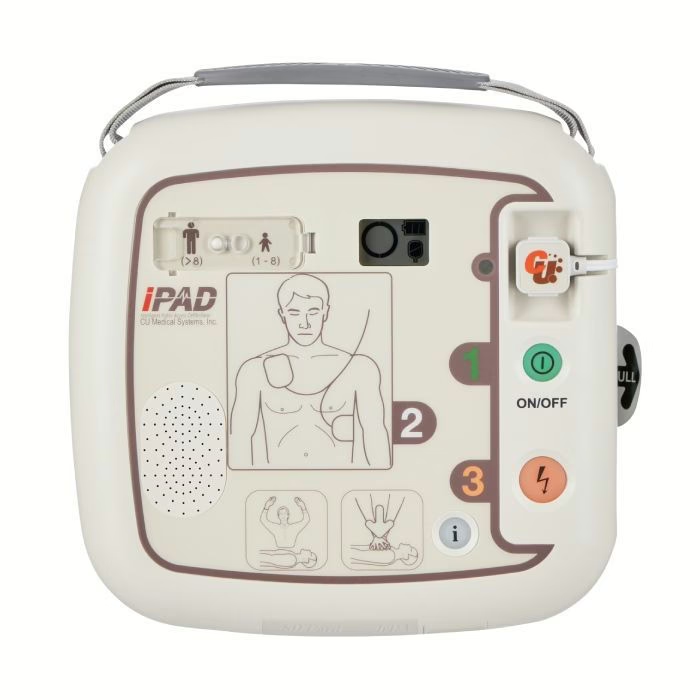
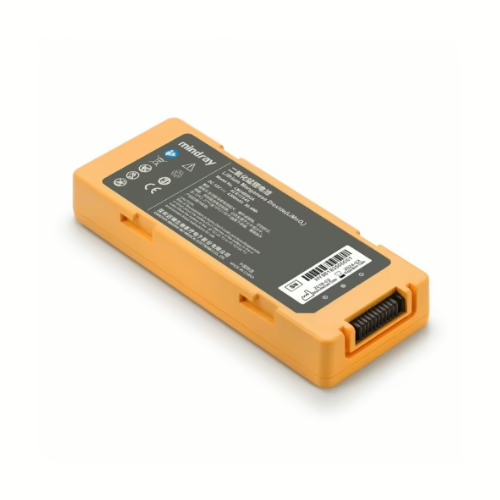
- Defibrillator – This is a life-saving device that can restart the heart in cases of sudden cardiac arrest.
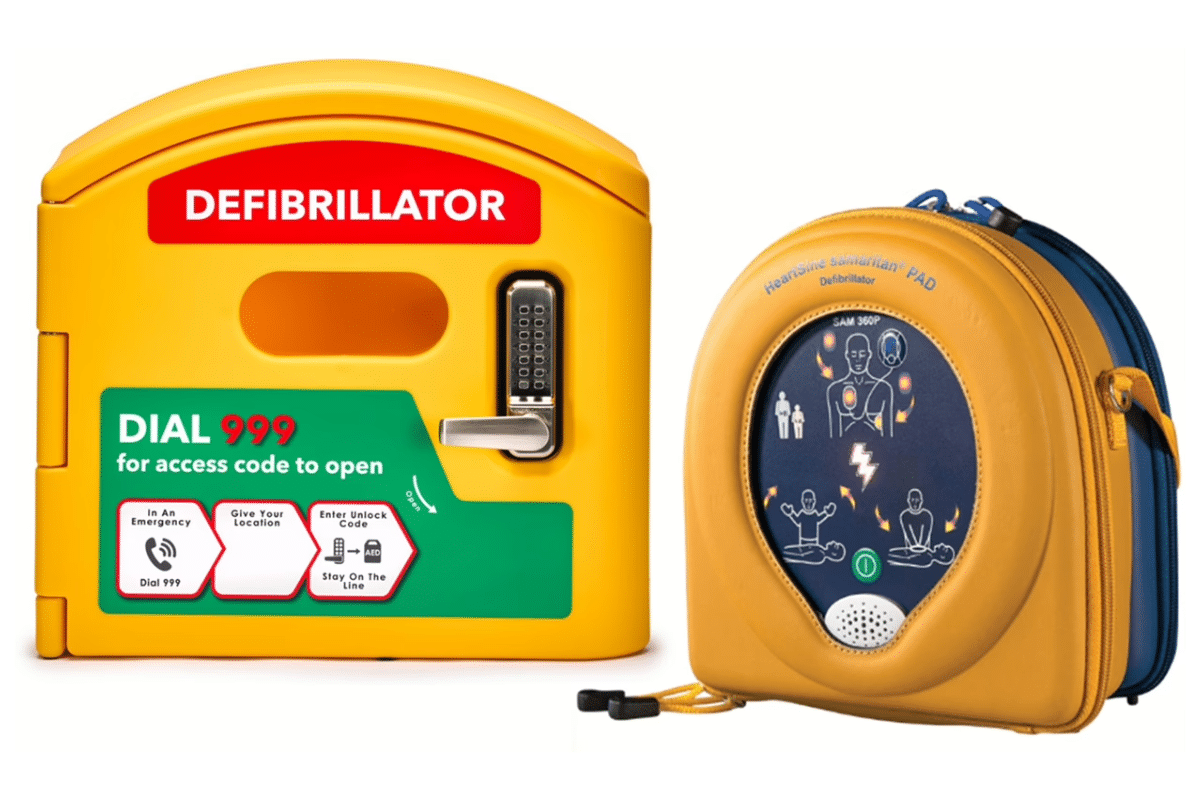
Modern AEDs (Automated External Defibrillators) are simple to use and can make all the difference in an emergency, which is why more and more schools are keeping one on site.
What Are The Best Defibrillators for Schools?
The ‘best’ types of defibrillators for schools tend to share a few key qualities: they’re easy to use (clear voice/visual prompts), they have automatic self-checks, and paediatric mode (or pad options) for children.
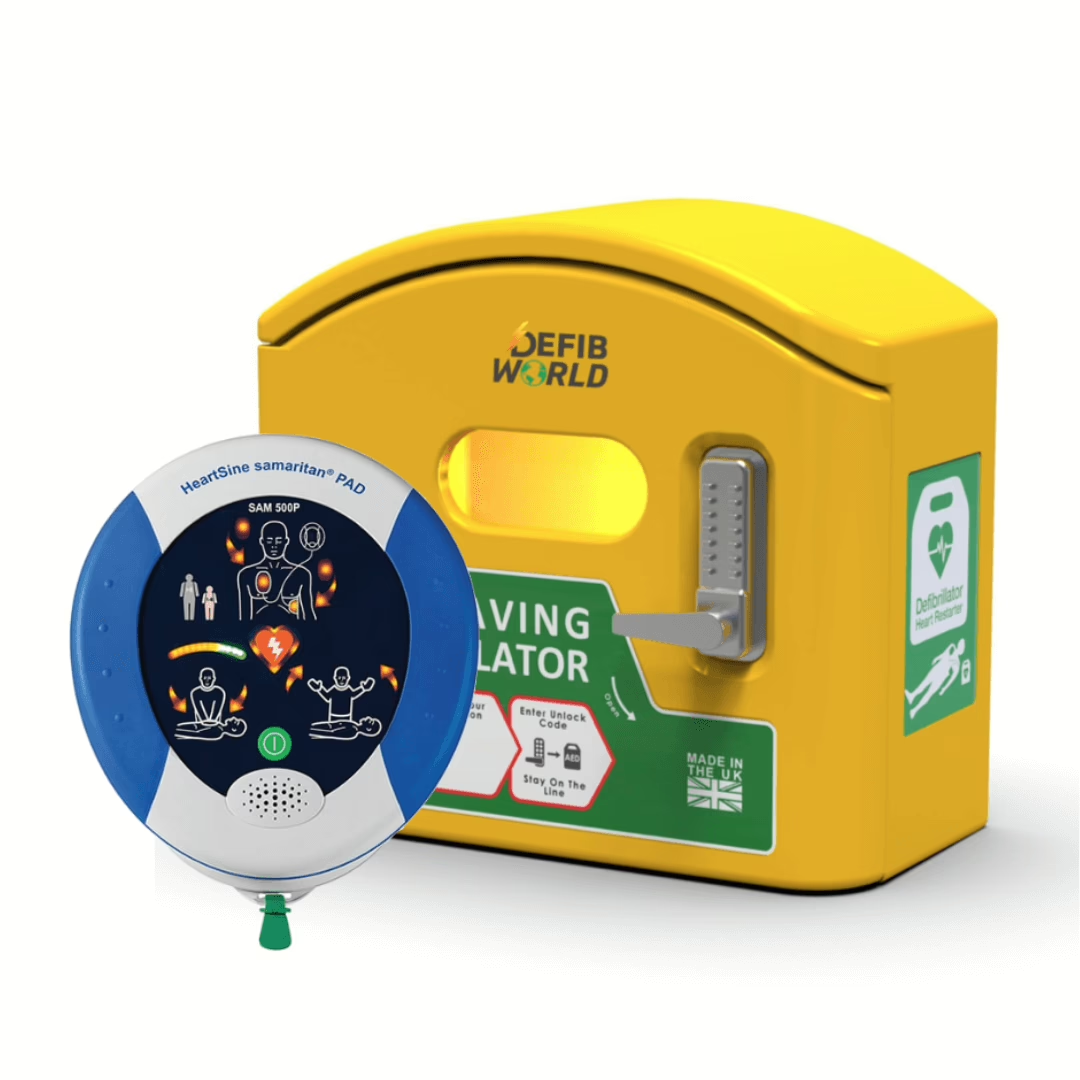
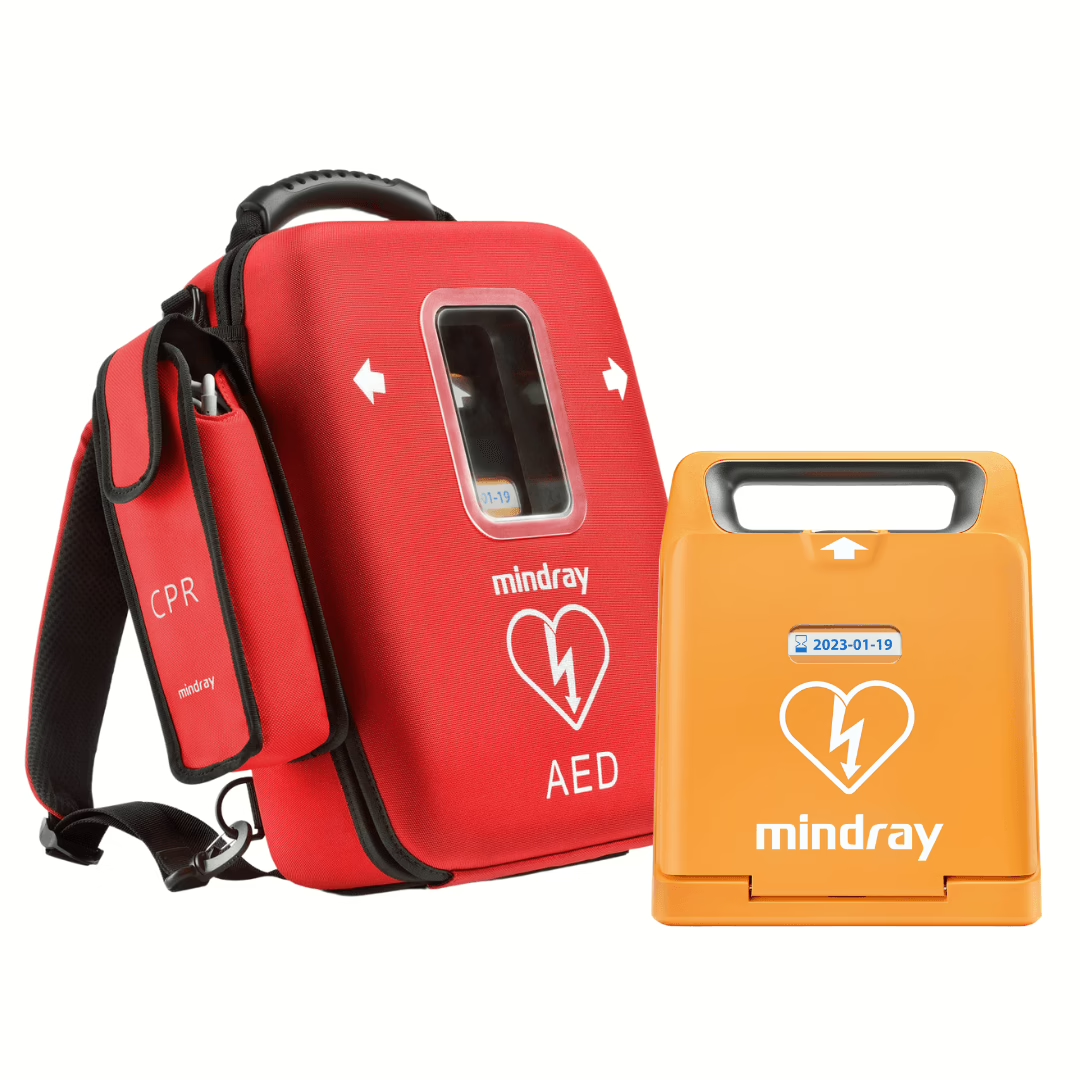
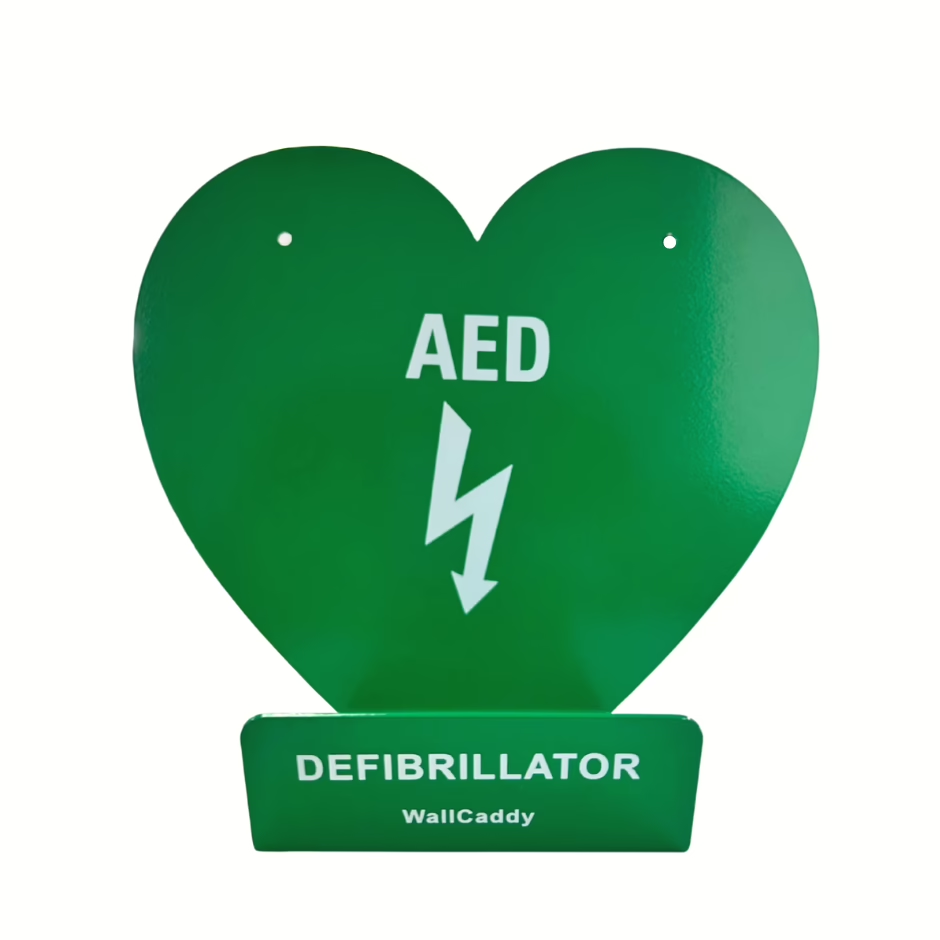
The C1A Mindray Fully Auto Defibrillator Outdoor Package is a great option to have outside the school building, featuring a Mindray C1A Fully Automatic Defibrillator, DefibSafe2 External Locked Defibrillator Cabinet and Defibrillator Wall Sticker.
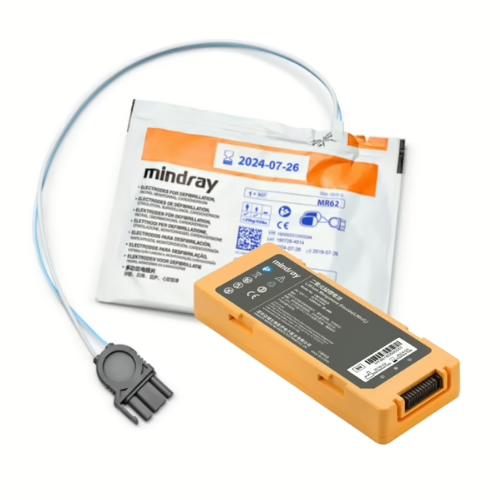
This is a fully automatic defibrillator, an ideal option for both experienced and inexperienced rescuers in all environments. It is immediately ready for use, thanks to the ‘pre-connected’ AED electrodes.
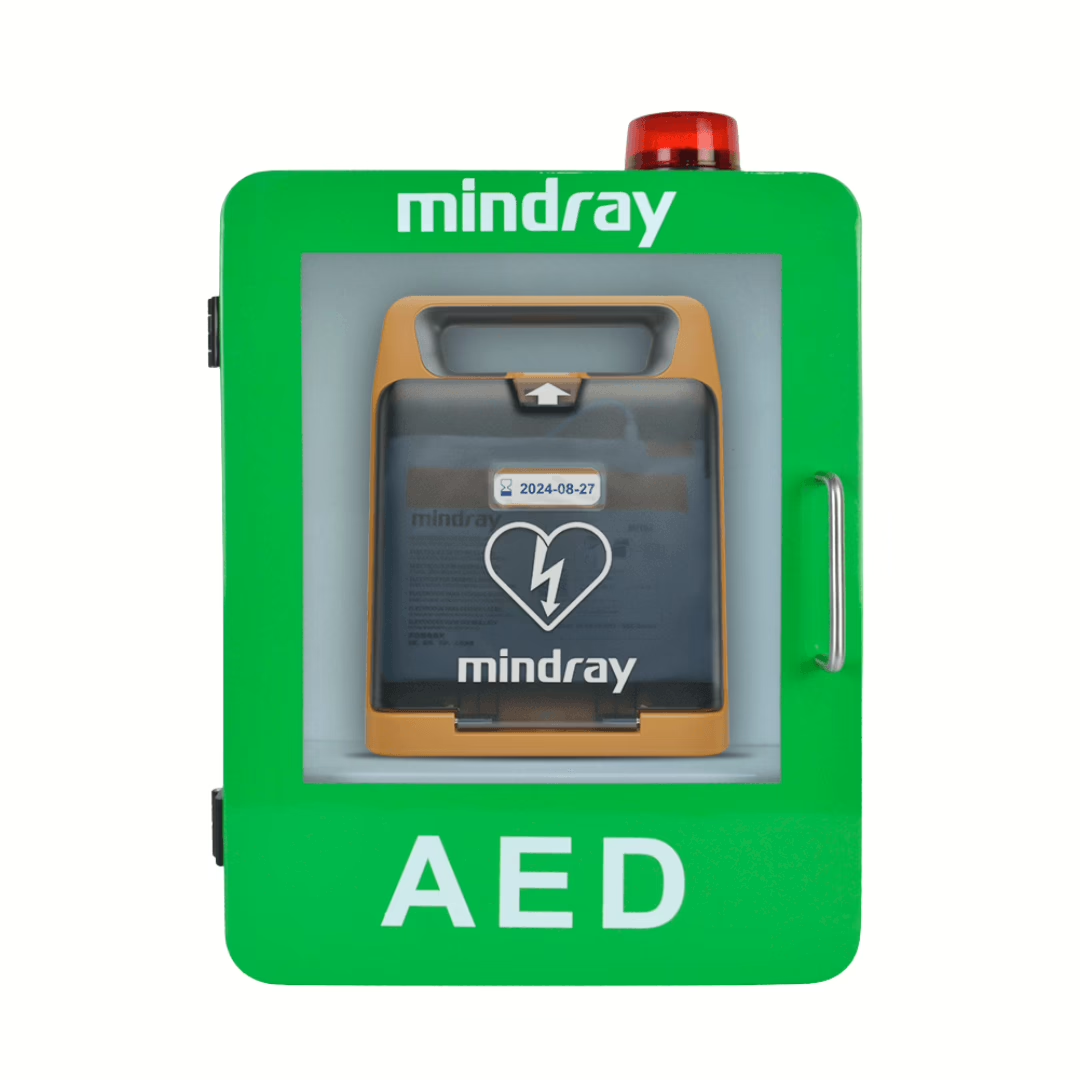
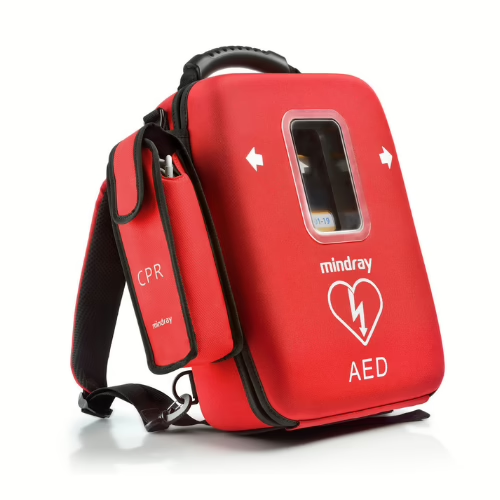
For indoors, the C2 Mindray Semi Auto AED Package is a great choice, complete with the Mindray C2 Semi Automatic Defibrillator, AED PolyCarbonate AED Cabinet with Strobe Light Alarm, Defibrillator Wall Sticker.
Suitable for trained and untrained responders, the Mindray C2 Defibrillator is ideal for placement in any environment, ensuring your school, office or place of work is heart safe. C2 models include a 17.78cm colour screen that automatically adjusts brightness. This screen allows for more concise animated instructions in combination with the standard voice prompts.
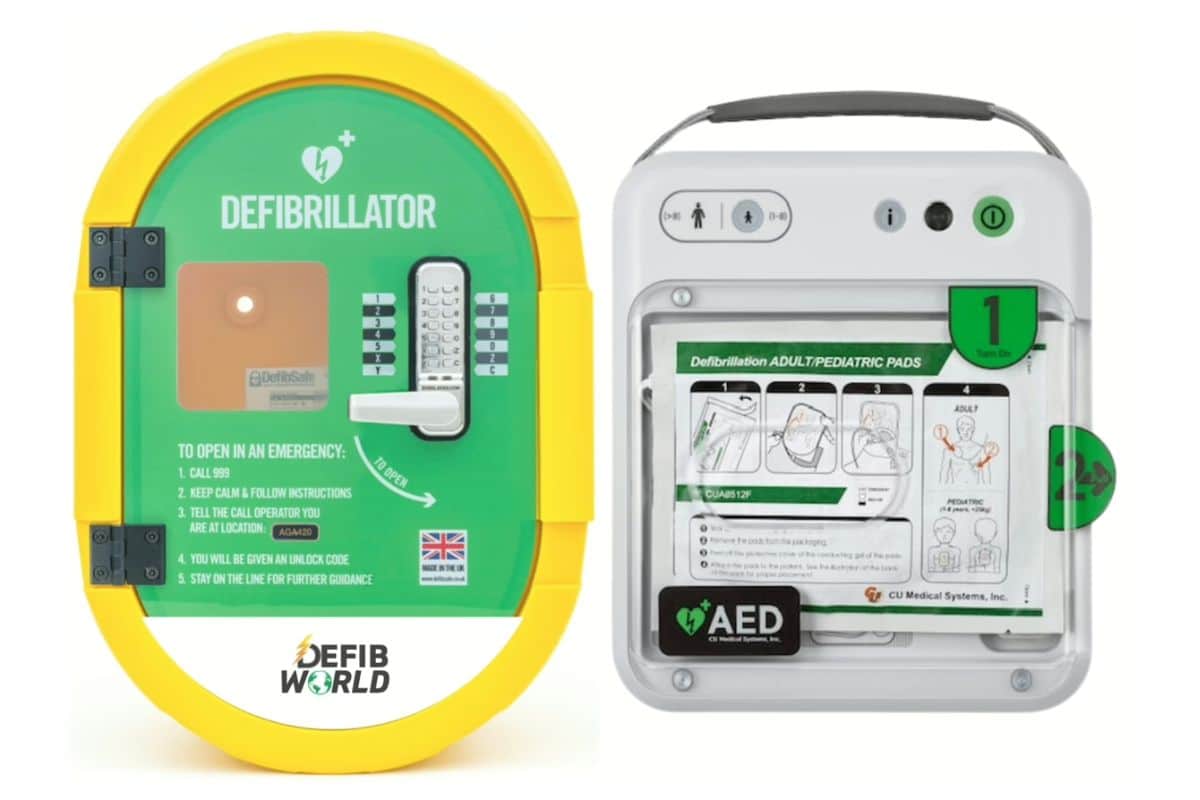
Shop our wide selection of top-rated defibrillators for schools and universities, here.
What Are the First Aid Legal Requirements for Schools in the UK?
In the UK, all schools have a legal duty to make sure they provide proper first aid arrangements, but the exact requirements vary slightly between England, Wales, Scotland and Northern Ireland.
England
For example, schools in England have to follow the Health and Safety (First Aid) Regulations 1981. They don’t set out exactly how many first aiders or kits a school must have, but they do make it clear that employers (which includes schools) must provide “adequate and appropriate” equipment, facilities and trained people.
Schools in England are also expected to follow guidance from the Department for Education, which includes having a first aid policy, trained staff (including paediatric first aid for those looking after under-5s), and making sure provision matches the size and risks of the school (i.e. more staff trained if it’s a large secondary school compared to a small village primary).
In regards to defibrillators, the Department for Education launched a programme in 2022 to supply state-funded schools with defibrillators, ensuring that by the end of 2023 every eligible school had received at least one device, with larger schools being provided with more.

This means that most schools in England now have access to a defibrillator, even though the law does not make it compulsory.
Wales
Wales also follows the 1981 regulations, but schools there have extra obligations under devolved education guidance. The Welsh Government expects schools to carry out proper risk assessments and ensure suitable first aid cover. Again, that includes equipment, facilities and training. For nurseries and early years settings, having staff with up-to-date paediatric first aid training is a legal requirement.
When it comes to defibrillators in Welsh schools, there is no legal obligation for schools to have a defibrillator, but the Welsh Government has supported their rollout through funding and local initiatives. This is the same for Scottish and Northern Irish schools, however government-backed programmes and community initiatives have ensured that many do.
Scotland
In Scotland, the same Health and Safety Regulations 1981 apply, and the Scottish Government also provides guidance on supporting pupils with healthcare needs, so schools have to think beyond just accidents, and consider children with medical conditions who might require immediate care.
Northern Ireland
While Northern Ireland has its own version of the law – the Health and Safety Regulations (Northern Ireland) 1982 – the duties are essentially the same as the rest of the UK. Employers must provide adequate first aid equipment, facilities and trained staff. Schools are expected to keep proper policies in place, carry out risk assessments, and ensure staff are trained appropriately.
Are You Ready to Save a Life in School?
Browse our quality range of easy-to-use defibrillators for schools and check out our regularly updated blog to learn more about CPR and first aid.
And of course, if you need assistance or have any questions at all, please call us on 0330 223 6336 or drop us an email at sales@defibworld.org.