














































.jpg)


When a person collapses with sudden cardiac arrest, using a defibrillator quickly can restart the heart and restore a normal rhythm. But if the casualty has a pacemaker, responders without medical training may hesitate.
In the UK, more than 500,000 people are living with a pacemaker, and the NHS carries out around 35,000 to 45,000 new implants every year. As these devices become more common, the likelihood of encountering one during a cardiac emergency is increasing.
For workplaces, public spaces, and care environments, this raises an important question. Can a defibrillator be used on someone with a pacemaker, or does it require a different approach?
The good news is that defibrillators are designed for use in these situations. Modern AEDs are built to guide the user through each step, making them suitable for use by people without medical training.
In this guide, we explain how defibrillators interact with pacemakers and what to be aware of when using one in an emergency.
What’s the Difference Between a Pacemaker and Defibrillator?
Pacemakers and defibrillators are both designed to support the heart, but they are used in very different situations.
In simple terms, a pacemaker supports the heart day to day, while a defibrillator is used to restart it in a life-threatening emergency.
A pacemaker is a small implanted device that helps treat heart rhythm problems over time. It sends gentle electrical signals to keep the heart beating regularly if it becomes too slow or uneven. It works continuously and is typically used to manage ongoing heart conditions.
A defibrillator, by contrast, is used in emergency situations. During sudden cardiac arrest, the heart can fall into life-threatening rhythms where it struggles to pump blood effectively. A defibrillator delivers a controlled shock to interrupt this abnormal rhythm and allow the heart to restart in a normal pattern.
As they serve different roles, having a pacemaker does not remove the need for a defibrillator. An AED will still assess the heart’s rhythm and only deliver a shock if one is needed.
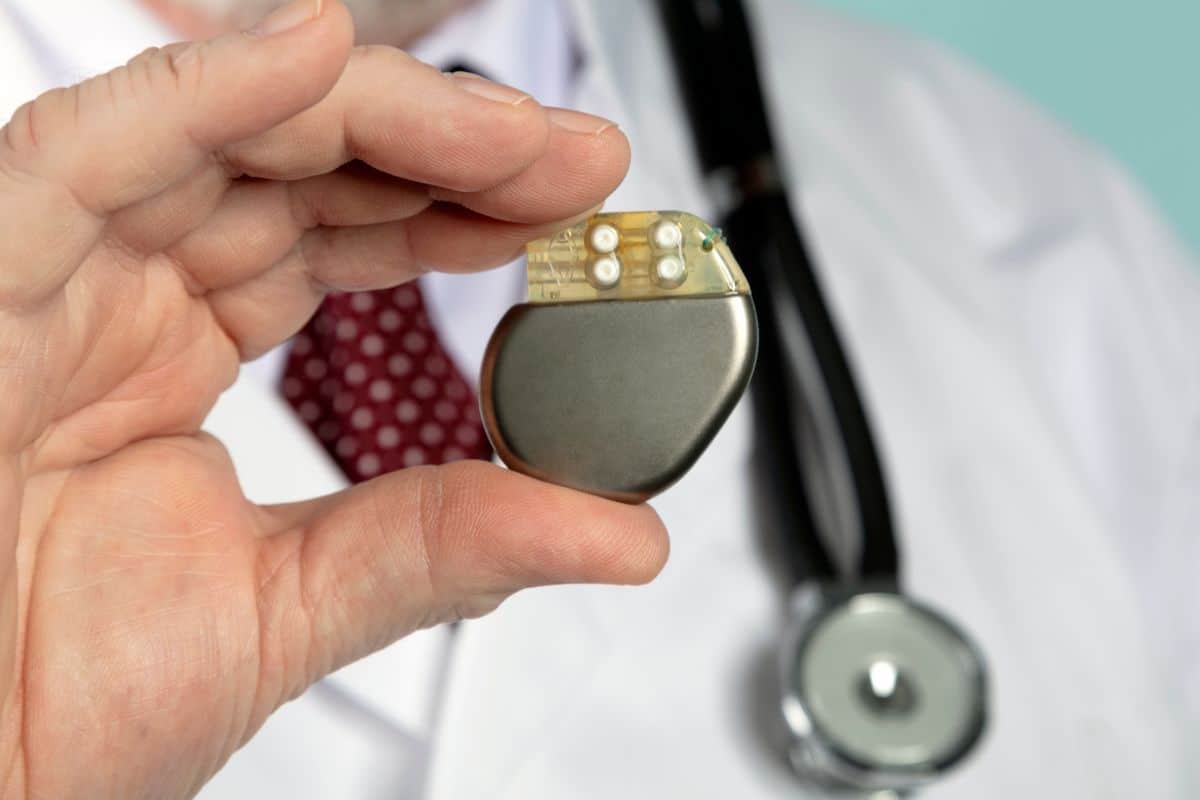
In simple terms, a pacemaker supports the heart day to day, while a defibrillator is used to restart it in a life-threatening emergency.
Can a Defibrillator Be Used on Someone With a Pacemaker?
Yes, a defibrillator can be used on someone with a pacemaker. In a cardiac arrest situation, using an AED should never be delayed because of an implanted device.
While a pacemaker helps manage abnormal heart rhythms, it does not prevent cardiac arrest. If the heart stops pumping effectively, a defibrillator may still be needed to restore effective heart function.
A common concern is whether the electrical shock from an AED could interfere with or damage a pacemaker. In reality, pacemakers are designed to withstand external shocks. The main consideration is pad placement.
If a pacemaker is visible or can be felt under the skin, pads should not be placed directly over the device, as this can affect device function or the effectiveness of the shock. Instead, they should be positioned slightly away from the device site.
In an emergency, taking action quickly is far more important than worrying about whether a pacemaker is present.
If a person is unresponsive and not breathing normally, use the defibrillator as soon as it is available and follow the instructions provided. The presence of a pacemaker should not delay treatment.
In an emergency, taking action quickly is far more important than worrying about whether a pacemaker is present.
Where Do You Place Defibrillator Pads With a Pacemaker?
You can use a defibrillator on someone with a pacemaker, but pad placement needs a small adjustment to allow the current to pass through the heart.
Pacemakers and implantable cardioverter defibrillators (ICDs) are usually positioned just under the skin on the upper chest, often below the collarbone. In many cases, you can see or feel a small, firm lump where the device sits.
If you notice that the person has a pacemaker or ICD, adjust the pad position slightly to ensure it is not placed over this area.
Current Resuscitation Council UK guidance recommends keeping defibrillator pads at least 8 centimetres away from the device site. This helps prevent disruption to the electrical current while still allowing it to pass through the heart.
Standard antero-lateral placement should still be followed. This means placing one pad on the upper right side of the chest and the other on the left side, below the armpit. If a pacemaker is present, the pad can be moved slightly to avoid the device while still maintaining this general positioning.
Defibrillator pads should be firmly attached to bare skin and positioned so the current can pass across the heart. Even with a pacemaker or other implanted device, AEDs are safe to use, and this small adjustment is all that is needed to use them effectively.

If you notice that the person has a pacemaker or ICD, adjust the pad position slightly to ensure it is not placed over this area.
How Can We Help
To sum up, can a defibrillator be used with a pacemaker? The answer is definitely yes.
In a cardiac arrest, an AED should be used promptly. The only adjustment needed is to avoid placing the pads directly over the device, keeping them slightly away so the shock can be delivered effectively.
At Defib World, we support workplaces, public spaces, and care environments in choosing reliable, easy-to-use defibrillators designed for real-world situations.
From clear instructions to intuitive pad placement guidance, our range of trusted AEDs is built to help ensure they can be used effectively when it matters most.
Explore our defibrillator range today, or get in touch with our team for support in finding the right solution for your setting.