

































.jpg)


Please remember, if you need assistance or have any questions, call us on 0330 223 6336 or drop us an email at sales@defibworld.org
- Published:3 April 2025
If you’ve ever found yourself wondering whether buying a defibrillator is worth the expense, you’re not alone. These lifesaving devices can sometimes run into the hundreds, if not thousands of pounds, prompting many individuals and organisations to question: “Is the price justified, or is it more gadget than necessity?” Let’s cut straight to the heart of that concern. In this article, we’ll dig beneath the usual facts, tackling the nagging questions people rarely talk about and offering fresh, deeply informed insights. By the end, you’ll know exactly where you stand on a defibrillator’s true cost vs. its life-saving value, with no questions left unanswered.
HIGH-LEVEL COSTS: WHY PRICES VARY WIDELY
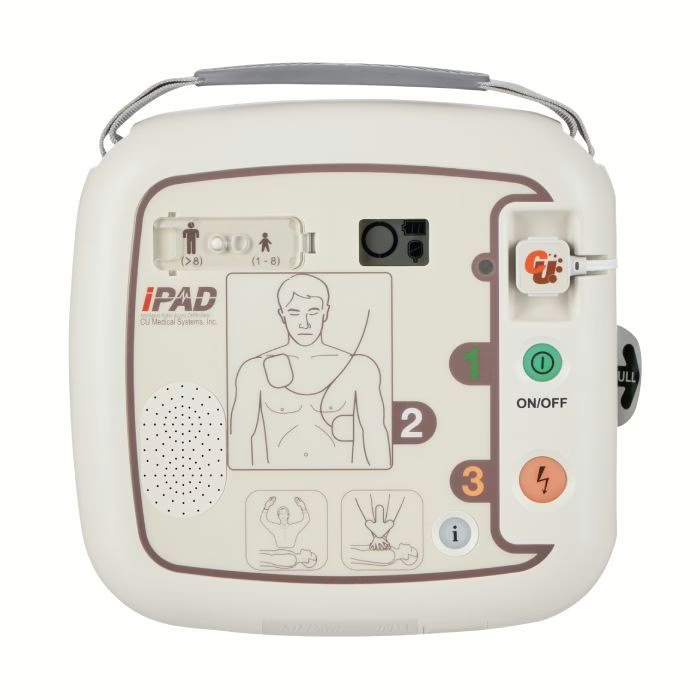
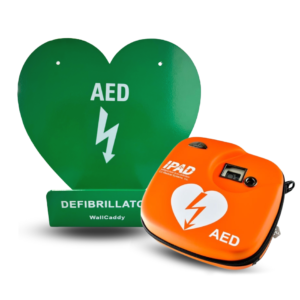
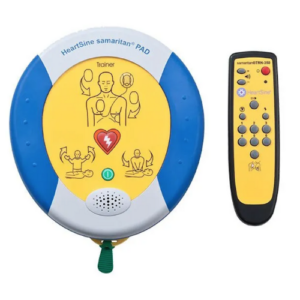
Defibrillators, also known as Automated External Defibrillators (AEDs), can range from around £600 to well over £2,000. That’s a serious outlay, especially for smaller businesses, community centres, or individuals footing the bill. Why the massive price gap? It typically comes down to technology, brand reputation, and included features. A basic AED might suffice for simple public usage, whereas more advanced models offer additional functionality, like advanced ECG analysis or child-mode settings. If you’re curious about deeper specifics, it’s often helpful to see how these devices compare side by side.
THE HARD FIGURES VS. HIDDEN COSTS
When you look at an AED’s price tag, let’s say £1,200, it’s easy to treat that as the final figure. But there are hidden or “soft” costs you should keep in mind:
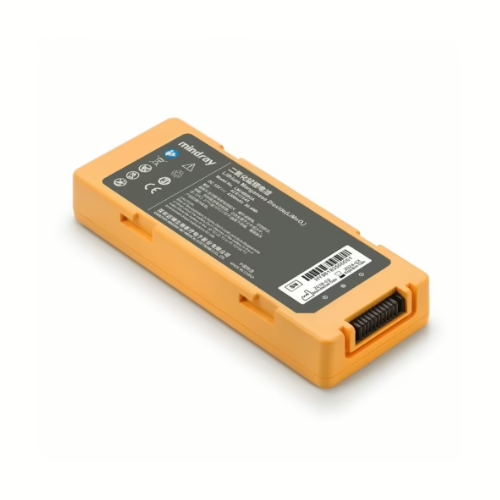
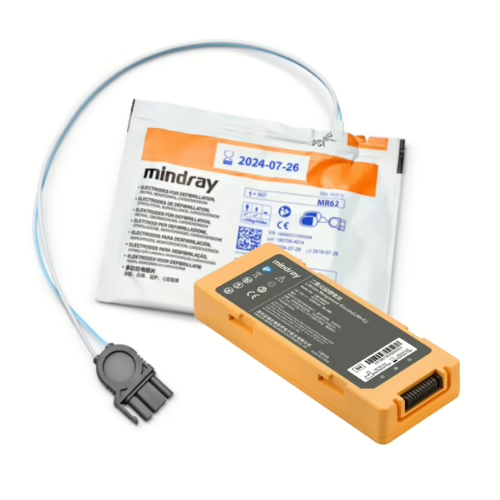
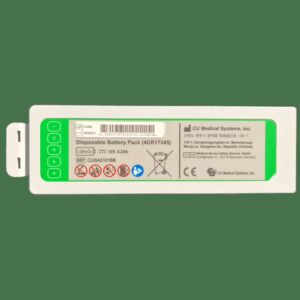
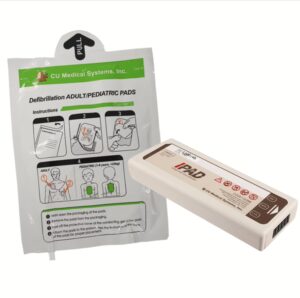
- Ongoing Maintenance and Pad Replacements. All AEDs require periodic checks, electrode pad replacements, and, in some cases, battery refreshes. Skipping these might render the device useless when you need it most.
- Staff Training or Familiarisation. Although many modern AEDs are user-friendly, there is still value in teaching employees or community members how to use them calmly and confidently. Training can be free in some locales, but often it’s an additional expense.
- Legislative or Regulatory Upgrades. In certain regions, guidelines evolve. For instance, if new laws mandate that public venues have specific defibrillator features, you might need an upgraded device or additional accessories down the line.
Though these expenses might add to the final total, they rarely overshadow the fundamental “worth” of a defibrillator if it saves even one life. Still, it’s worth being realistic about them as you plan your budget.

- 3 April 2025
UNDERSTANDING THE LIFE-OR-DEATH MATH
Medical experts generally state that survival rates drop by around 10% for every minute spent waiting to administer a shock after sudden cardiac arrest. If an ambulance takes eight minutes to arrive, that could easily mean an 80% reduction in someone’s chance of survival. With a defibrillator on site, however, you slash that waiting period dramatically. This is far more than hypothetical: real-world data from many communities shows a marked increase in survival rates when AEDs are readily available.
It’s not just about “someone else’s heart stopping,” either. The person who might need an AED could be a close friend, a colleague, or even you. Once you internalise that possibility, the cost discussion tends to shift from “Is it too expensive?” to “How do I get one in place as soon as possible?”
INTANGIBLE BENEFITS: PEACE OF MIND AND COMMUNITY CONFIDENCE
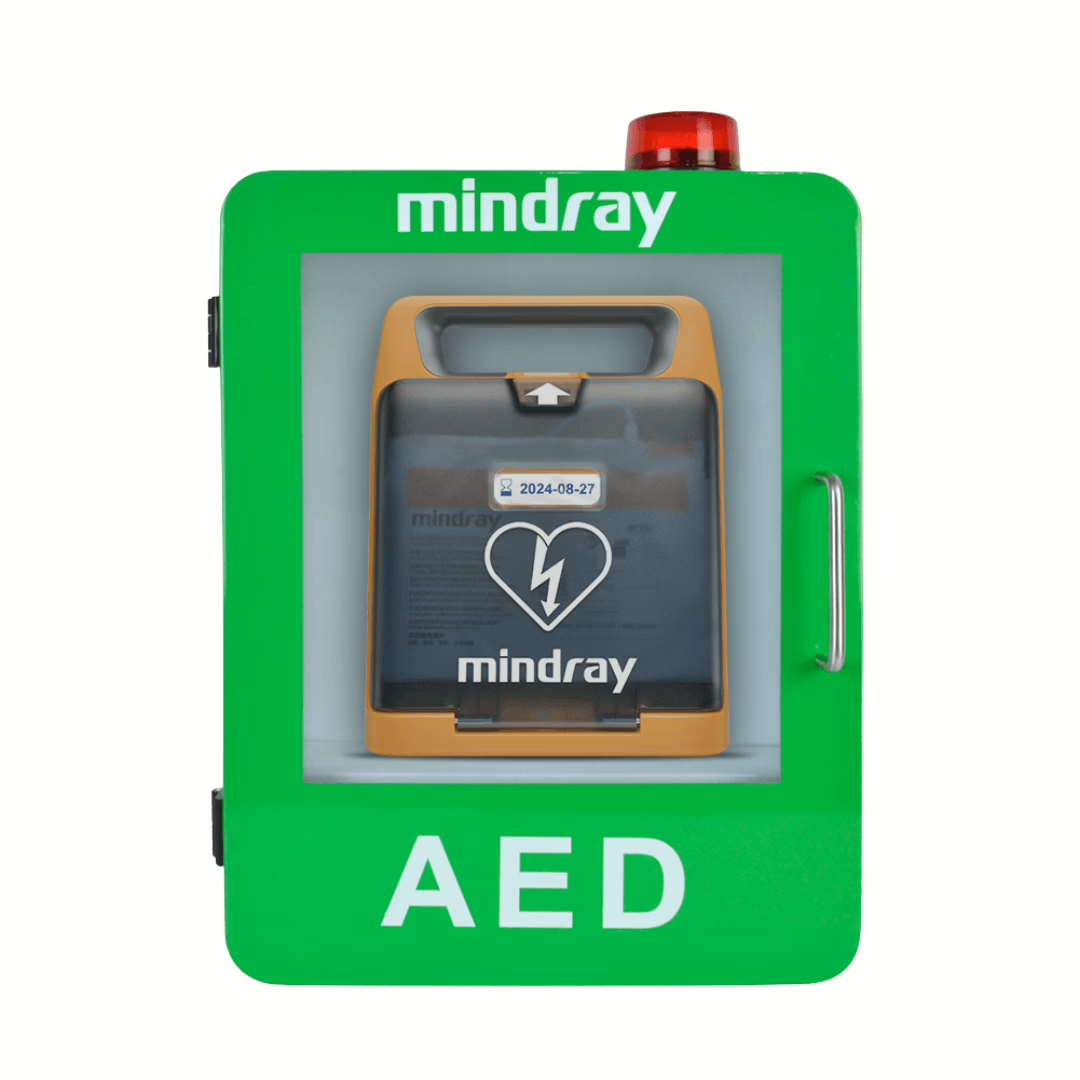
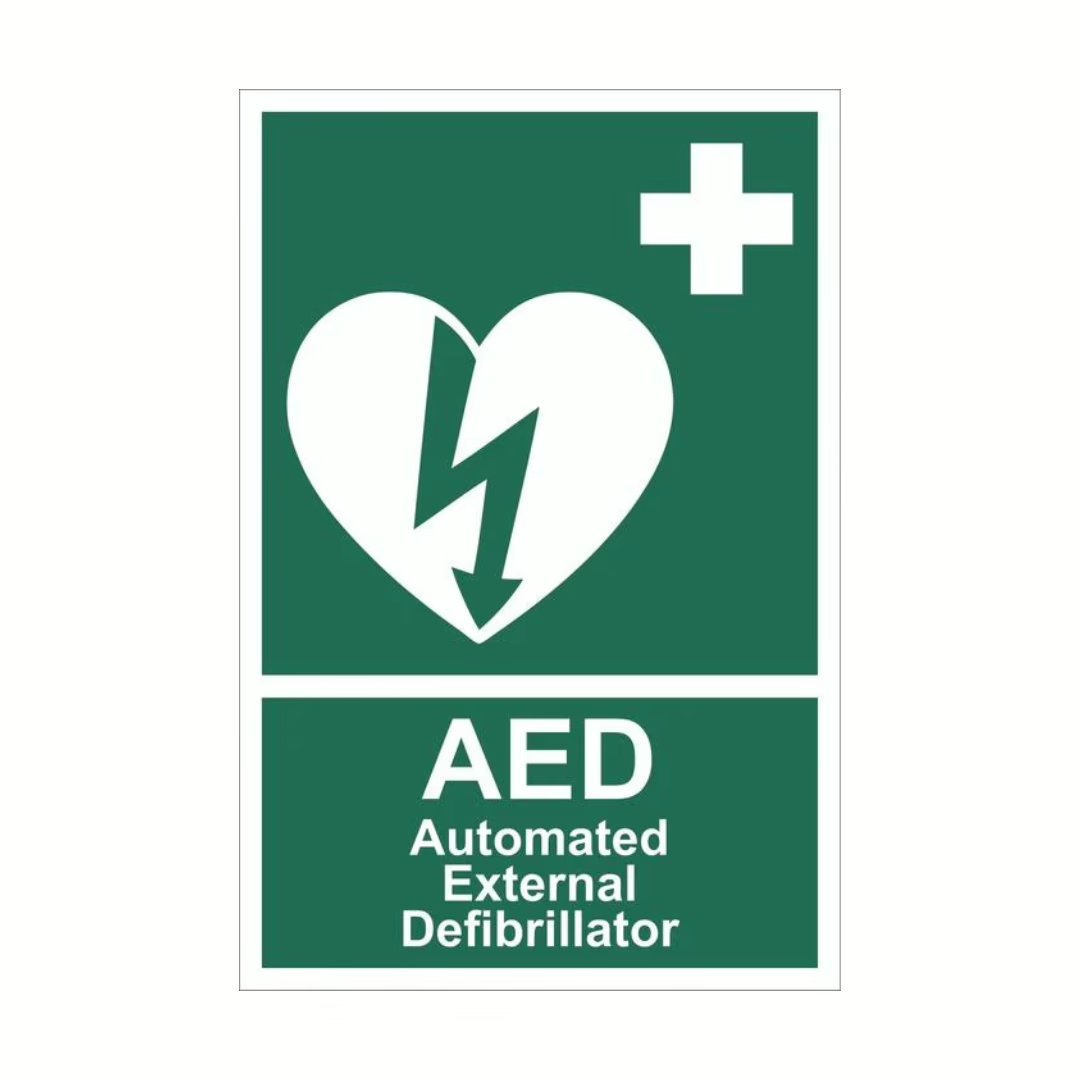
Though everyone talks about the literal, life-saving potential of AEDs, there’s another aspect rarely discussed in detail: the psychological and social benefits. Having a visible AED on site, maybe near your reception area or in a dedicated Defibrillator Cabinet, can positively affect morale. People know their environment is prepared for the worst. Employees at a workplace often feel a subtle yet real sense of relief knowing that the organisation values their well-being enough to invest in safety. Likewise, customers or visitors see that level of care and may trust you more deeply as a result.
In community settings (a local sports club, for instance), an AED can also become a rallying point for neighbours who want to share the cost, collectively train in first aid, and generally look out for each other. This intangible sense of security and connectedness is hard to assign a monetary figure to, yet it contributes to what people mean by “value beyond the bottom line.”
SOCIETAL RESPONSIBILITY AND LEGAL CONSIDERATIONS
We live in an era where social responsibility and corporate accountability are more important than ever. If you run a public venue, there’s an expectation, sometimes mandated by law, that you take reasonable measures to protect patrons. This ties into a concept known as “duty of care.”
In some regions, there’s talk of legislation requiring specific public places to install defibrillators. Even if your locality doesn’t yet mandate it, future legislation might. Being ahead of the curve can spare you last-minute scrambles if new regulations roll out. Moreover, it’s far cheaper (and ethically sound) to handle this proactively rather than face potential legal fees or brand damage should an avoidable tragedy occur on your premises.
THE EMOTIONAL TOLL OF “WHAT IF?”
Imagine a scenario: you chose not to install an AED because you deemed it too expensive. Then, one day, someone collapses, a colleague, a visitor, or a loved one. You call the ambulance; it arrives in eight minutes, but that was too late. Yes, this is a worst-case scenario, but it’s not an uncommon one. The emotional aftermath and potential legal ramifications could be enormous. That hypothetical alone convinces many people that the cost is, in fact, minimal compared to the potential heartbreak of not having immediate help.
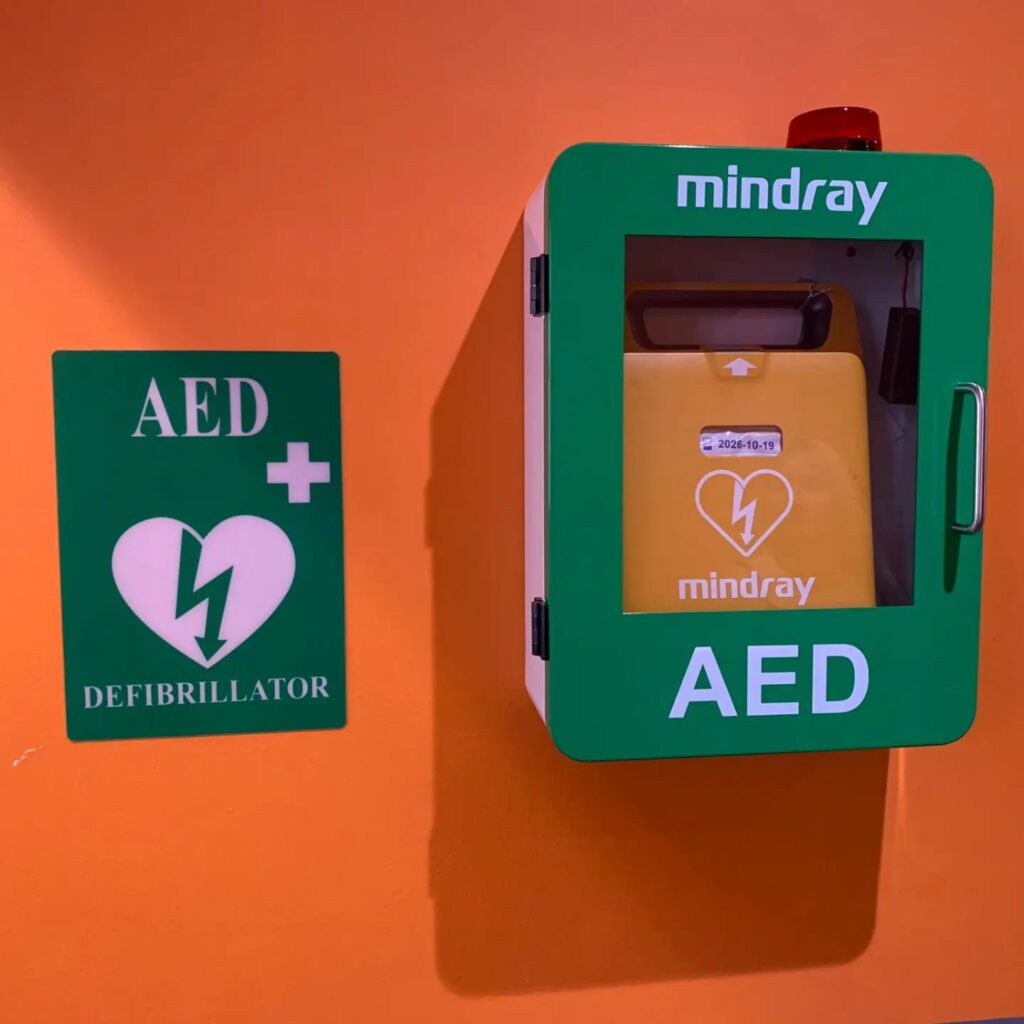
HOW TO GET THE MOST OUT OF YOUR AED INVESTMENT
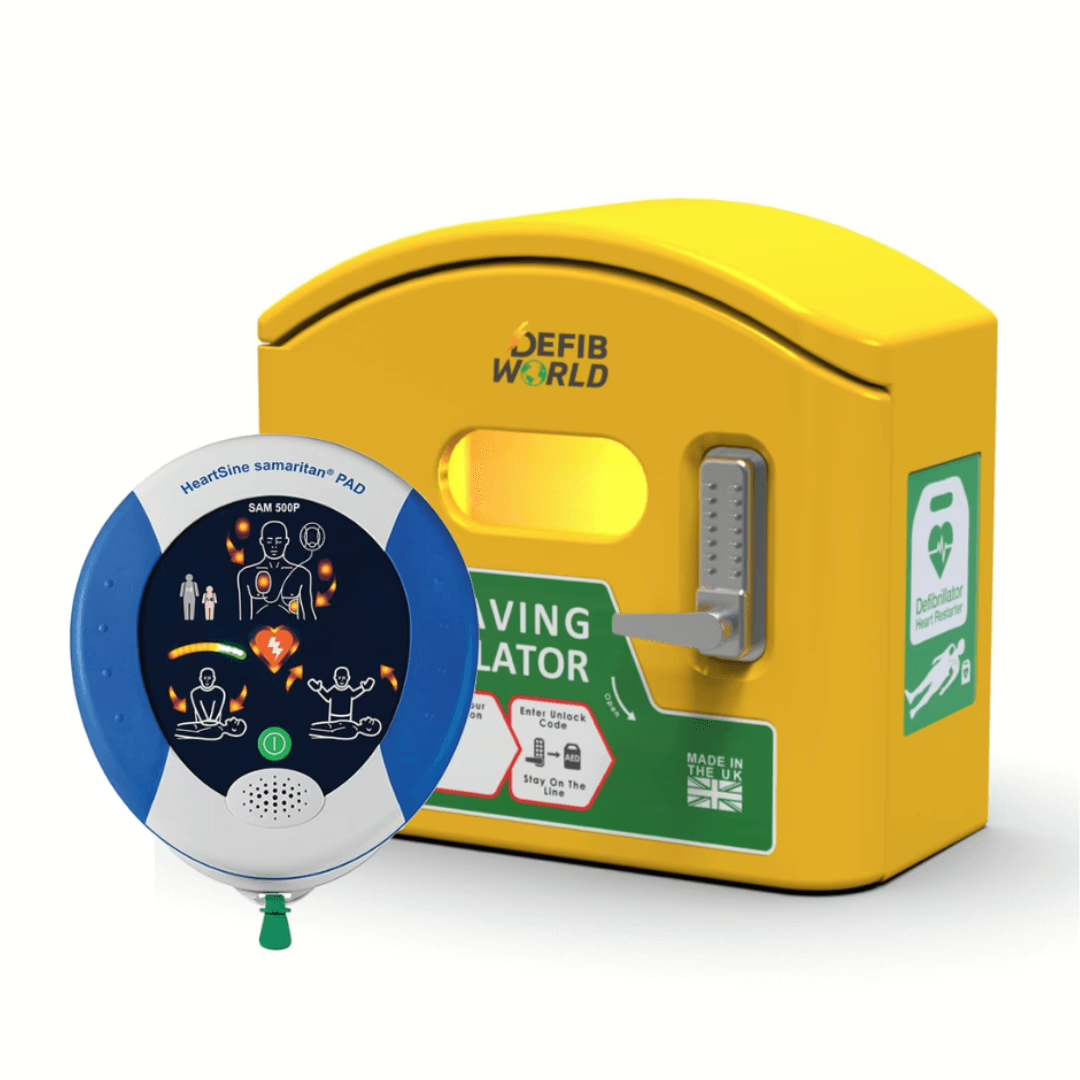
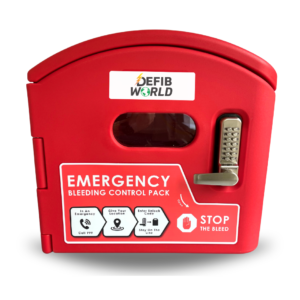
- Pair It with the Right Storage and Accessories. Keep your device in an easily spotted location, possibly in a Defibrillator Cabinet that stands out visually and ensures consistent temperature control, especially if you’re in a region with extreme weather.
- Ensure Regular Maintenance. Many people fail to maintain their AED properly. Create a schedule for monthly or quarterly checks and stay on top of pad and battery expiration dates.
- Provide Ongoing Training. Even if you can’t afford formal classes for every single employee, you can at least share digital resources or short in-person demos. Familiarity with the device can save precious time in an actual emergency.
- Register Your AED. If you’re in an area with a local registry or network, consider registering your AED so emergency services can direct bystanders to it if someone collapses nearby.
DEBUNKING THE “AEDS ARE TOO COMPLICATED” MYTH
One reason some people hesitate is that they worry about messing it up or doing more harm than good. In reality, modern AEDs are incredibly user-friendly. They provide audio or even visual prompts to guide you step by step. Some devices literally speak to you, instructing everything from pad placement to when to deliver the shock. So, beyond cost, complexity shouldn’t be a barrier.
PRICEY ON THE SURFACE, PRICELESS WHEN YOU NEED IT
Yes, defibrillators can carry a seemingly hefty price tag, especially for small communities, volunteer-run organisations, or budget-conscious businesses. Yet, there’s an undeniable calculus at play: these devices save lives in a way that no alternative can match. As you weigh the cost, remember that an AED is more than just a medical tool; it’s an investment in safety, peace of mind, and communal well-being.
At the end of the day, the question “Are they worth it?” practically answers itself. Once you or someone you care about is in a life-or-death situation where every second counts, the real cost becomes the regret of not having acted sooner. And that’s a cost no one wants to bear.