










































.jpg)


Published on 18/08/2025 & Updated on 20/11/2025.
Over 70% of cardiac arrests happen outside of a hospital setting, and most involve people aged over 65. With the risks rising sharply when treatment is delayed, it’s essential that every care home, retirement community, and even private home with elderly residents has quick access to an Automated External Defibrillator (AED).
At Defib World, we offer AEDs specifically designed for home use, ensuring that every care home has access to life-saving technology. Protect your residents by ordering online today.
In this guide, we’ll walk you through everything you need to know about defibrillators in care homes, from why they’re so important to choosing the right model, and tips for delivering the equipment to the elderly.
So, first things first…
Why Every Care Home Should Have a Defibrillator
Sudden cardiac arrest can happen to anyone, at any time. But unfortunately, the risk is naturally higher in care homes. This is because many residents live with existing heart conditions, limited mobility, or other health issues, which can all increase the likelihood of a cardiac emergency.
In these moments, every second is absolutely critical. Did you know that for each minute without defibrillation, survival rates drop by around 10%?
However, having a defibrillator in the care home means staff can act immediately, rather than waiting for emergency services to arrive. In urban areas, ambulance response times can be long, and in rural locations, they can be considerably longer.
 Beyond these scary statistics, an AED in a care home offers peace of mind for staff, residents, and families, as it shows a commitment to safeguarding the people in your care and ensures your team is ready to respond quickly and confidently if the worst happens.
So, how do you know which one to choose?
Choosing the Right Defibrillator for Care Homes
The great thing about modern AEDs is that they are designed to be simple, safe, and effective, even for people with no medical background. That said, there are many types of defibrillators on the market, and the right choice for a care home will depend on the needs of your residents and staff, as well as the layout of your building.
Here are some key things you should think about when shopping around:
1. Ease of Use
In an emergency, care home staff won’t have time to read lengthy instructions or figure out complicated controls.
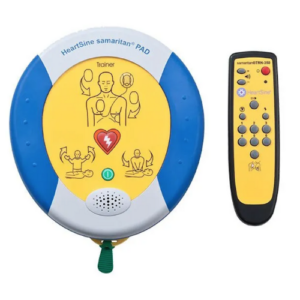
This is why it’s important to choose an AED with clear voice prompts that will guide the user step-by-step, telling them exactly what to do, from placing the pads to delivering a shock.
Visual indicators, such as diagrams, flashing lights, or simple animations, can reinforce those instructions and help in noisy environments where hearing the voice prompts might be difficult.
The best AEDs are designed so that anyone, even without prior training, can use them effectively. That means minimal steps to deliver a shock, usually just opening the lid, placing the pads, and pressing one button when told to.
The Cardiac Science Powerheart G5 Fully Automatic AED Defibrillator is a great example of an easy-to-use AED, featuring voice prompts that guide the user step by step.
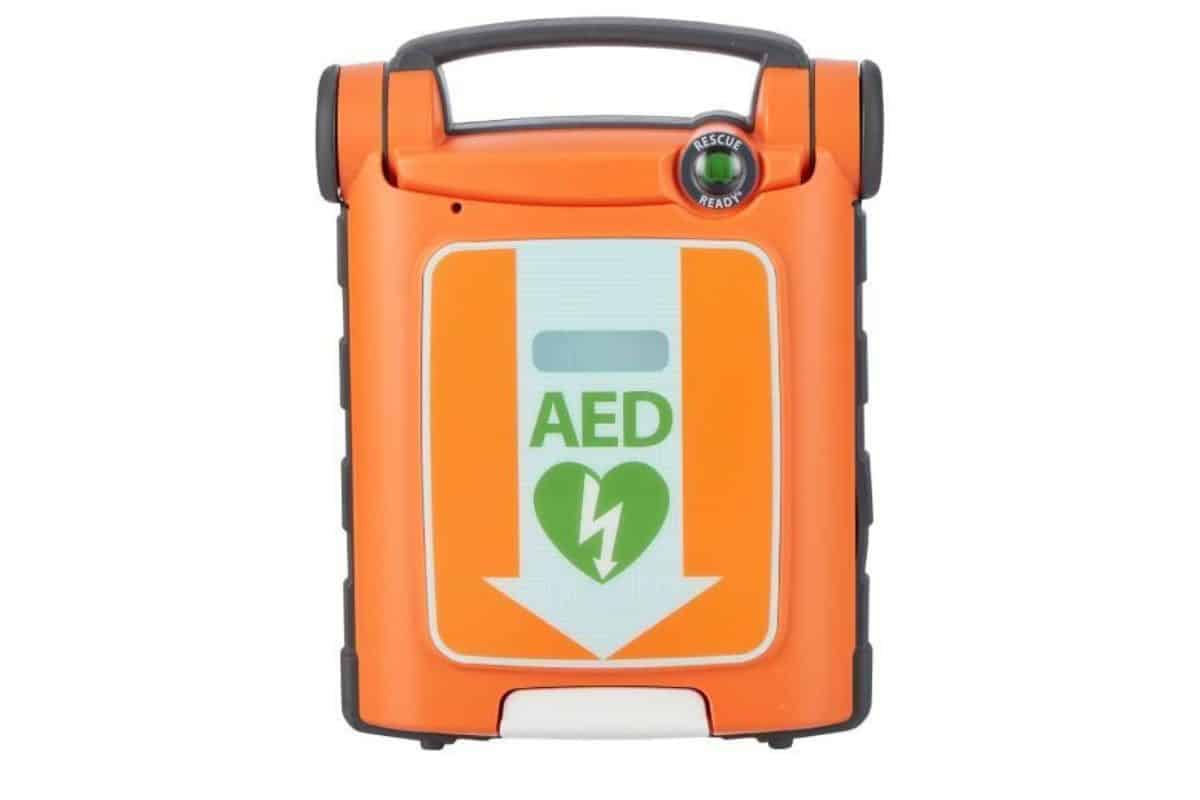 The Cardiac Science Powerheart G5 Fully Automatic Defibrillator also benefits from automatic self-tests: daily, weekly, and monthly, ensuring the battery, pads, and internal systems are always ready, giving care home staff peace of mind that the device will work when it’s needed most.
2. Lightweight and Portable
In a care home, every second counts during a cardiac emergency, and the AED needs to reach the resident as fast as possible. If your building has multiple floors, long corridors, or separate wings, a lightweight, portable unit can make all the difference.
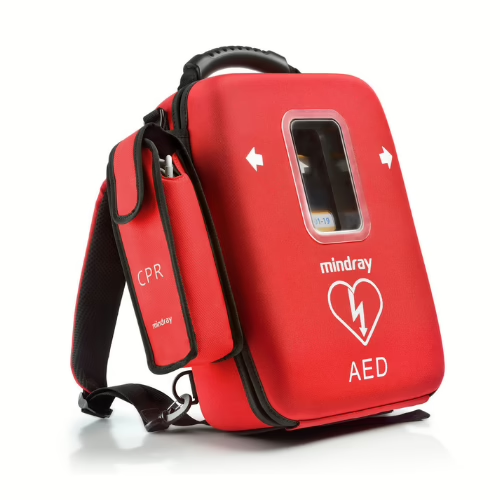
You’ll also find that some AEDs come with sturdy carry handles or soft protective cases with shoulder straps, making them easier to transport. And for larger sites, you might also consider strategically placing multiple units so that no area is more than a minute from an AED.
3. Environment
You also want to consider whether the AED will be stored indoors, near reception, or in an outdoor cabinet.
Where you plan to store your AED will influence which model is most suitable, as some models are more robust and weather-resistant than others.
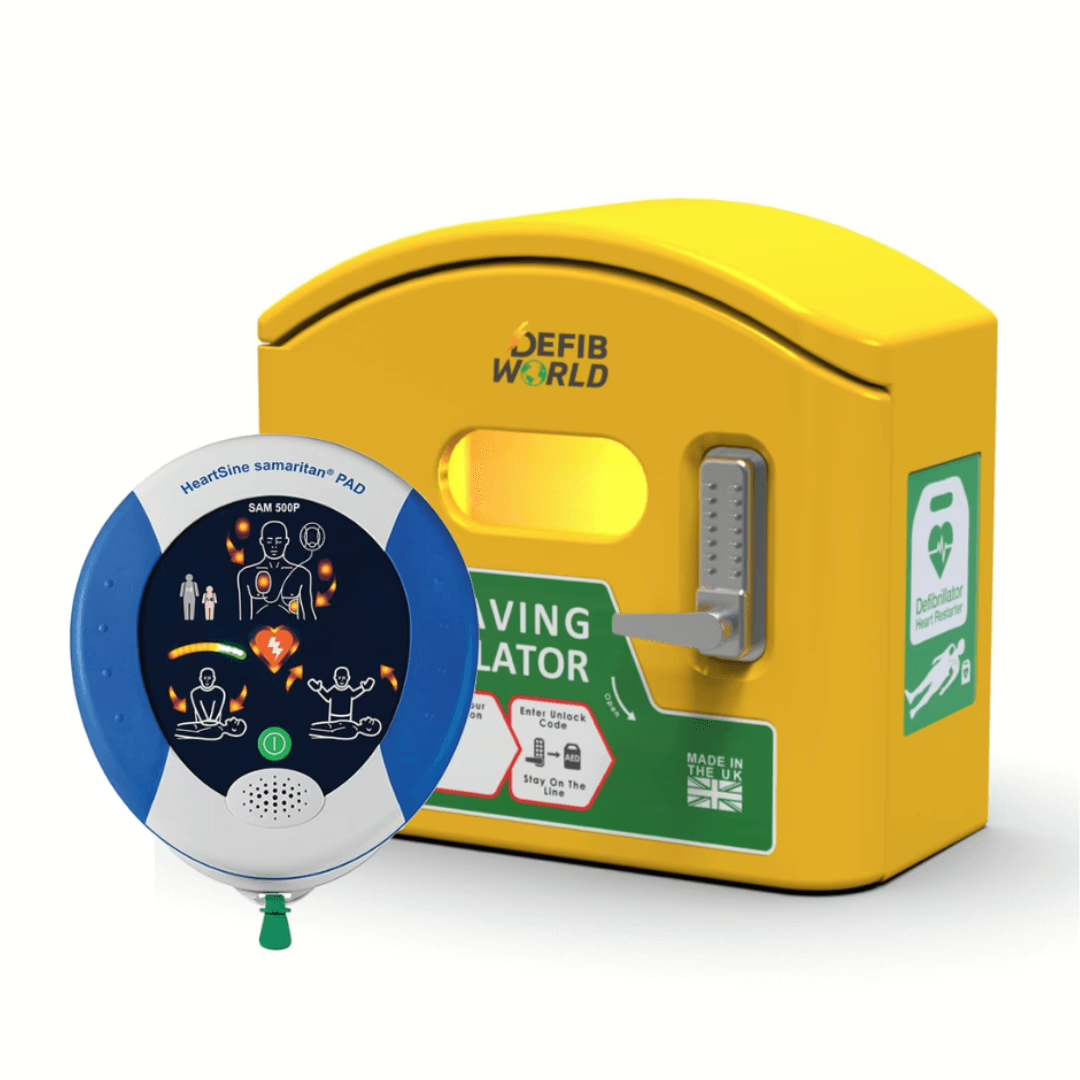
If you plan to keep it indoors, such as in a reception area or staff office, almost any standard model will be fine. But if you want the AED to be accessible to visitors, staff, or the wider community outside of the care home’s main hours, you might need an outdoor cabinet.
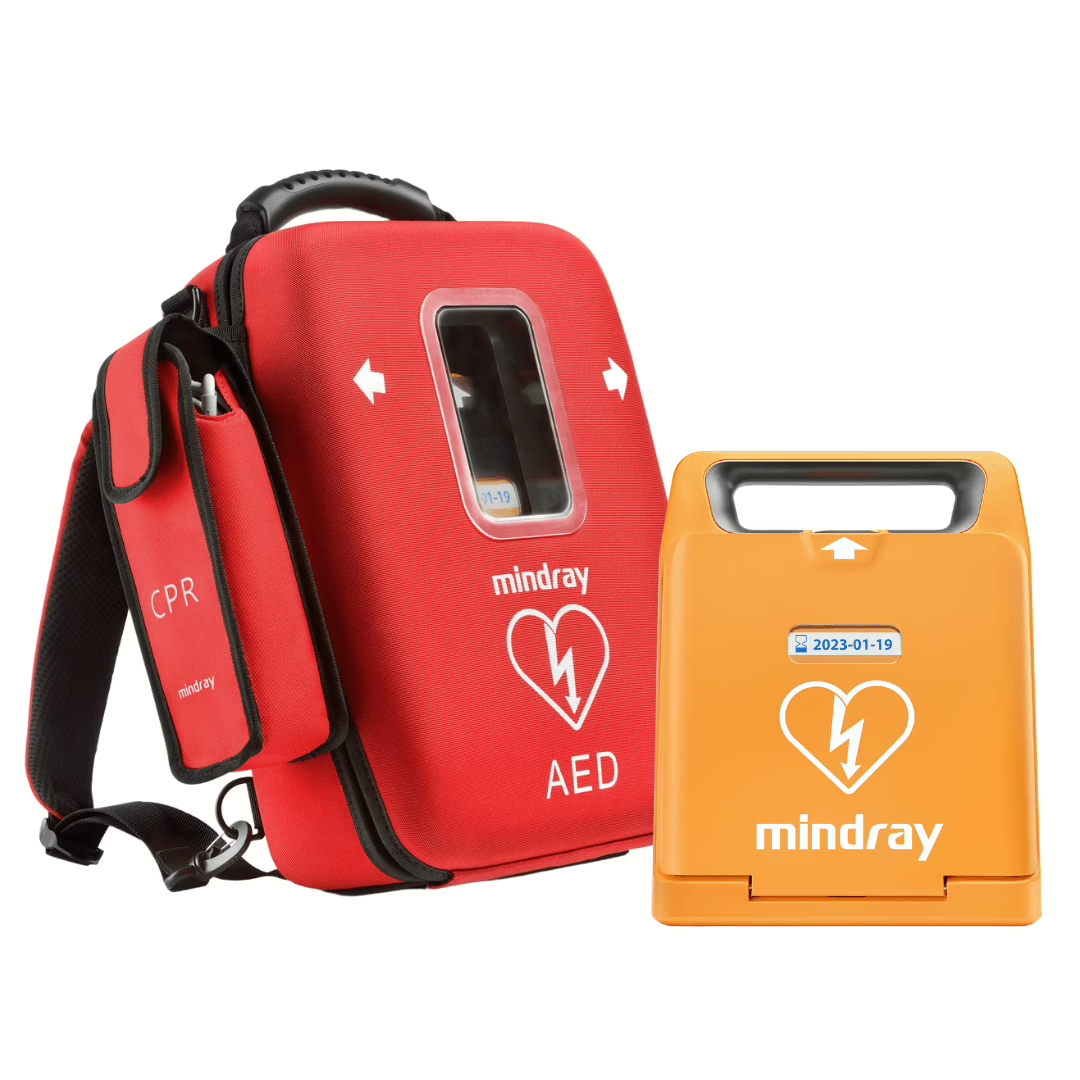
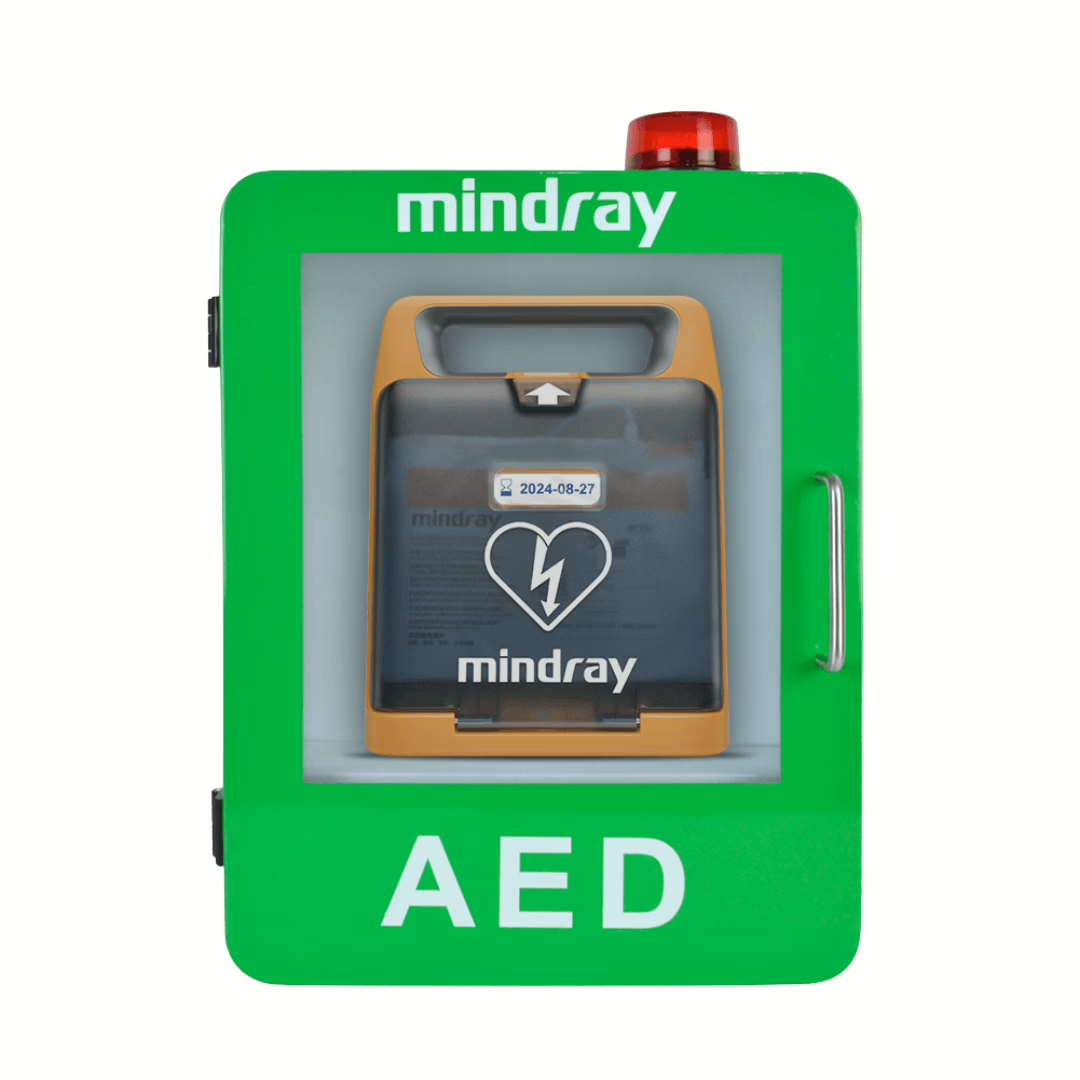
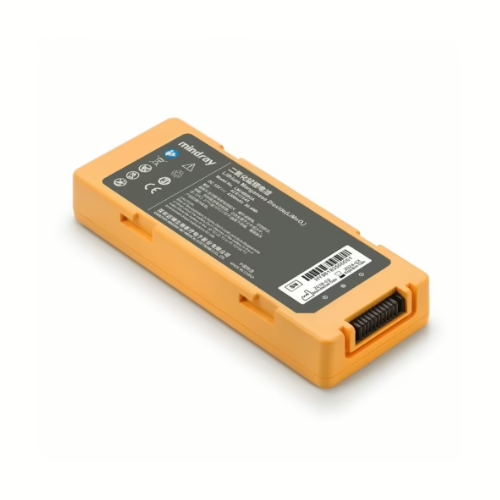
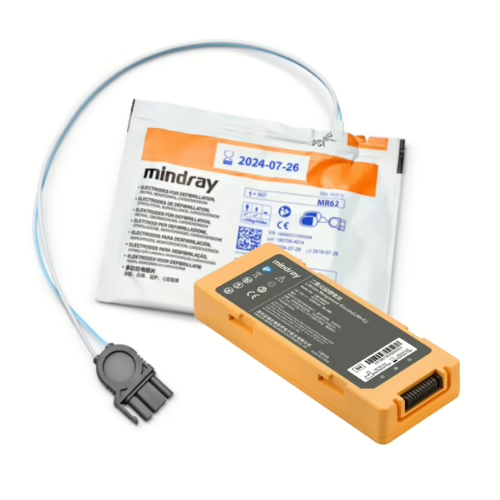
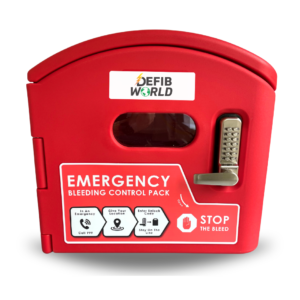
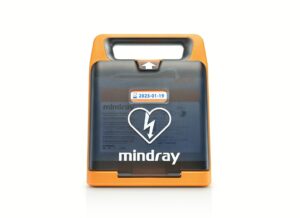
The C1A Fully Mindray AED, Defibrillator Cabinet, and Bleed Kit Package is a fantastic option if you’re looking for an outdoor defibrillator.
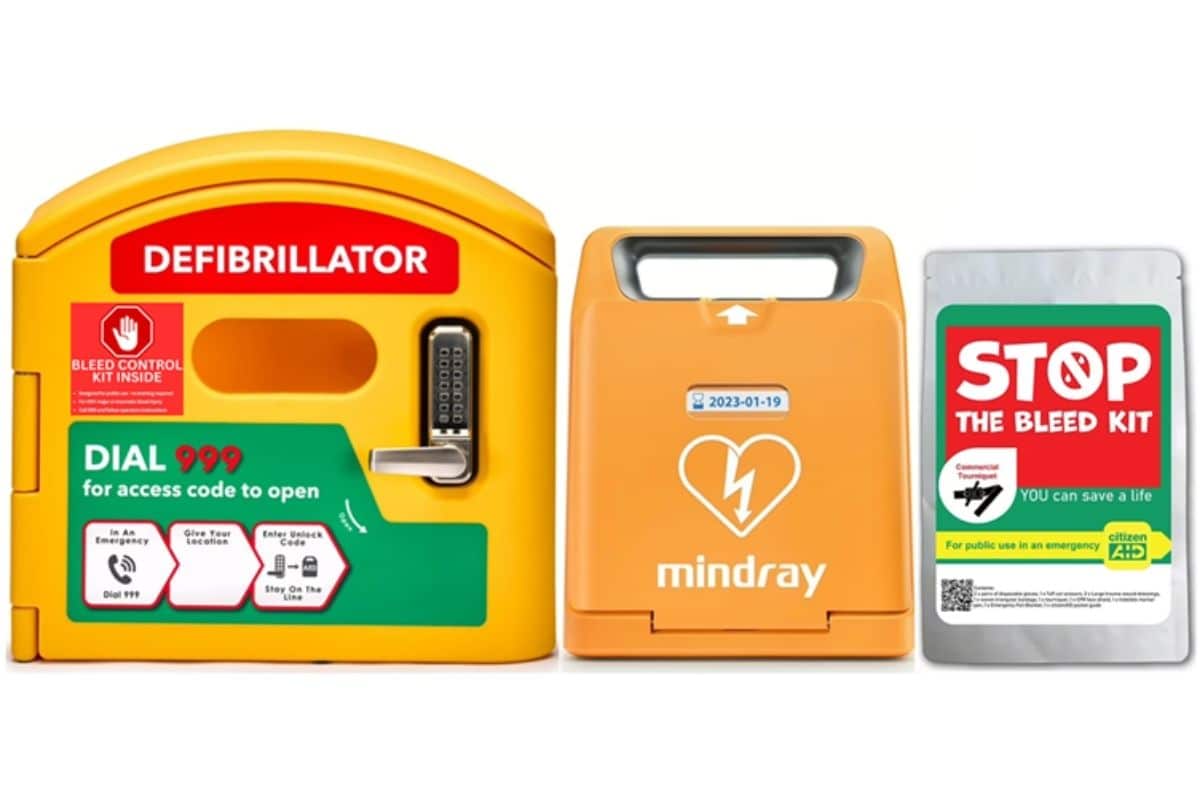 With pre-connected electrode pads, voice-guided instructions, CPR coaching, and immediate shock delivery, the Mindray BeneHeart C1A Fully Automatic AED ensures that even untrained bystanders can respond effectively in an emergency.
4. Battery Life and Maintenance
Reliability is everything with a defibrillator, so you want a model that’s ready to work at a moment’s notice without constant upkeep.
Look for one with a long battery shelf life so that it’ll require fewer replacements and lower ongoing costs. Also, look for one which has pads with a generous expiry date to save time and reduce the risk of them being out of date when they’re needed most.
Some AEDs also have the added benefit of running automatic self-checks that test the battery, circuitry, and pads at regular intervals.
Our Top Tips for AED Use on Elderly Patients
While AEDs are designed to be safe and effective for people of all ages, there are a few additional considerations when using them with elderly residents in a care home setting.
For example, elderly patients often have more delicate skin. When placing the pads, take care when removing clothing and ensure they make good contact with the chest, smoothing out any skin folds.
Some elderly people may have pacemakers or implanted defibrillators. These can often be spotted as a small lump under the skin near the collarbone. If present, place the AED pad at least an inch away from it.
It’s also worth noting that for an AED to be most effective, the people using it must be confident in their ability to operate it correctly. This is why training is essential for caregivers, family members, and care home staff. Regular hands-on training ensures that in the event of an emergency, responders act quickly and efficiently.
How Defib World Can Help
We hope this blog has taught you everything you need to know about defibrillators for care homes.
If you’re considering a defibrillator, have a look through our range of easy-to-use defibrillators and check out our regularly updated blog to learn more about CPR and first aid.
And of course, if you need assistance or have any questions, please call us on 0330 223 6336 or drop us an email at sales@def