



















0330 223 6336
My profile
shopping cart

Is It Worth Buying a Defibrillator for My Home​?

For every minute closer you are to a defibrillator, your chance of survival goes up by 10% in case of a cardiac arrest.

If you consider that 72% of cardiac arrests happen at home, and yet community defibrillators are used in fewer than 1 in 10 of these cases, you’ll see how it may be worth buying a defibrillator for your home.

In this guide, we’ll cover everything you need to know about home defibrillators and whether investing in one is right for you and your family.

What is a Home Defibrillator?

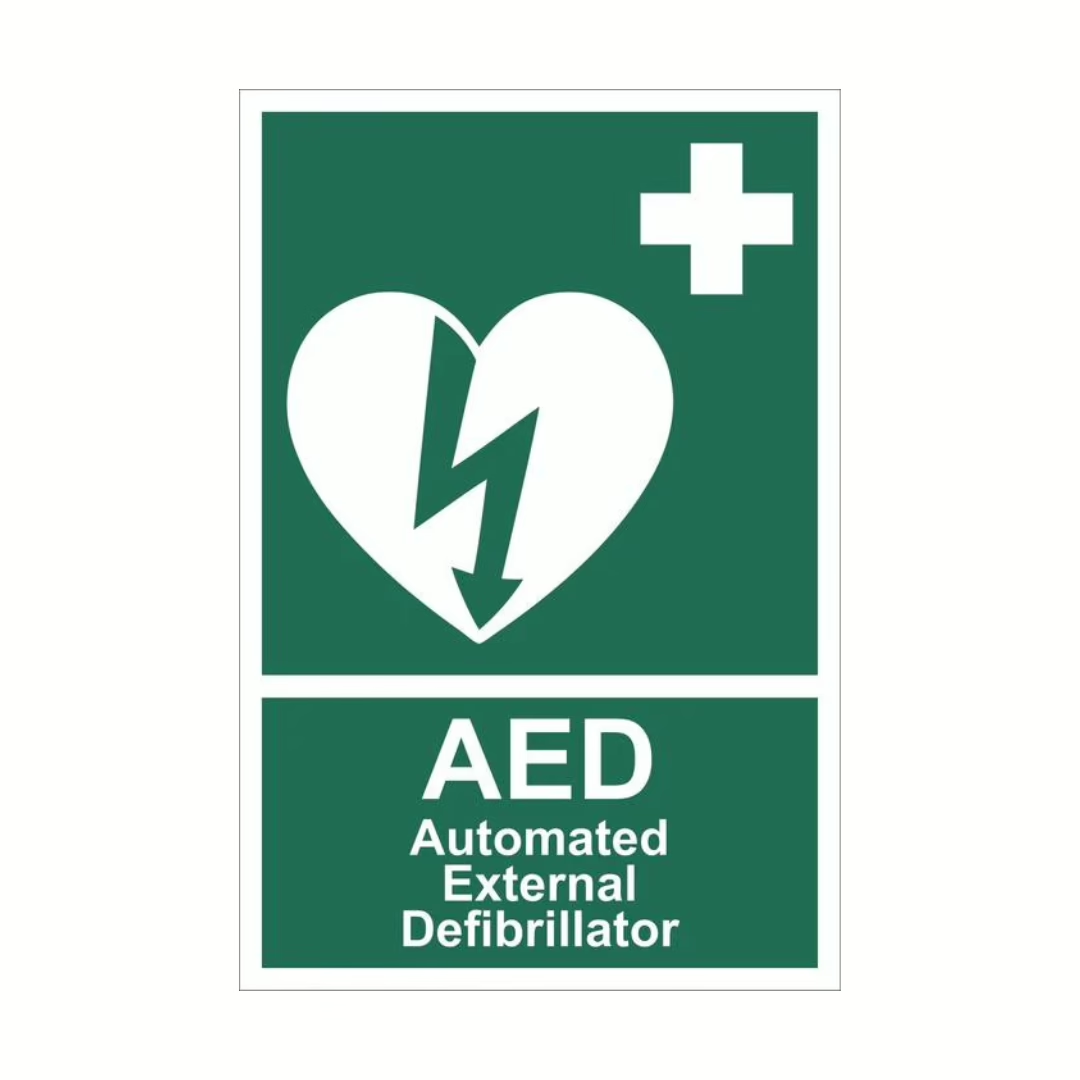
A home defibrillator is usually an Automated External Defibrillator, or AED. If you, your family or a neighbour suffers a cardiac arrest, you can use this portable device to deliver an electric shock to the heart, significantly increasing their chance of survival.

So, how does a defibrillator work? When a person experiences a cardiac arrest, their heart stops beating. This can be because of an electrical malfunction that disrupts the rhythm of their heartbeat.

In an emergency, you can use an AED to analyse the patient’s heart rhythm quickly. The defibrillator will then instruct you to deliver a shock if needed to get their heart beating again.

For homes, you can buy a fully-automatic or semi-automatic defibrillator – which we would recommend. The only difference is that fully automatic AEDs will deliver a shock automatically where needed, while a semi-automatic defibrillator will need you to press a shock button.

If you’re wondering at this point whether you’d be able to use a defibrillator, the good news is that they are straightforward to use. While CPR and first aid training will help, defibrillators are designed to be used by anyone and will give you clear voice instructions at every step.

To get an idea of the home defibrillator models available, have a look through our range of automatic and semi-automatic home defibrillators.

During cardiac arrest, a person’s heart unexpectedly stops beating. You can use a defibrillator to help the heart regain its normal beat, increasing chances of survival.

Do I Need a Home Defibrillator?

Next, it’s worth covering whether you need a home defibrillator. While it’s worth consulting your doctor first, a home defibrillator may be a good choice if you or your family have:

  • A known heart condition
  • A history of cardiac disease
  • Certain genetic conditions, like Long QT syndrome or hypertrophic cardiomyopathy

While these factors can make you more at risk, sudden cardiac arrest can affect anyone, no matter your age or health. It can affect children too, although this is less common than among adults.

If you remember that every minute counts when it comes to accessing a defibrillator, you might also consider keeping one at home if you live in a particularly remote or rural area.

What is the Best Defibrillator for Home Use?

When it comes to choosing a defibrillator for your home, you’ll probably want a model that’s simple to use, with easy storage and maintenance.

A couple of popular choices for home defibrillators include:

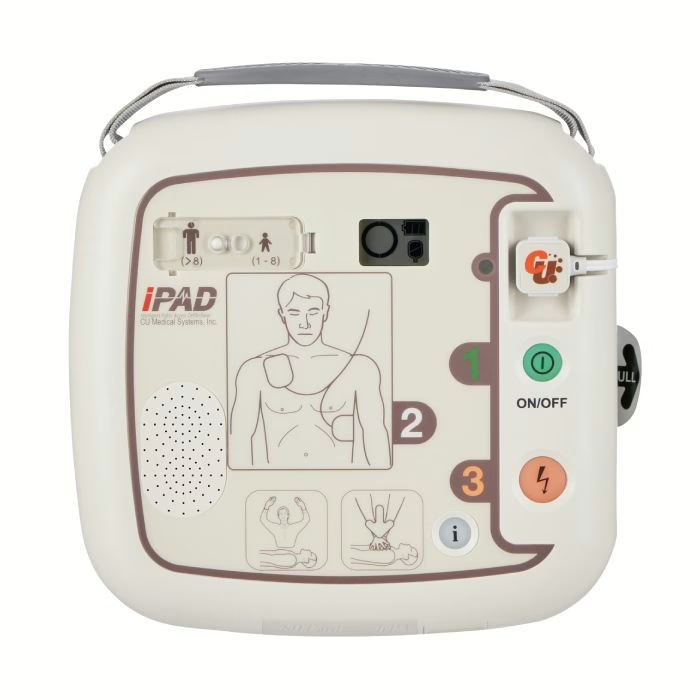
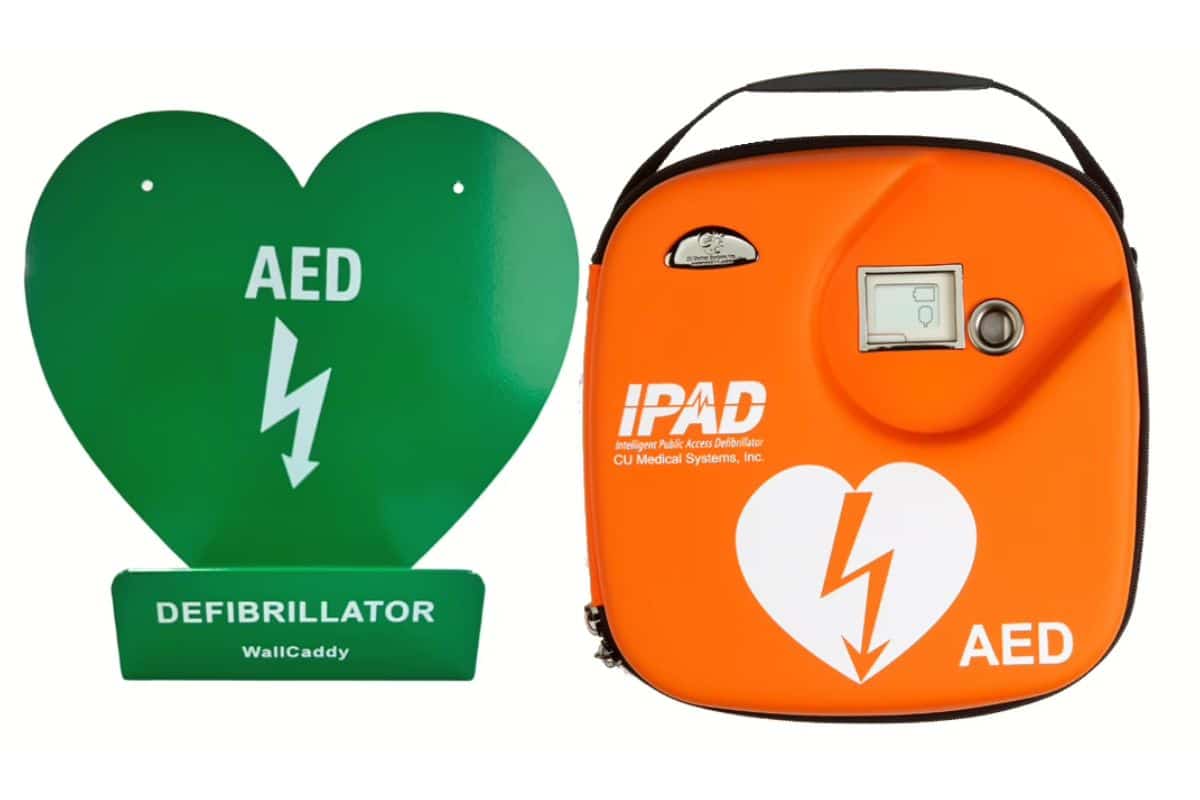
iPAD SP1 Fully Automatic AED

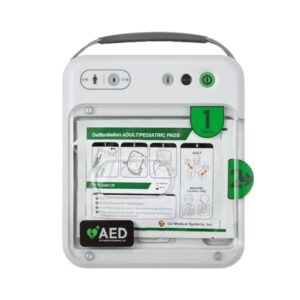
The iPAD SP1 is a defibrillator that’s widely used by the NHS Ambulance Service and emergency responders. In your home, this defibrillator makes it easy to switch between treating adults and children – just press a button, so there’s no need to change pads.

Having the pads inside the device is also useful for homes, where you’ll likely store your defibrillator for a long time before it needs to be used.

The iPAD SP1 makes it simple to switch between treating adults and children at the touch of a button.

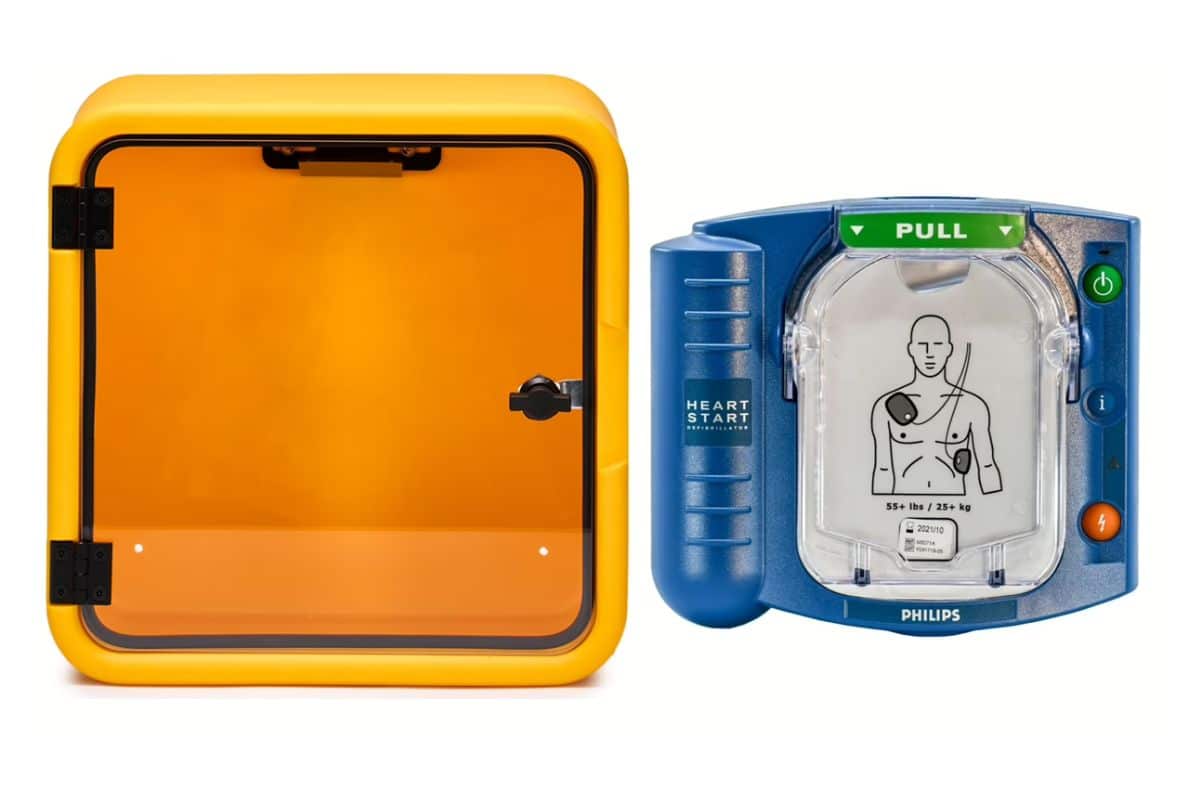
Philips Heartstart HS1 AED

The Philips Heartstart HS1 is designed for everyday users, with smart technology to help you deliver the best therapy in a high-stakes situation.

If you want extra support, the HS1 AED can give you step-by-step voice instructions and coach you through CPR. It also has a quick shock ability, helping you to deliver CPR and defibrillation within a space of just 8 seconds.

As home defibrillators will be stored for a long time, the HS1 AED also has the benefit of testing itself daily to make sure the components, subsystems and battery are all ready.

A square orange case with a Blue Philips Heartstart defibrillator.
If you’re new to first aid, the Heartstart HS1 AED can coach you through CPR during the defibrillation process.

What is the Cost of a Home Defibrillator?

In the UK, a home defibrillator can cost anywhere between £960 and £1,700. The model you’ll choose will depend on the features you need. In the case of a home defibrillator, where it’s a precaution you’ll hopefully never use, you may want to go for a simpler device.

When it comes to maintenance costs, defibrillators have a relatively low upkeep. You’ll need to electrode pads around every 2 years or if they are used and the battery every 5 years. 

Before investing in your own defibrillator, you might also want to check if there’s a community defibrillator in your area

How We Can Help

If you were wondering whether it’s worth buying a defibrillator for your home, we hope this guide has left you feeling more confident knowing whether it’s the right investment for you.

While defibrillators can be an upfront investment, they can make all the difference in life-and-death situations and are simple enough for most adults to use.

If you’re considering a defibrillator, have a look through our range of easy-to-use defibrillators for homes and read our blog to learn more about CPR and first aid.

  • 0
      0
      Your Basket
      Your basket is emptyReturn to Shop