




































.jpg)


- Published:2 June 2026
Buying or renting a defibrillator depends on your organisation’s budget, location, long-term plans, and ability to manage maintenance.
Buying gives you ownership of an automated external defibrillator (AED) when you need a permanent solution, while renting can be a flexible option for organisations that want to spread the cost and receive ongoing support while still having access to a reliable, rescue-ready defibrillator.
In this blog, we will cover the difference between renting and buying, what the options are in the UK, and what you should consider before choosing to rent or buy.
Rent or Buy a Defibrillator: What’s the Difference?
When deciding whether to rent or buy a defibrillator, the main difference is how your organisation wants to manage cost, ownership, and responsibility. Buying usually means paying full price upfront and taking responsibility for the device throughout its operational life.
Renting an AED allows you to spread the cost over time. For small offices, independent gyms, schools, and community centres, this allows them to improve their emergency preparedness without a large initial payment.
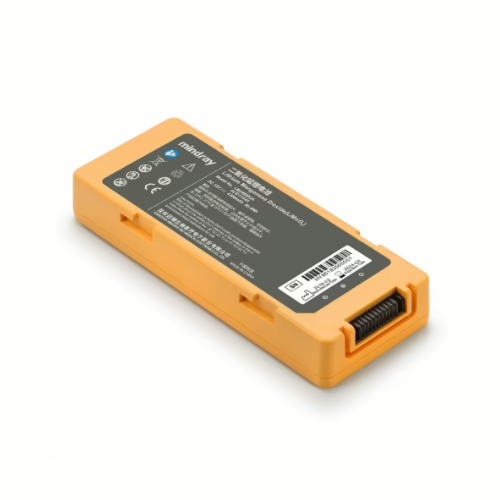
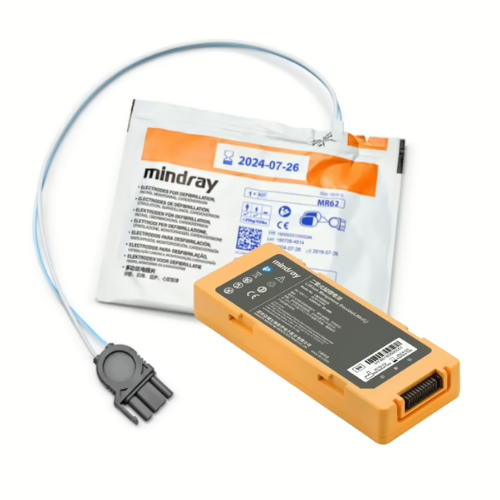
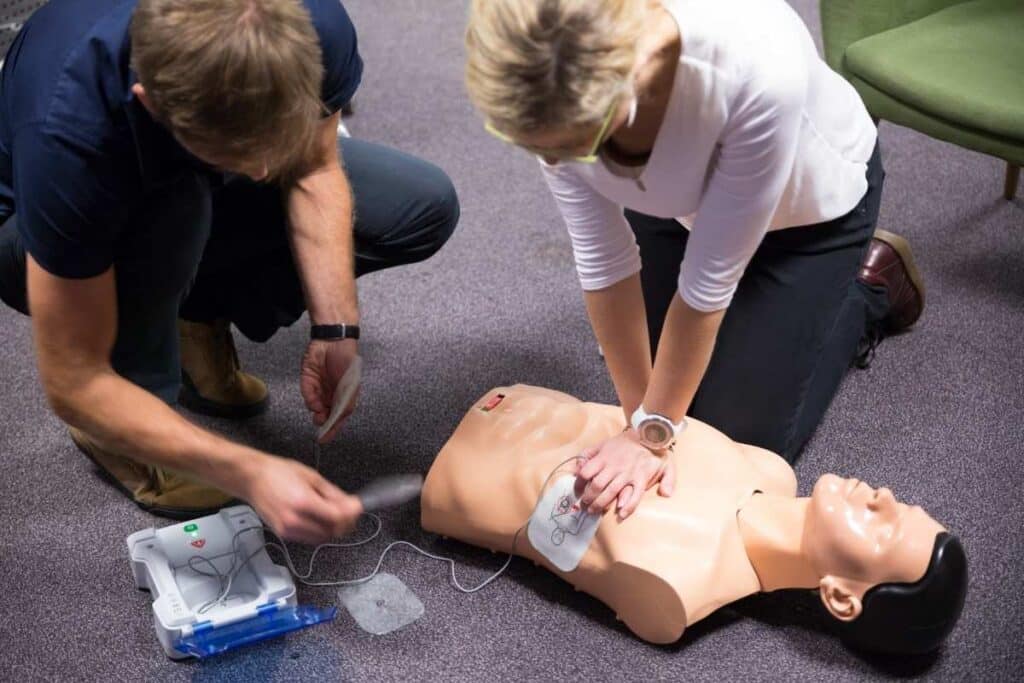
A defibrillator is not a one-off purchase; it requires ongoing maintenance. Organisations need to think about replacement pads and batteries, along with the setup costs like cabinets and signage. Proper installation and maintenance are requirements to keep an AED rescue-ready. For some organisations, a rental package that includes this support may be preferable.
Can You Rent a Defibrillator in the UK?
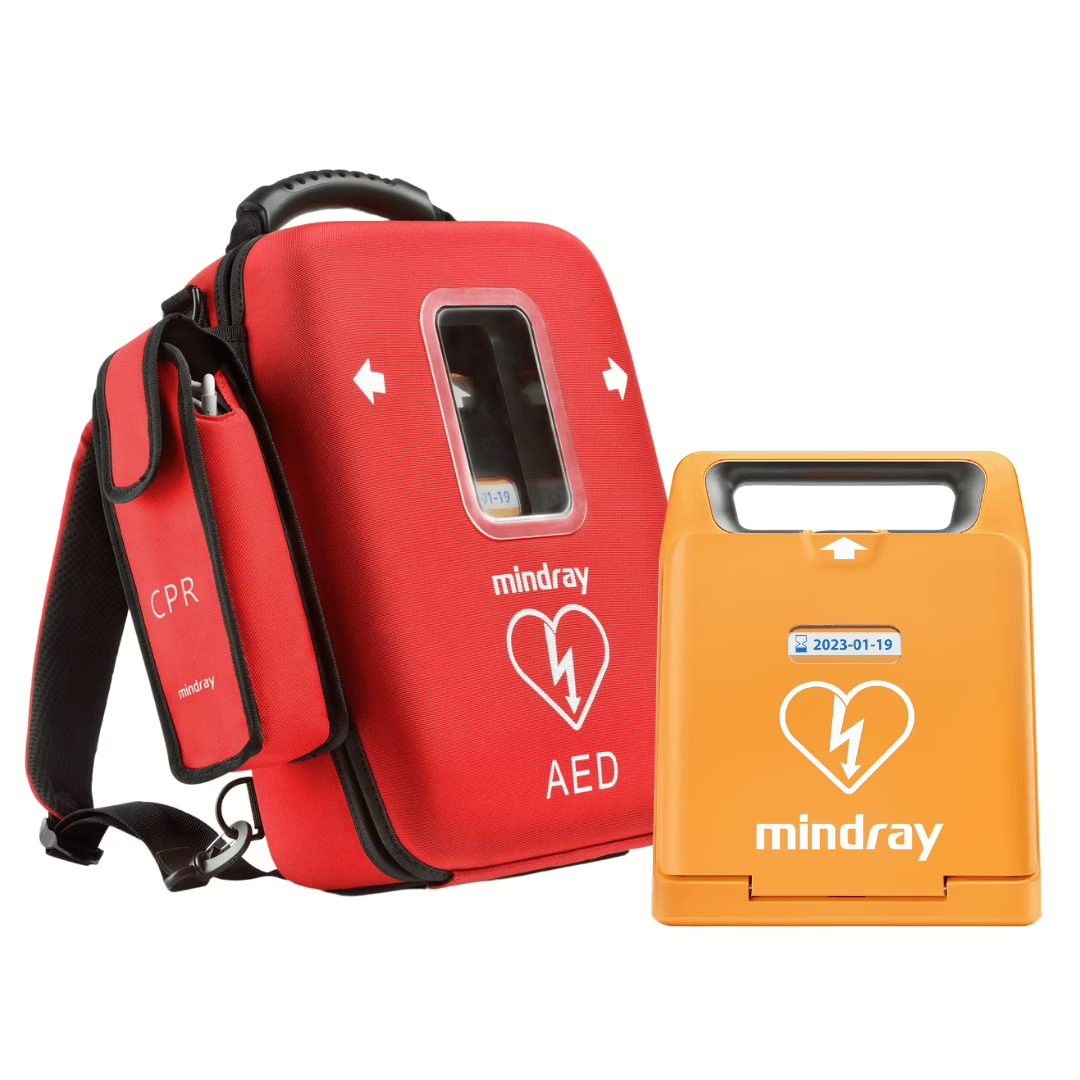
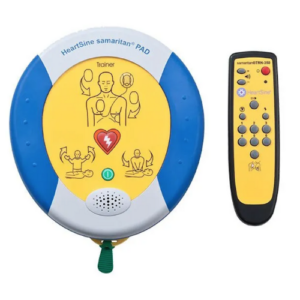
Renting a defibrillator is a great option for organisations. Rental packages give organisations access to leading defibrillator models from brands like Mindray and Philips without the premium price tag. For organisations that are unsure which device is right for their setting, this provides a simpler option for getting a reliable defibrillator in place with the essential supporting equipment included.
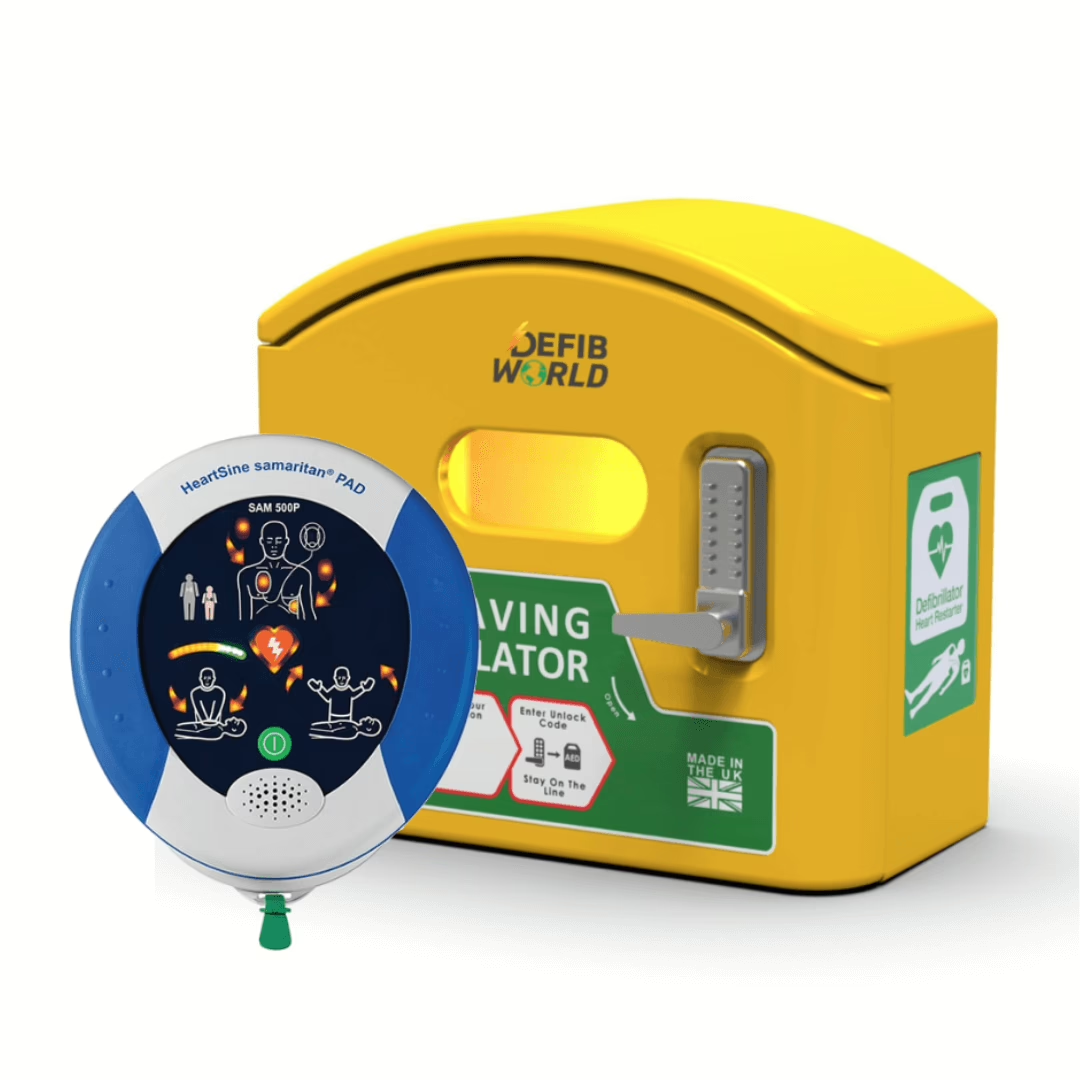
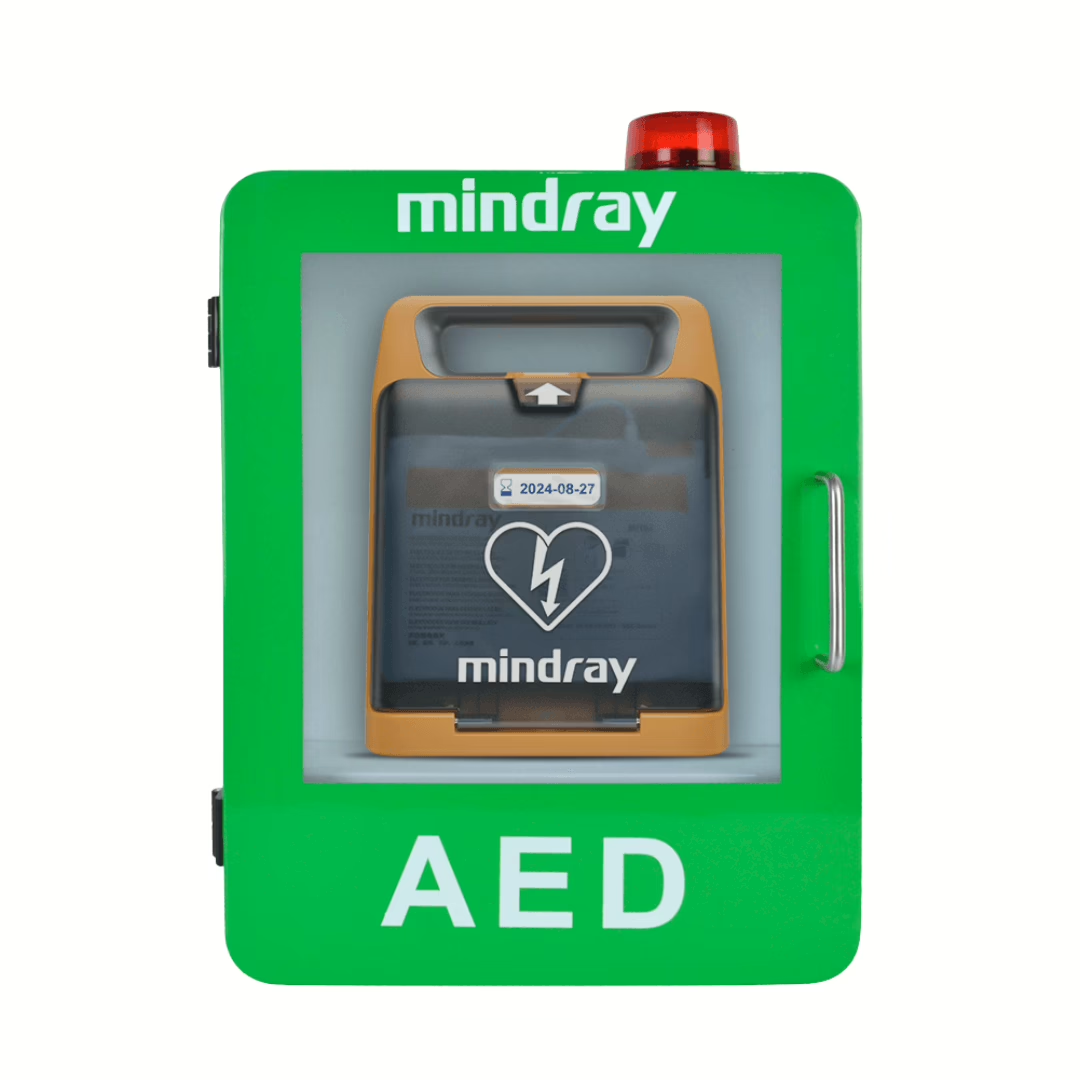
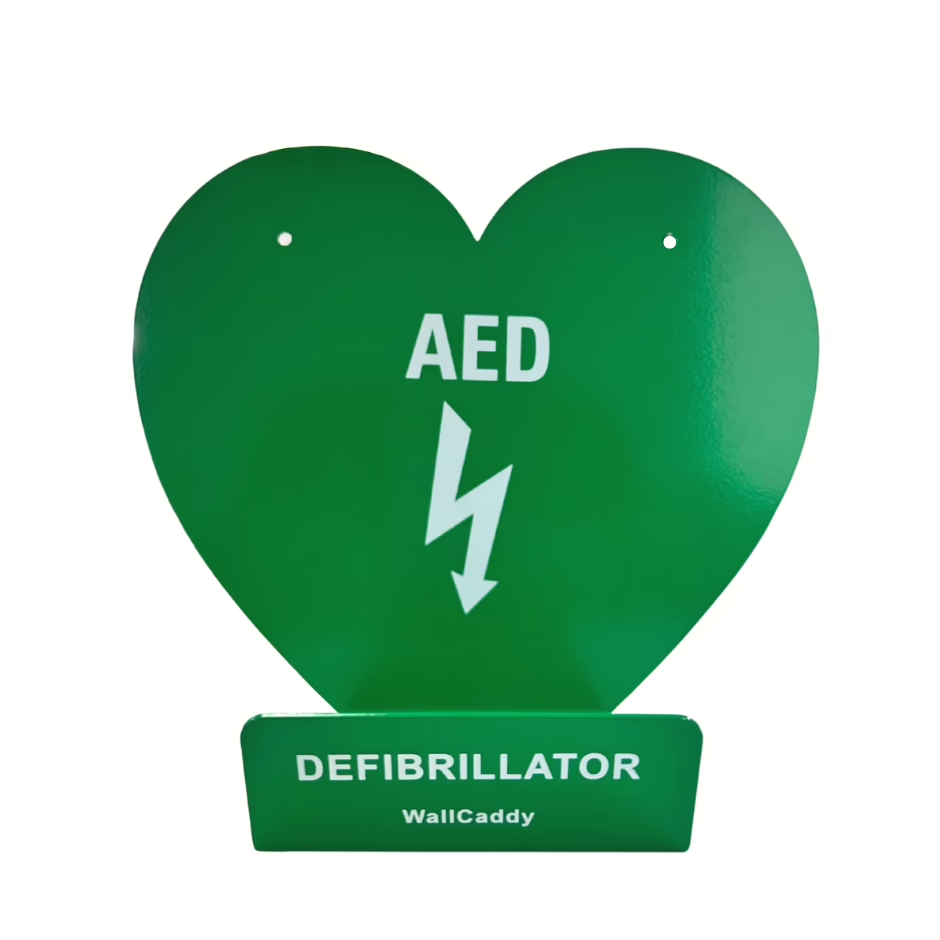
The Defib World AED rental package includes the elements you need for a complete rescue kit, helping ensure essential response items are available with the device. In a real emergency, AEDs need to be clearly visible and supported by the right accessories. The package includes a complete kit, helping organisations stay in line with official guidance.
What Organisations Should Consider Before Renting or Buying
Before choosing whether to rent or buy, organisations should consider their location, needs, footfall, risk profile, opening hours, and who will be responsible for the device. A busy office, gym, school, or community venue may all have practically different needs.
Employers also have a responsibility to make adequate and appropriate first aid arrangements, which means thinking beyond the AED itself and considering how the device will be accessed, checked, and managed.
For settings such as gyms and sports facilities, an AED can be especially valuable because physical activities and high exertion may increase the risk of cardiac arrest emergencies. A gym, leisure centre or sports club may prioritise fast access and visible placement, while a smaller office may focus more on affordability, staff awareness and simple ongoing management.
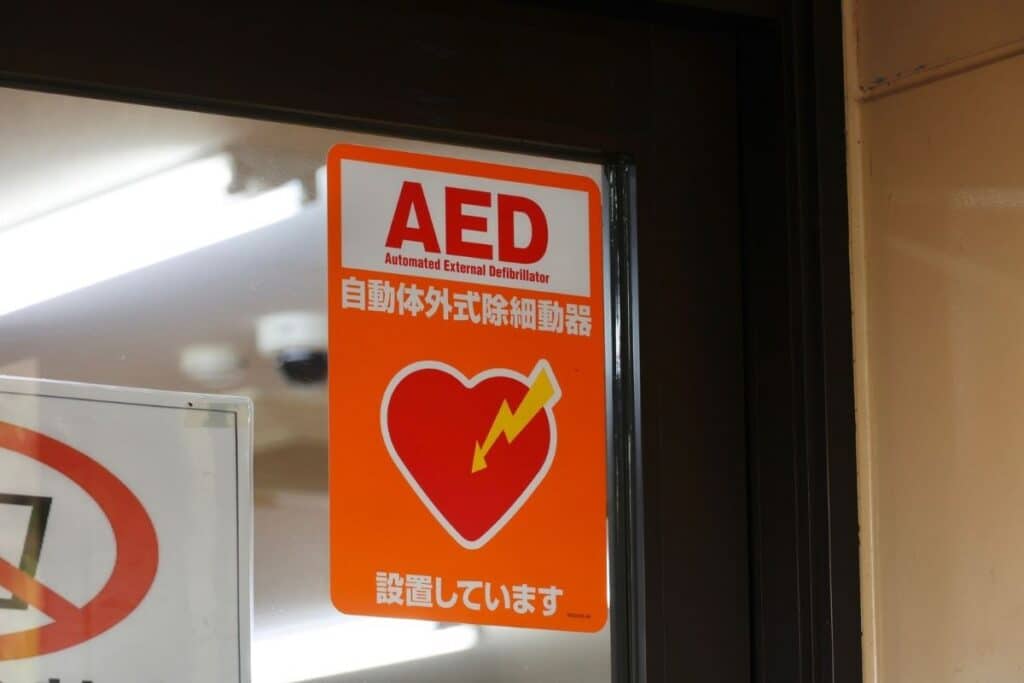
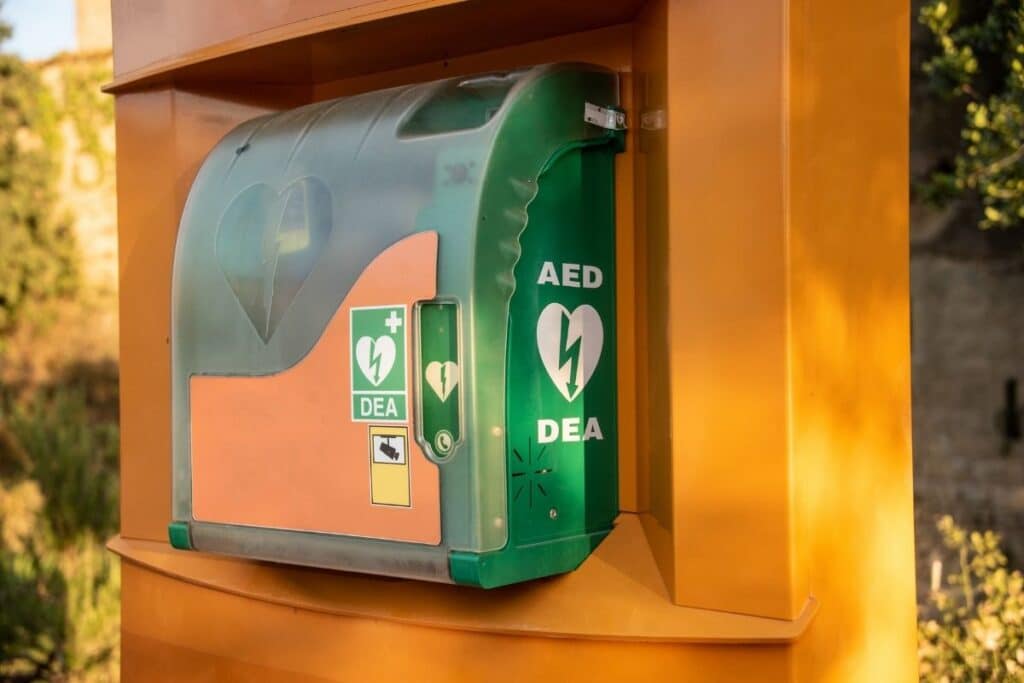
Access should also influence whether you buy or rent. If a defibrillator is only intended for use inside a private workplace, an indoor storage option may be enough. If your defibrillator needs to be available to the wider community, the organisation may need to think about outdoor storage, clear signage and whether the AED can be reached outside normal opening hours.
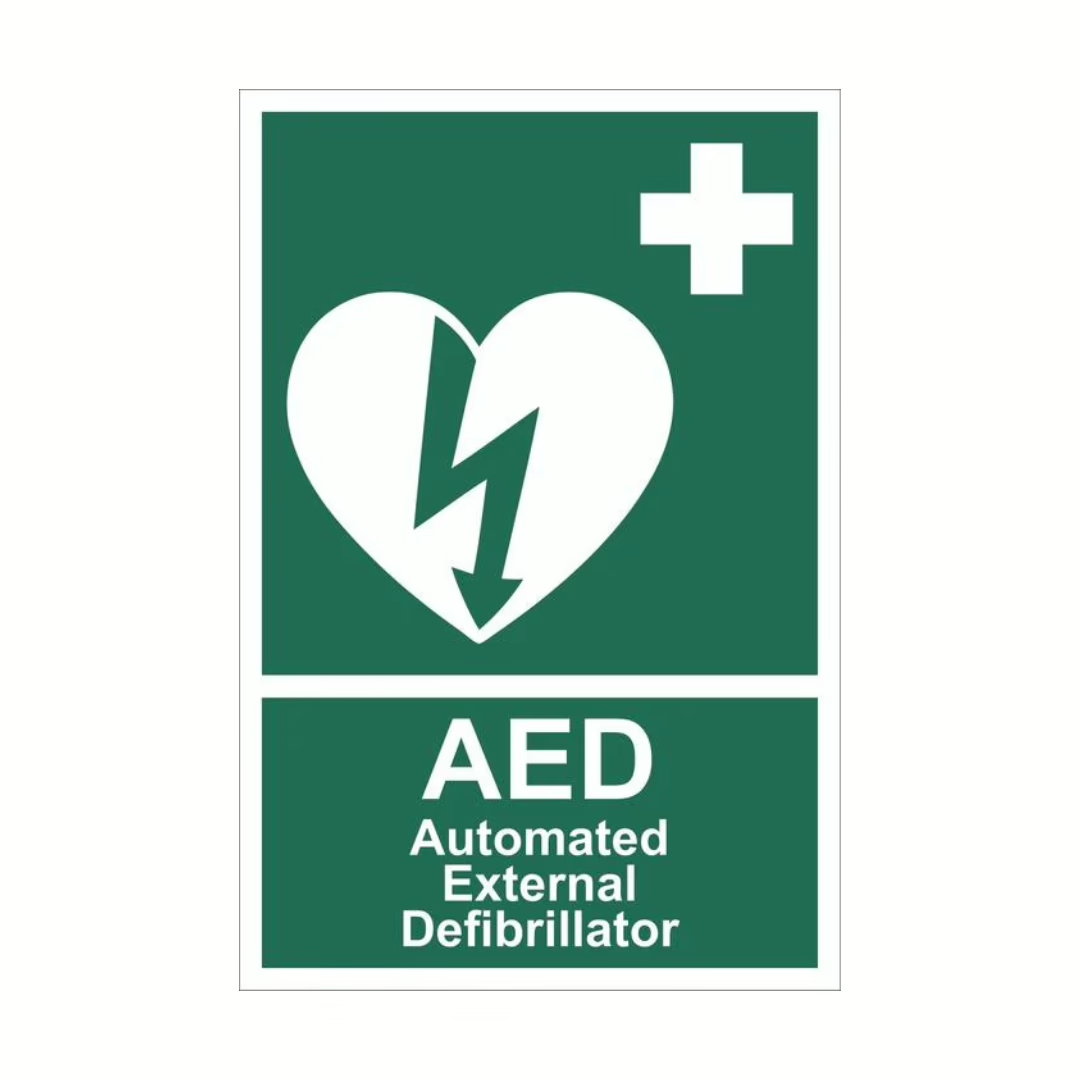
This is especially important for community-focused organisations like schools, sports clubs and shared public buildings. Where possible, AEDs should be accessible 24 hours a day, 7 days a week, where possible, so they can benefit the whole community. For organisations buying outright, these extras may need to be purchased separately. With a rental package, these elements may already be included or easier to arrange as part of the setup.
Organisations are ultimately responsible for the upkeep of their first aid devices. If an organisation is not able to maintain its devices or does not have a dedicated member of staff to manage a maintenance schedule, renting may be a good option.
Registration should also be considered from the start, whether the AED is rented or bought. The Circuit, the national defibrillator network, allows AED owners to register their device so ambulance services can locate it during an emergency.
The real decision is not about rental versus purchase. It is about finding a solution that helps your organisation keep an AED available and ready to use. When a cardiac arrest takes place, every second counts, and an available defibrillator makes all the difference.
Should Your Organisation Rent or Buy a Defibrillator?
Renting may suit organisations that want a supported AED solution without managing every element themselves. Defib World’s rental package includes an AED, storage options, signage, inspections, consumable replacements, and warranty support, making it a very practical choice for organisations and community spaces.
Buying may be better for organisations that want full ownership and already have the budget, staff, and processes to manage the device long term.
Whichever option you choose, the highest priority is having an AED that can be used confidently in an emergency.
Fill out the rental form today and get expert guidance on Defib World’s rental package and find the right AED solution for your organisation.