















































.jpg)


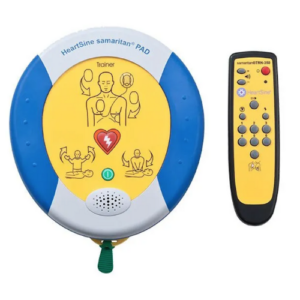
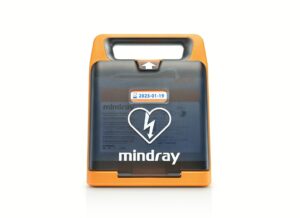
Defibrillators save lives, but only if people can reach them quickly. That’s why more communities are choosing to store public access AEDs outdoors, where they’re accessible 24/7.
However, some worry about the risks of storing an AED outside, such as theft or weather-related damage. So, can a defibrillator be stored outside?
The answer is yes – provided it’s housed in a suitable outdoor cabinet.
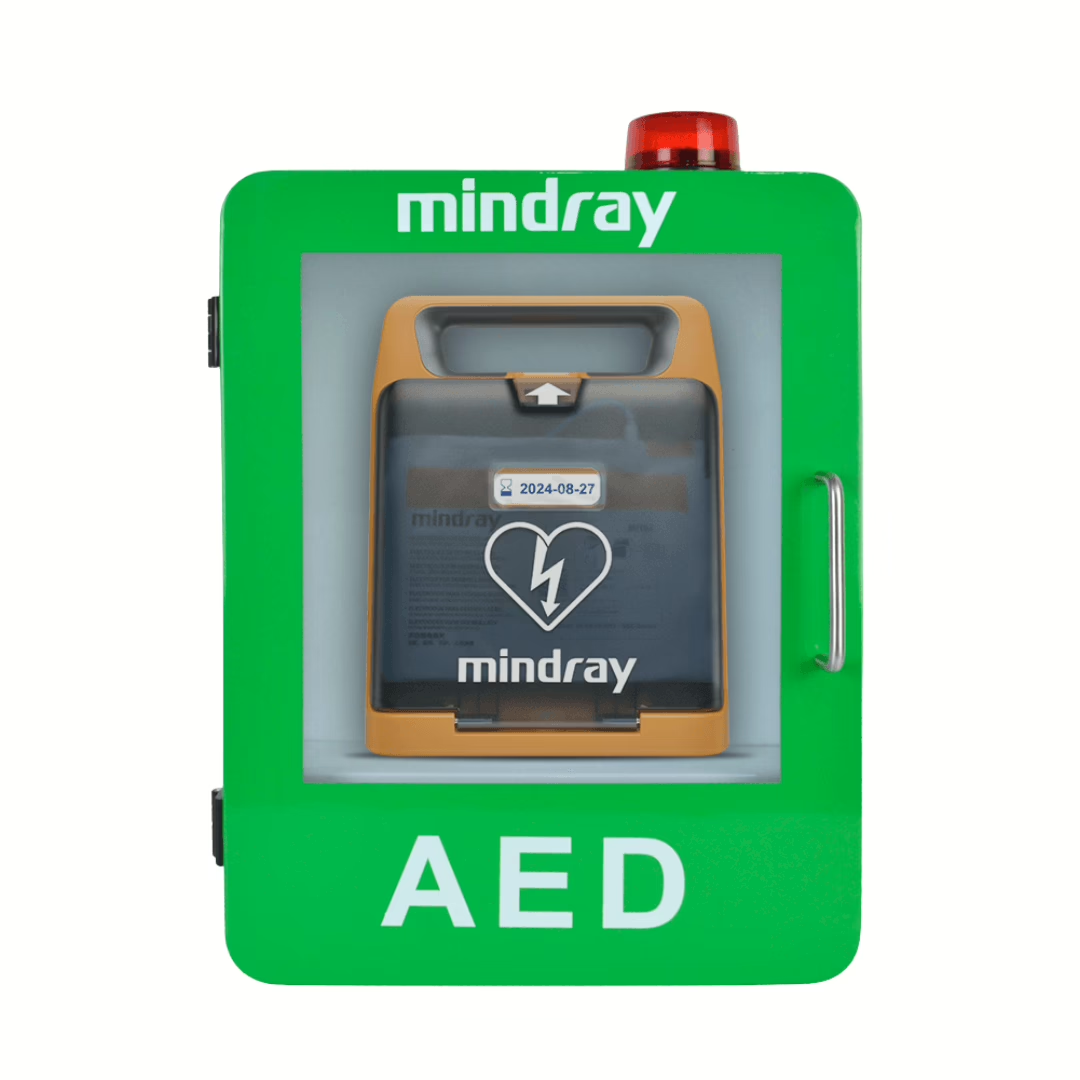
All AEDs kept outdoors must be stored in temperature-controlled storage cabinets that protect the device from hazards and environmental extremes, keeping it fully operational.
We’ll cover these concerns in detail below, including practical steps to ensure your AED is accessible, stored safely and fully protected outdoors.
How Temperature Affects Your Defibrillator
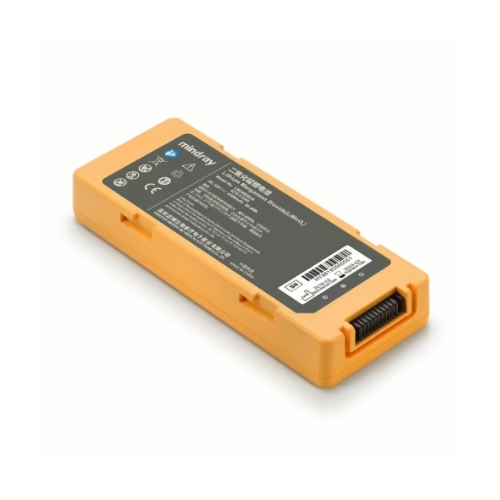
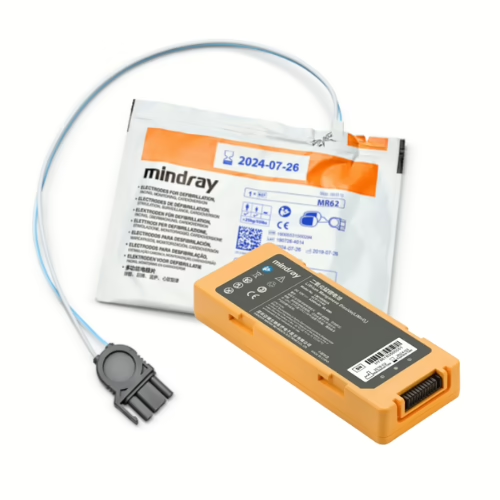
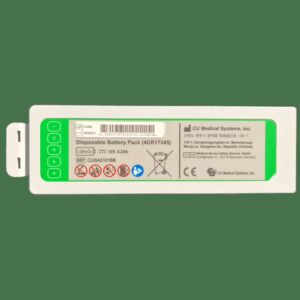
Keeping an AED in optimal condition is essential for it to perform during an emergency. Temperature extremes can degrade the battery and electrode pads, compromising the device when it’s needed most.
Most AEDs are designed to operate between 0°C and 50°C, and exposure outside this range can cause serious issues.
The Effects of Cold
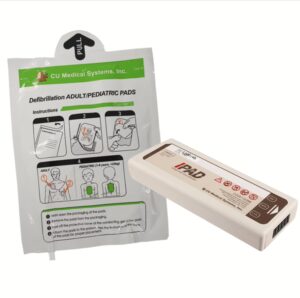
When the temperature drops below freezing, as is often seen in winter nights in the UK, the gel on the defibrillator’s electrode pads can harden, or even freeze.
This gel is essential; it allows the pads to stick to the patient’s skin and conduct the life-saving shock. If the gel fails, the AED may not work in an emergency.
Cold weather can also drain the AED’s battery faster, reducing its lifespan and potentially preventing it from powering on when needed.
The Effects of Heat
Though less common in the UK, excessive heat poses its own risks. High temperatures can cause the gel on the pads to dry out, meaning they won’t adhere properly to the chest or deliver an effective shock.
Heat also speeds up a battery’s self-discharge, causing it to lose charge faster and reducing its lifespan compared to the manufacturer’s stated shelf life.
A temperature-controlled outdoor cabinet protects the AED from extreme cold and heat, keeping the pads and battery within optimal operating range so the device is ready for life-saving use at all times.
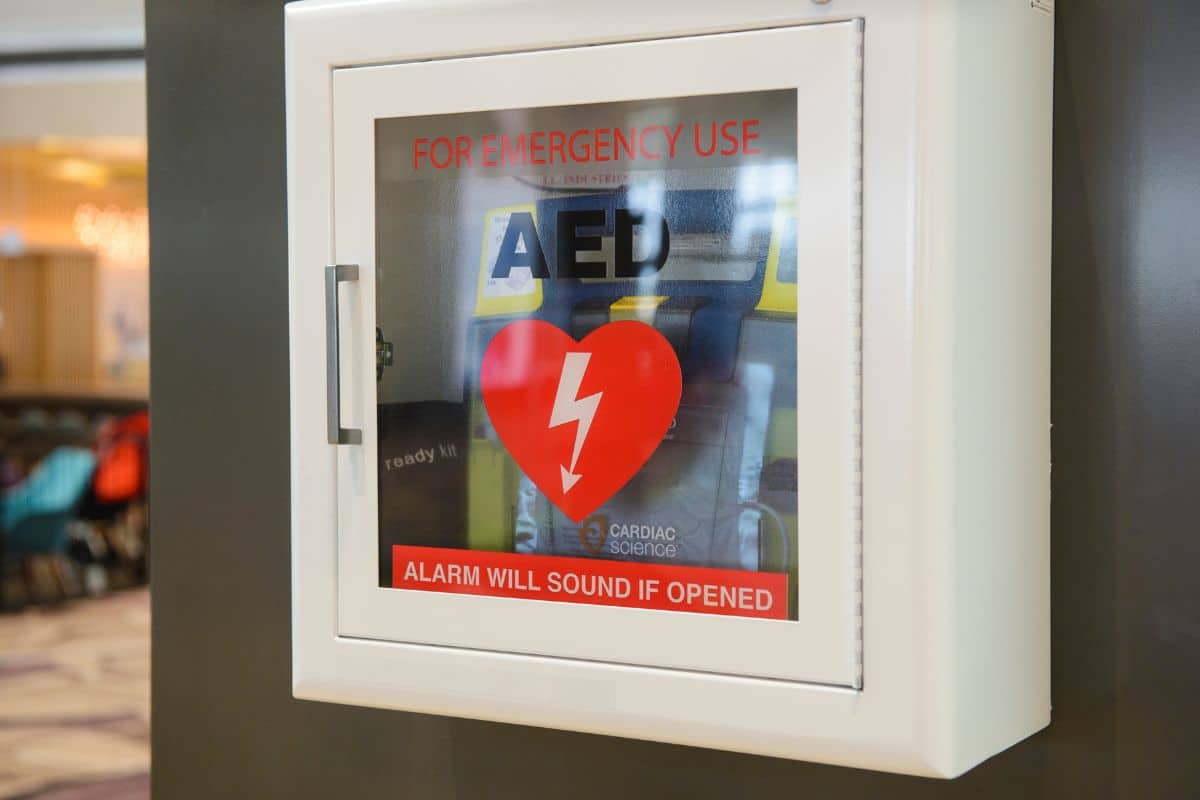
Extreme cold hardens defibrillator pads and drains their batteries, while heat dries pads and shortens battery life.
The Risk of Tampering and Damage
Concerns about tampering or accidental damage are common, but research shows that defibrillators stored outside are rarely targeted.
For example, in London, one of the world’s largest and busiest cities, fewer than 10 incidents are reported each year, out of over 9,000 public AEDs. This shows that outdoor placement does not significantly increase the risk of misuse or damage.
Even in busy public areas, minor bumps or interference are unlikely to affect the AED, as defibrillators stored outdoors are always housed in a temperature-controlled cabinet. These cabinets have a sturdy design that safeguards the AED against accidental knocks.
Combined with regular maintenance and inspections, a cabinet ensures that your AED remains functional, protected from damage, and ready for use at any time.
Practical Steps For Storing Your AED Outside
Storing an AED outdoors doesn’t have to be complicated. You can keep your defibrillator safe and ready to go in an emergency by choosing the right storage and following a few key steps.
1. Choose the Right Outdoor Storage Unit
Any defibrillators stored outside must be housed in a temperature-controlled cabinet. These cabinets protect the device from weather, frost, heat and humidity, keeping the AED and its pads in optimal working condition.
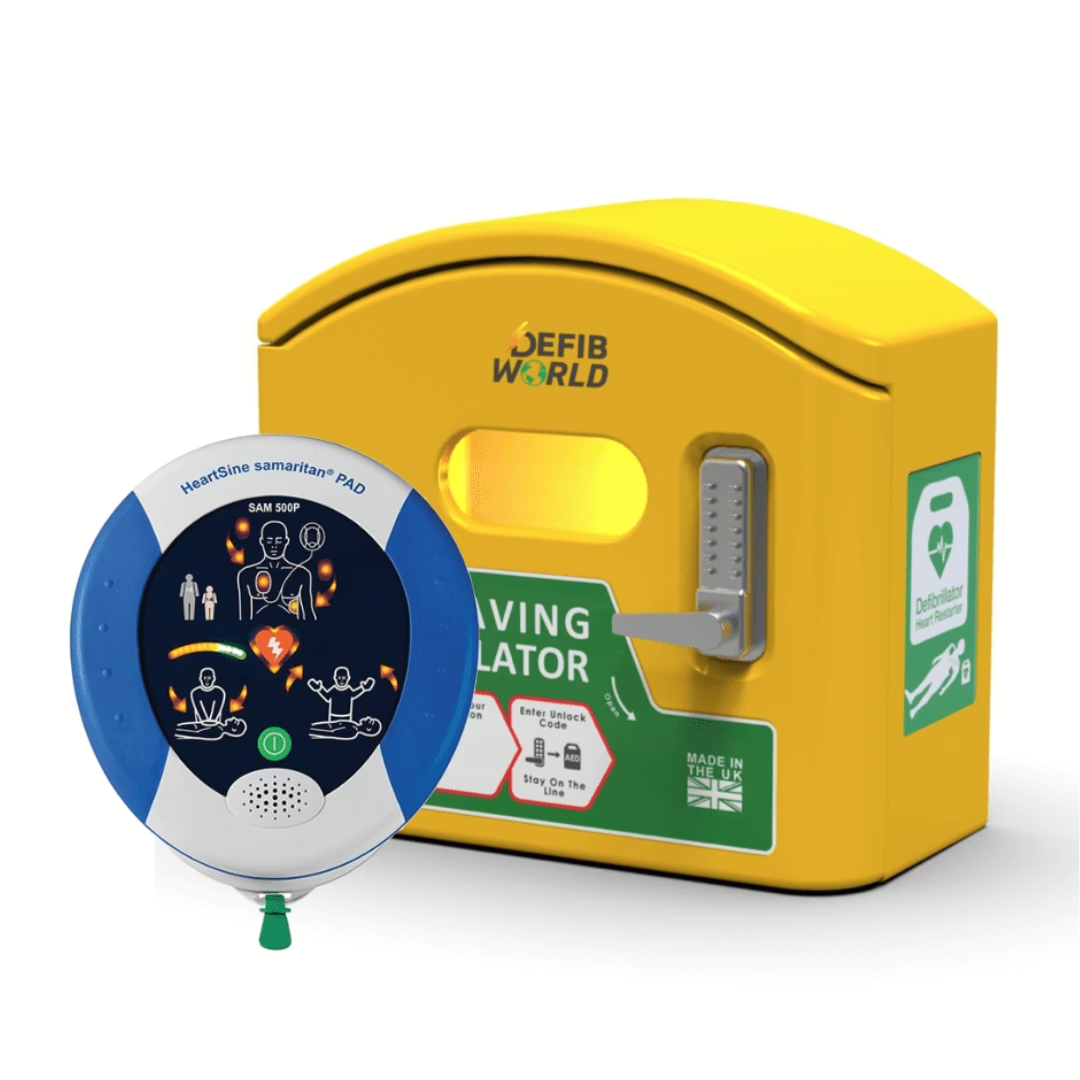
Outdoor cabinets are versatile, with options to mount securely on walls or fit into structures such as repurposed phone boxes, making them ideal for high-traffic public areas.
Many models include automatic temperature regulation, with built-in heaters and fans to keep the AED within the manufacturer’s recommended operating range.
At Defib World, we stock a range of robust outdoor defibrillator cabinets, designed to keep your defibrillator safe and fully operational.
Contact us today to find out more.
Unlocked or Locked Cabinet?
Accessibility is critical with outdoor defibrillators. Brain tissue begins to die within minutes without oxygen, and delayed access to a defibrillator can significantly reduce a person’s chance of survival.
This is why unlocked cabinets are generally recommended for outdoor AEDs. They allow anyone nearby to access the device immediately, without having to find a key or enter a code.
As mentioned above, theft or vandalism of public AEDs is rare. For example, in England, over the past two years, 124 public access defibrillators have been reported stolen or vandalised.
Given that there are over 68,000 defibrillators registered in England, this represents a very small fraction of the total number. Though there may be a small risk of damage or tampering, it is significantly outweighed by the need for rapid, unrestricted access in an emergency.
If you deem a locked cabinet necessary in a high-risk area, it should only be implemented after a careful risk assessment. Make sure access codes or keys are displayed clearly on the cabinet and clearly communicated to emergency services.
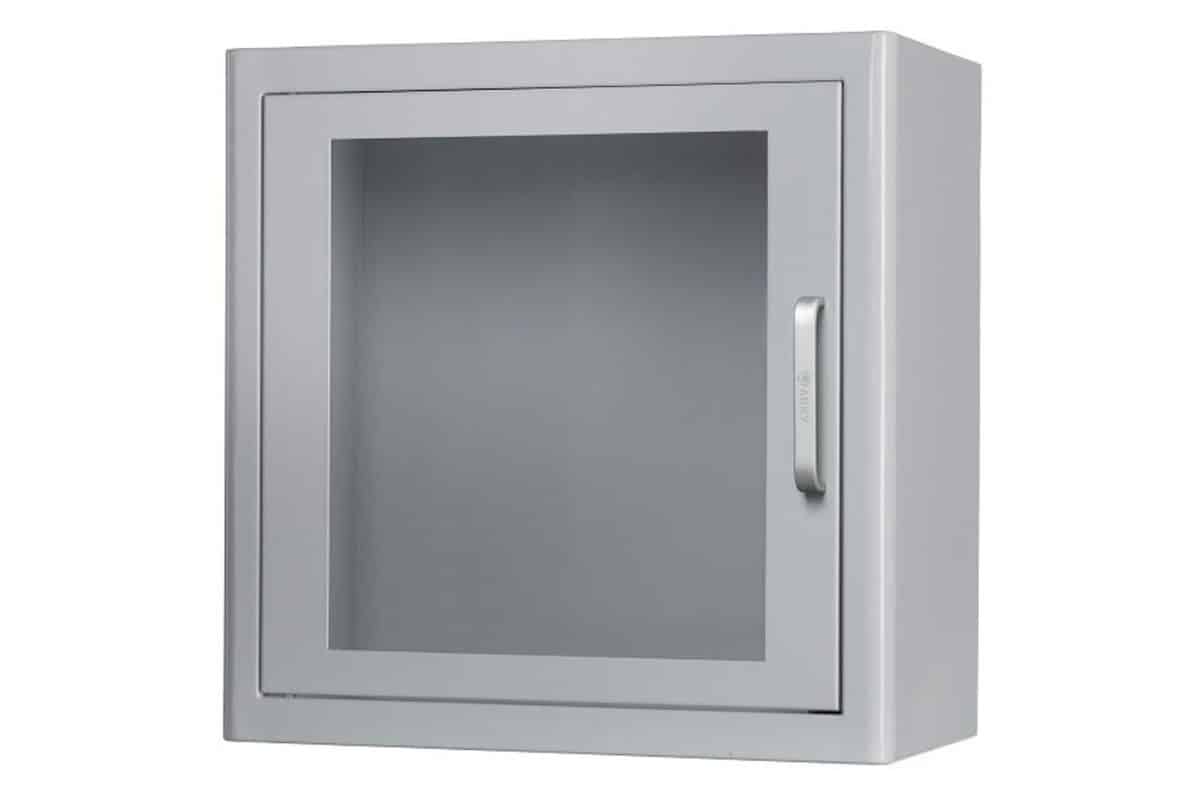
Unlocked AED cabinets ensure anyone nearby can access the device quickly, improving survival chances in an emergency.
2. Choose a Smart Outdoor Location
The cabinet you choose when placing a defibrillator outdoors will maintain the device at the correct operating temperature. However, thoughtful community placement still matters to protect the cabinet, improve accessibility, and reduce maintenance.
When choosing a spot:
- Avoid areas exposed to direct sunlight, which can degrade the cabinet over time.
- Ensure the AED is visible and easy to reach for the public. Avoid placing it too high or too low, so anyone can access it quickly in an emergency.
- Position the cabinet in a well-lit, unobstructed location that is easy for emergency services or bystanders to access.
- Consider practicality. Choose locations where foot traffic is high or near areas where people spend time, such as parks, shopping centres, sports facilities, or community centres.
The right location can save crucial seconds in an emergency, giving bystanders the confidence to act quickly.
Place AEDs in visible, accessible, well-lit areas with high foot traffic to save crucial seconds in an emergency.
3. Maintaining Your Outdoor AED
Even with a temperature-controlled cabinet, outdoor AEDs still require regular maintenance to ensure they are ready for use in an emergency.
Follow the manufacturer’s instructions to inspect the unit for damage and check that the battery and pads are in date. Run self-tests to check the circuitry connections and address any faults immediately, keeping a record of maintenance carried out to ensure the AED is always ready for use.
Regular upkeep will keep your outdoor defibrillator protected, reliable, and ready for use in all conditions.
There we have it! We hope that this blog has taught you everything you need to know about storing a defibrillator outside.
At Defib World, we specialise in outdoor defibrillators and cabinets designed to keep your AED safe, accessible, and fully operational, no matter the weather. Our cabinets are robust and weatherproof, protecting your device from rain, frost, heat, and damage.
Got any questions? Give us a call on 0330 223 6336 or email sales@defibworld.org. Our team will help you choose the best solution for safely storing a defibrillator outdoors.